

Diptera.info :: Identification queries :: Other insects, spiders, etc.
 Hemerobiidae ?
|
|
| Robert Heemskerk |
Posted on 10-01-2008 21:16
|
 Member Location: Amsterdam, Netherlands Posts: 2082 Joined: 17.10.05 |
hi otherinsektforum, Is this larva Hemerobiidae? place: Amsterdam forest, bridge over water date: 9-01-2008 Robert Heemskerk attached the following image: 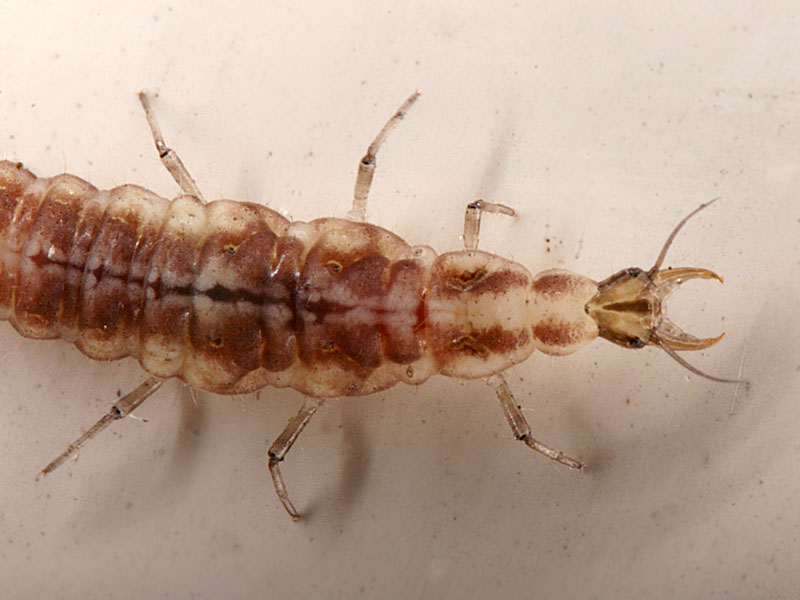 [101.39Kb] |
 |
|
| jorgemotalmeida |
Posted on 10-01-2008 21:31
|
 Member Location: Viseu - PORTUGAL Posts: 9296 Joined: 05.06.06 |
stout and curved mandibles... it seems it has no tubercles. Tell me if the abdomen is tappered in its extremity. I agree with Hemerobiidae. I wait for more opinions. |
|
|
|
| Robert Heemskerk |
Posted on 10-01-2008 22:40
|
|
Member Location: Amsterdam, Netherlands Posts: 2082 Joined: 17.10.05 |
Thank you for your reaction Jorge, I preciate it. These group of insekts are not easy, so I can learn a lot of it's difficulties  On the inside of the madibles I can see some kind of tubercles, a bit underneath and inside of the mandibles. I give you a magnification of the mouthparts. I don't know what you meant with 'tappered', distributed ? Robert Heemskerk attached the following image: 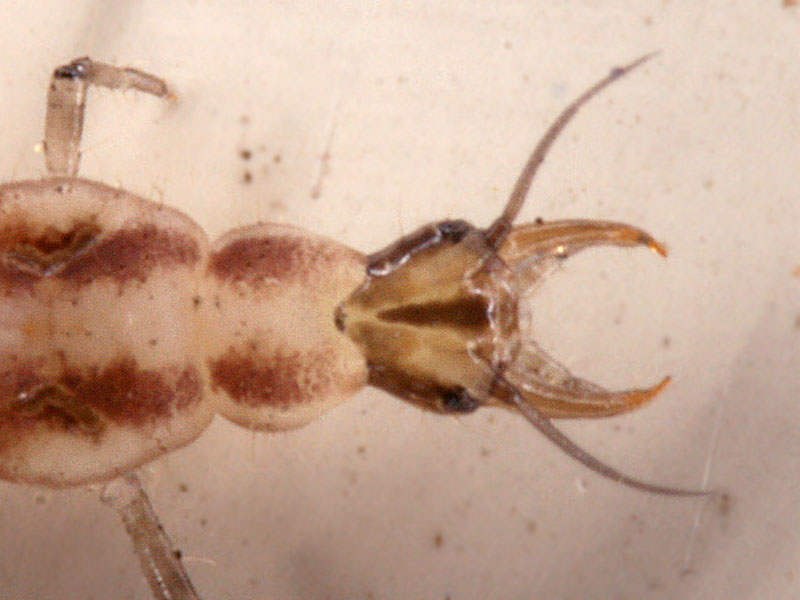 [96.24Kb] Edited by Robert Heemskerk on 10-01-2008 22:42 |
|
|
|
| Robert Heemskerk |
Posted on 10-01-2008 22:43
|
|
Member Location: Amsterdam, Netherlands Posts: 2082 Joined: 17.10.05 |
total view (I turned the picture upsidedown)
Robert Heemskerk attached the following image: 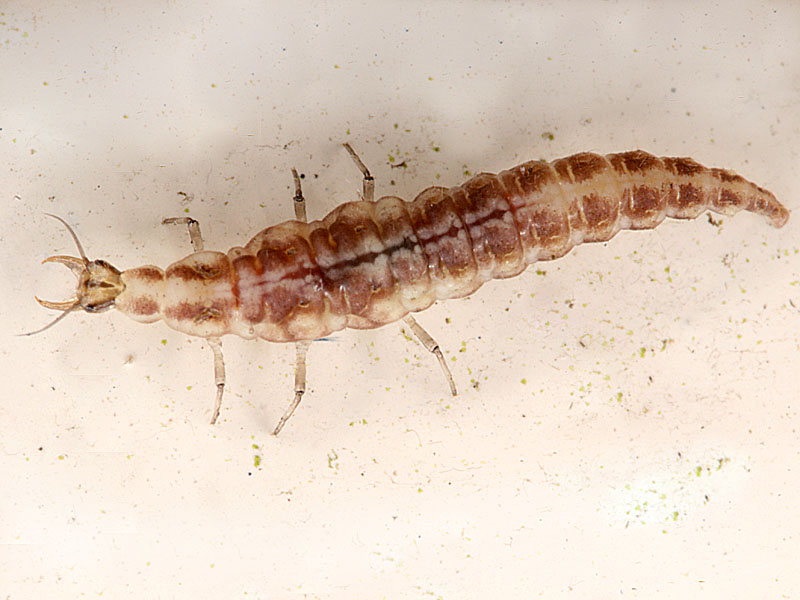 [112.45Kb] Edited by Robert Heemskerk on 10-01-2008 22:44 |
|
|
|
| jorgemotalmeida |
Posted on 10-01-2008 22:45
|
|
Member Location: Viseu - PORTUGAL Posts: 9296 Joined: 05.06.06 |
it was a typo. IT IS "TAPERED" not tappered. Tapered abdomen means: to become gradually narrower or thinner toward one end... |
|
|
|
| jorgemotalmeida |
Posted on 10-01-2008 22:50
|
|
Member Location: Viseu - PORTUGAL Posts: 9296 Joined: 05.06.06 |
In Hemerobiidae the body is very slender. In Chrysopidae the body is more stout and it has tubercles and warts in the backs... show me a lateral view of this larva, please. I think I see warts in the back... if so, Chrysopidae. |
|
|
|
| Robert Heemskerk |
Posted on 10-01-2008 23:18
|
|
Member Location: Amsterdam, Netherlands Posts: 2082 Joined: 17.10.05 |
 I got only dorsal view.., that's a pitty I got only dorsal view.., that's a pitty
Edited by Robert Heemskerk on 10-01-2008 23:19 |
|
|
|
| jorgemotalmeida |
Posted on 10-01-2008 23:58
|
|
Member Location: Viseu - PORTUGAL Posts: 9296 Joined: 05.06.06 |
i see warts on the backs. if this confirms, so Chrysopidae. If not.. it must be Hemerobiidae.  It would be great if you managed to rear this larva. The imago are much more easy. It would be great if you managed to rear this larva. The imago are much more easy. |
|
|
|
| Paul Beuk |
Posted on 11-01-2008 08:11
|
 Super Administrator Location: Netherlands Posts: 19403 Joined: 11.05.04 |
Based on the shape of the antennae I'd say Chrysopidae. The ones we get in our samples at the office have tapering antennae (), whereas those of Hemrobiidae are almost club-like at the tip (not really swollen but certainly not getting narrow in a very gradual way like in the images above). I have never seen that character being used in keys, however.
Paul - - - - Paul Beuk on https://diptera.info |
|
|
|
| John Bratton |
Posted on 12-01-2008 12:07
|
|
Member Location: Menai Bridge, North Wales, UK Posts: 672 Joined: 17.10.06 |
For what it is worth, the head pattern fits several Hemerobius larvae and none of the other genera as depicted in Killington's 1936/37 Ray Society books. John Bratton |
|
|
|
| Andy Chick |
Posted on 12-01-2008 15:43
|
|
Member Location: Under a pile of unidentifed flies! Posts: 58 Joined: 30.11.07 |
my initial thought was a coleopteran larvae, carabidae but the lack of cerci seems to rule it out |
|
|
|
| Robert Heemskerk |
Posted on 15-01-2008 15:16
|
|
Member Location: Amsterdam, Netherlands Posts: 2082 Joined: 17.10.05 |
Thank you all for your reactions. I'll say it is mostlike Chrysopidae sp., if you do not agree feel free to tell. Robert, |
|
|
|
| Jump to Forum: |