

Diptera.info :: Identification queries :: Other insects, spiders, etc.
 Bees or bumblebees?
|
|
| Alvesgaspar |
Posted on 12-02-2008 00:11
|
 Member Location: Lisbon, Portugal Posts: 573 Joined: 24.08.07 |
I'm having trouble in the identification of black bees (or bumblebees?) which I thought were all ''Xylocopa violacea''. However, someone assured me they were not. Here they are, together with my best guess: #1 - Xylocopa violacea ? #2 - Anthophora plumipes ? #3 - Bombus sp.? Thank you, Joaquim Gaspar Alvesgaspar attached the following image: 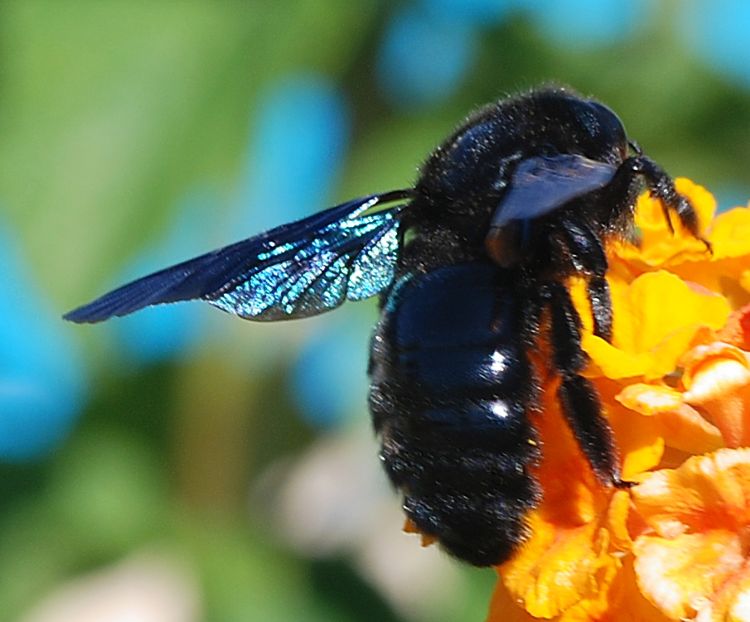 [121.17Kb] |
|
|
|
| Alvesgaspar |
Posted on 12-02-2008 00:11
|
|
Member Location: Lisbon, Portugal Posts: 573 Joined: 24.08.07 |
2nd photo: Anthophora plumipes?
Alvesgaspar attached the following image: 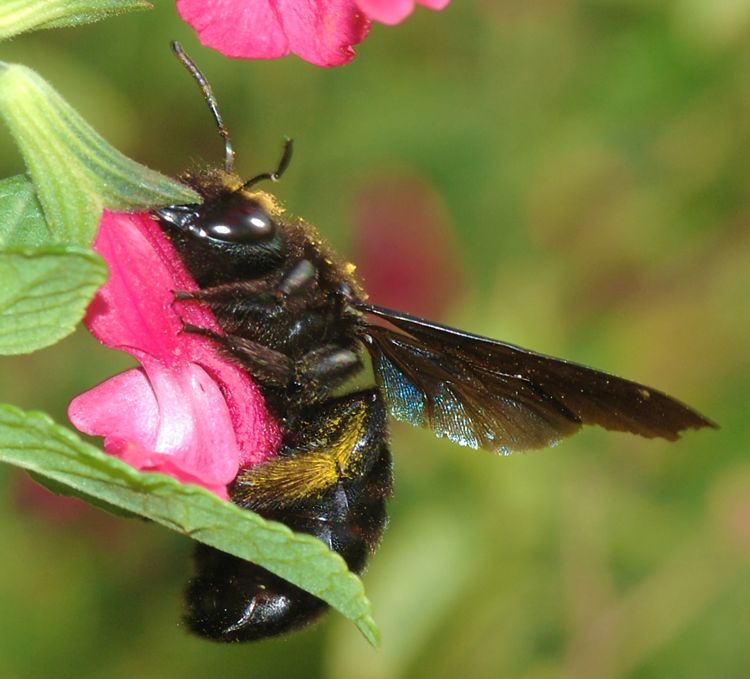 [123.01Kb] |
|
|
|
| Alvesgaspar |
Posted on 12-02-2008 00:12
|
|
Member Location: Lisbon, Portugal Posts: 573 Joined: 24.08.07 |
... and last one: Bombus sp. (but which one) ?
Alvesgaspar attached the following image: 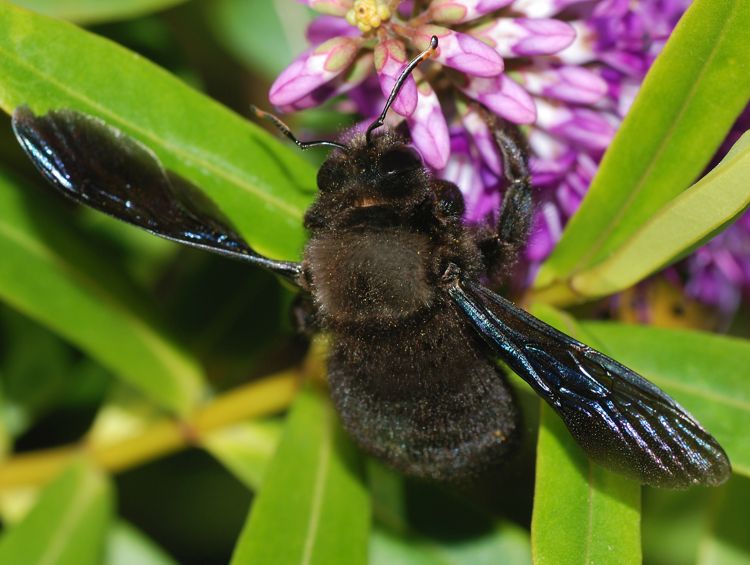 [125.5Kb] |
|
|
|
| pierred |
Posted on 12-02-2008 07:14
|
 Member Location: Paris (France) Posts: 1486 Joined: 21.04.05 |
Hello, For me, the two last ones are X. violacea male (see the reddish tip of the antennas). For the first one, it is more difficult, since one doesn't see the antennas. Pierre Duhem |
 |
|
| jorgemotalmeida |
Posted on 12-02-2008 11:44
|
 Member Location: Viseu - PORTUGAL Posts: 9296 Joined: 05.06.06 |
Xylocopa sp. at least. We have more Xylocopa Pierre.  I don?t know if there are other Xylocopa with that red tip, though. I don?t know if there are other Xylocopa with that red tip, though. |
|
|
|
| Alvesgaspar |
Posted on 12-02-2008 13:41
|
|
Member Location: Lisbon, Portugal Posts: 573 Joined: 24.08.07 |
Are you sure, Jorge? I read that Xylocopa don't have the hairy abdomens of pics 2 and 3. Also, the eyes reaching the jaws and the rust-coloured pollen brushes in the hind legs (pic 2) are typical of Anthophora plumipes |
|
|
|
| Susan R Walter |
Posted on 12-02-2008 15:00
|
 Member Location: Touraine du Sud, central France Posts: 1802 Joined: 14.01.06 |
The middle one is definitely not Anthophora plumipes. They do not have darkened wings and are just a different shape altogether. Susan |
|
|
|
| Christian Schmid-Egger |
Posted on 12-02-2008 17:27
|
|
Member Location: Germany, Berlin Posts: 233 Joined: 05.08.05 |
Okay, so I will add a forth opinion. The results in brief (and therefore I can confirme Pierre and Susan): All specimens are Xylocopa. Specimen in the middle and below is a male of X. violacea, above I cannot regonize sex or species. Males of X. violacea are unique in Europe by having second last flagellomeres read. Gaster is covered with small black setae (hairs), which in a special light may appear like a dense coat. Eyes does not reach mandible, there is a small space inbetween. Yellow pollen in legs is typical for all bees visting flowers with yellow pollen (there are no typical pollen storing brushes on photos). Most common Xylocopa species in Europe are violacea, valga and iris, in Spain and Portugal are some more, very rare species, I have to look in a list for species names. Anthophora never has such black wings with violet lustre, but some Andrena and other genera have. Also, there is no all black Bombus in Europe, but 2-3 Anthophora species. But, they look different. See www.galerie.hymis.de, Anthophora retusa and black form of plumipes. Did I forgot anything? Regards. Christian |
|
|
|
| Alvesgaspar |
Posted on 12-02-2008 22:23
|
|
Member Location: Lisbon, Portugal Posts: 573 Joined: 24.08.07 |
No, Christian, you did not forget anything. Thank you very much to all of you  |
|
|
|
| Jump to Forum: |