


Diptera.info :: Identification queries :: Diptera (adults)
 Chloropidae: cf. Fiebrigella/Lasiambia/Polyodaspis/Anacamptoneurum
|
|
| Steve Scholnick |
Posted on 16-04-2020 04:33
|
|
Member Location: Maryland, USA Posts: 129 Joined: 25.12.17 |
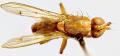
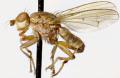
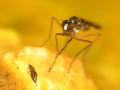
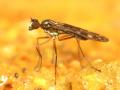
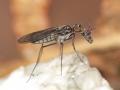
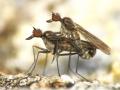
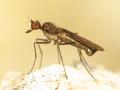
Found in a semi-urban area just off a small wooded drainage area in Maryland, USA. Of the 3 Nearctic species, I think Fiebrigella oophaga Sabrosky can be ruled out because it's supposed to have black palpi. However, I can't tell if this one is F. magnipalpis Becker or F. catalpae Malloch and am hoping for some expert help Thanks in advance Steve      
Edited by Steve Scholnick on 09-10-2022 22:50 |
|
|
|
| von Tschirnhaus |
Posted on 17-04-2020 15:35
|
|
Member Location: Bielefeld, Germany Posts: 454 Joined: 04.11.07 |
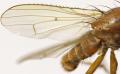
Chloropidae, female: The peculiar structure of the frons speaks for a Lasiambia species, as well the oblique hind crossvein. The extreme tip of the proboscis misses an elongate pair of pseudotracheae, different from most Palaearctic Lasiambia. The male of the type species of Fiebrigella from the Neotropics has highly asymmetric hind claws and an asymmetric end of the hind tarsi (von Tschirnhaus 1992, Decheniana-Beihefte (Bonn) 31: 445-497 [on p. 482-483]). This character has never been recorded from Nearctic Fiebrigella species. First the Nearctic Fiebrigella species must be studied if they have this sexual dimorphisms or if both sexes possess such peculiar hind legs. Polyodaspis and Anacamptoneurum are further closely related genera. Larvae of Lasiambia species, as far as known, are predators of egg masses of grass hoppers (Acrididae).
Edited by von Tschirnhaus on 18-04-2020 13:09 |
 |
|
| Steve Scholnick |
Posted on 17-04-2020 18:05
|
|
Member Location: Maryland, USA Posts: 129 Joined: 25.12.17 |
Dear Dr. von Tschirnhaus, Thanks for the additional information. If I understand your post correctly, this fly is close to but not definitively Fiebrigella so I should change the title of the post to avoid confusing later viewers. Any suggestions you have regarding an appropriate taxonomic level would be appreciated. The taxonomy of this group is certainly too confusing for an amateur like me as it seems to change frequently even within the papers of a single entomologist. Nearctica has Lasiambia Sabrosky 1941 synonymized under Fiebrigella Duda 1921 and Cherian has Fiebrigella synonymized under Anacamptoneurum (Acta zoologica cracoviensia, 55(1): 1-32, (2012)). Malloch's original description of Fiebrigella catalpae (as Botanobia) refers to the frons has being "highly glossy, with numerous slight longitudinal striae". Is this a more general characteristic of Fiebrigella and related genera? Lastly, I've included a photo of the hind tibia below although it's of unknown utility. Thanks again for the help Best wishes Steve  posterior view of hind tibia showing the tibial organ posterior view of hind tibia showing the tibial organ |
|
|
|
| Jan Willem |
Posted on 17-04-2020 21:04
|
 Member Location: Waalwijk, The Netherlands Posts: 2171 Joined: 24.07.04 |
Great pictures!
Jan Willem van Zuijlen |
|
|
|
| Steve Scholnick |
Posted on 17-04-2020 22:39
|
|
Member Location: Maryland, USA Posts: 129 Joined: 25.12.17 |
Thanks :-) Steve |
|
|
|
| von Tschirnhaus |
Posted on 18-04-2020 13:37
|
|
Member Location: Bielefeld, Germany Posts: 454 Joined: 04.11.07 |
The headline is o.k. now, but please Polyodaspis. I have only seen the type specimen of the Neotropic type species of Fiebrigella. In German the frons is repeatedly described as "fett-glänzend" meaning "glossy like fat". The fine striations produce this effect. The whole problem should be postponed as I saw a manuscript which possibly will reject some of the puzzling synonymies. The correct author of Lasiambia is Anonymus, 1937 and not Sabrosky, 1941 or Enderlein, 1936 (published by Evenhuis et al. 2008). Several taxonomic problems more ... Our Canadian expert does not know the Nearctic Fiebrigella species (pers. communication). Try to find a male and check the hind legs if they possess asymmetric claws and asymmetric 4th and 5th tarsal segments. Are those symmetric in your photographed female? |
|
|
|
| Steve Scholnick |
Posted on 18-04-2020 21:20
|
|
Member Location: Maryland, USA Posts: 129 Joined: 25.12.17 |
I fixed the typo in the title and have added a new set of photos of the hind tarsal claws. They look fairly symmetrical to me; one may be slightly thicker and curved differently but they're otherwise pretty much the same. This level of magnification is at the limit of what I can photograph and not end up with visual mush. I'll keep an eye out for a male once the weather here improves. 
Edited by Steve Scholnick on 18-04-2020 21:22 |
|
|
|
| Jump to Forum: |