

Diptera.info :: Identification queries :: Diptera (adults)
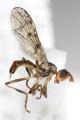
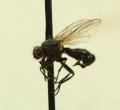
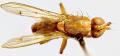
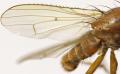
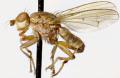
 Dominicana, Tabanid
|
|
| Nikita Vikhrev |
Posted on 25-02-2016 04:24
|
 Member Location: Moscow, Russia Posts: 9577 Joined: 24.05.05 |
Barahona env.
Nikita Vikhrev attached the following image: 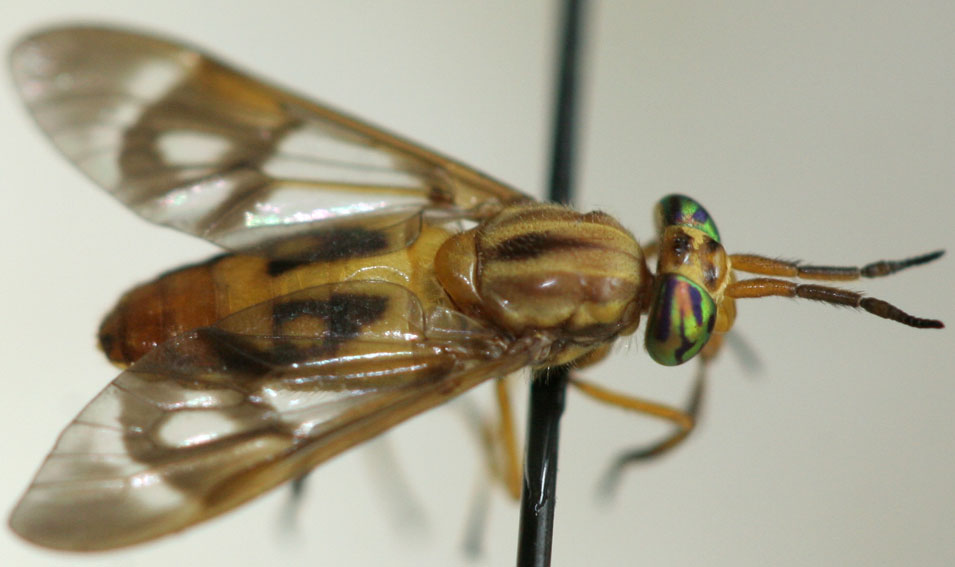 [80.65Kb] Nikita Vikhrev - Zool Museum of Moscow University |
|
|
|
| John Carr |
Posted on 25-02-2016 04:36
|
 Super Administrator Location: Colorado, USA Posts: 10697 Joined: 22.10.10 |
The key by Philip (1955) leads me to Chrysops variegata (De Geer, 1776), and at least one photo on the internet with that name is similar to your fly. |
 |
|
| Nikita Vikhrev |
Posted on 25-02-2016 04:48
|
|
Member Location: Moscow, Russia Posts: 9577 Joined: 24.05.05 |
Chrysops (Chrysops) variegatus. Thank you, John. It should be a common species, I collected a series of 7-8 specimens and was bited several times.
Nikita Vikhrev - Zool Museum of Moscow University |
|
|
|
| John Carr |
Posted on 25-02-2016 04:59
|
|
Super Administrator Location: Colorado, USA Posts: 10697 Joined: 22.10.10 |
Nikita Vikhrev wrote: Chrysops (Chrysops) variegatus. Thank you, John. It should be a common species, I collected a series of 7-8 specimens and was bited several times. Philip either treated the genus as feminine or forgot to make names agree in gender. I learned to correct his North American names without thinking. This is only the second time I have looked at the tropical part of his key. |
|
|
|
| Zeegers |
Posted on 25-02-2016 15:01
|
|
Member Location: Soest, NL Posts: 19380 Joined: 21.07.04 |
I agree. On the matter of spelling: this is correct, but one has to take care. -ops is from the Greek OO-ps (not Latin !) and the gender rules in Greek can be cumbersome. For instance, soma = neutrum ! But in this case, indeed ops is feminine. So variegata it is (or should be). Theo |
|
|
|
| Nikita Vikhrev |
Posted on 25-02-2016 15:07
|
|
Member Location: Moscow, Russia Posts: 9577 Joined: 24.05.05 |
1. Theo and John, thank you! It is a pleasure to get name for the series of exotic Tabanid. 2. After reading John's reply I started to search here: http://www.diptera.org/NomenclatorSearch.php and found only after changing name (see: http://www.diptera.org/NomenclatorDetail.php?Recn=580665 ) Nikita Vikhrev - Zool Museum of Moscow University |
|
|
|
| John Carr |
Posted on 25-02-2016 15:33
|
|
Super Administrator Location: Colorado, USA Posts: 10697 Joined: 22.10.10 |
Theo, do you know if this species is closely related to the North American Chrysops flavidus group? |
|
|
|
| Zeegers |
Posted on 27-02-2016 09:19
|
|
Member Location: Soest, NL Posts: 19380 Joined: 21.07.04 |
I am not aware of any " decent" phylogenetical investigation of Chrysops The grouping commonly used is just for convenience, I guess. For instance in the Palaearctic sejunctus is pretty close to caecutiens, yet in another group due to the fenestrae in the wing pattern. I would not lean too heavily on such features. On the other hand ..... It does not disprove close relationship either. Theo |
|
|
|
| Jump to Forum: |