

Diptera.info :: Identification queries :: Diptera (adults)
 Ephydridae with Lasius ants?
|
|
| Johan M |
Posted on 18-03-2015 07:01
|
|
Member Location: Posts: 19 Joined: 15.03.15 |
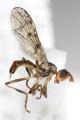
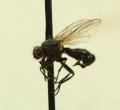
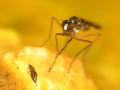
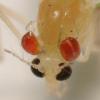
March 12 2015 I found this small fly under a limestone with Lasius-ant on the alvar of Öland in Sweden. The fly came climbing up from a hole in the ant colony. Size about 2 mm. My guess is Milichiidae but I would appreciate some help.  /Johan Myhrer, Sweden Johan M attached the following image: 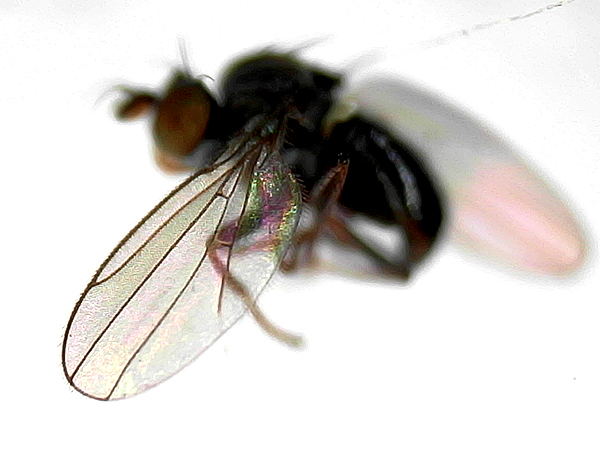 [171.47Kb] Edited by Johan M on 19-03-2015 06:29 |
|
|
|
| Tony Irwin |
Posted on 18-03-2015 09:22
|
 Member Location: Norwich, England Posts: 7353 Joined: 19.11.04 |
This looks like Philygria or Nostima (Ephydridae). Neither genus has any association with ants that I know of.
Tony ---------- Tony Irwin |
|
|
|
| Johan M |
Posted on 19-03-2015 06:12
|
|
Member Location: Posts: 19 Joined: 15.03.15 |
Ok, thank you Tony! I noticed a very similar fly with the same behaviour yesterday. Also that one came climbing up from an ant colony under a limestone. Unfortunately I was not able to catch that one. Any other generas with myrmecophile species? /Johan Myhrer |
|
|
|
| John Carr |
Posted on 19-03-2015 13:14
|
 Super Administrator Location: Colorado, USA Posts: 10697 Joined: 22.10.10 |
The common American species of Philygria has been reared from ant nests. |
 |
|
| Tony Irwin |
Posted on 19-03-2015 18:58
|
|
Member Location: Norwich, England Posts: 7353 Joined: 19.11.04 |
That record has passed me by, John! Any chance of a reference? I understood that most Philygria larvae that have been found were feeding on soil-dwelling blue-green algae. Of course there's no reason why they shouldn't be feeding on blue-green algae in an ants' nest, but it would be good to get some details together.
Tony ---------- Tony Irwin |
|
|
|
| Tony Irwin |
Posted on 19-03-2015 19:27
|
|
Member Location: Norwich, England Posts: 7353 Joined: 19.11.04 |
John - are you thinking of the record in Walter's "The Texas leaf-cutting ant and its control" - it mentions P.fuscicornis (=P.debilis) reared from nest debris at 7 to 10 feet depth. I'm not convinced there's any particular association. Are there any other references?
Tony ---------- Tony Irwin |
|
|
|
| John Carr |
Posted on 19-03-2015 21:59
|
|
Super Administrator Location: Colorado, USA Posts: 10697 Joined: 22.10.10 |
Tony Irwin wrote: John - are you thinking of the record in Walter's "The Texas leaf-cutting ant and its control" - it mentions P.fuscicornis (=P.debilis) reared from nest debris at 7 to 10 feet depth. I'm not convinced there's any particular association. Are there any other references? That's the only one I know of. I haven't studied the subject, I just happened to have seen that record. At least some species of Philygria breed in non-aquatic habitats where ants could be found. The mystery is why a maggot that feeds on photosynthetic bacteria would be found in a dark place. Maybe ants stock cyanobacteria, at least incidentally. Or maybe ants stock fly pupae, which hatch before they are eaten. Edited by John Carr on 19-03-2015 22:08 |
|
|
|
| Tony Irwin |
Posted on 20-03-2015 22:14
|
|
Member Location: Norwich, England Posts: 7353 Joined: 19.11.04 |
I like your final suggestion, John - that would make sense, but I seem to recall that Atta feed on the fungi they grow, rather than on prey items - unless the Philygria pupae have just been "tidied up" from upper regions of the nest? Most Philygria are found in drier habitats, away from water, but we do need more observations. Johan - did you record the species of ant with which your Philygria was associated? Tony ---------- Tony Irwin |
|
|
|
| Johan M |
Posted on 07-07-2015 08:51
|
|
Member Location: Posts: 19 Joined: 15.03.15 |
I'm pretty sure it was Lasius flavus since I was looking for the myrmecophile beetle Claviger testaceus. Need to look at pictures from that day to be sure though...
Johan Myhrer, Sweden |
|
|
|
| Jump to Forum: |