

Diptera.info :: Identification queries :: Diptera (adults)
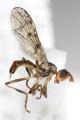
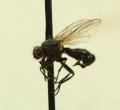
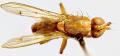
 Cylindromyia brassicaria (NW Spain)
|
|
| Belen |
Posted on 03-10-2012 16:20
|
|
Member Location: Galicia (NW Spain) Posts: 177 Joined: 27.05.07 |
Today in an area with wet meadows, orchards and deciduous forest (chestnuts, oaks, laurels ...). The area is located in northwest Spain, near the coast, temperate climate. 3 oct., 2012      Thanks for any help! Edited by Belen on 07-10-2012 17:32 |
|
|
|
| Piluca_Alvarez |
Posted on 03-10-2012 17:51
|
 Member Location: Madrid, Spain Posts: 2431 Joined: 06.11.10 |
Belen, can you tell me how on earth did you manage to get 6 shots of a feeding Cylindromyia in focus??? Do you have it tamed or what???    Seriously now, it enterely looks one of the auriceps group. I would say it seems to be C. auriceps itself. At least, everything seems to fit But, please, please, please, wait for the experts I only hope that they don't make my face go deep purple  make me hide underneath a rock and never come out again make me hide underneath a rock and never come out again
Edited by Piluca_Alvarez on 03-10-2012 17:53 |
|
|
|
| Zeegers |
Posted on 03-10-2012 18:41
|
|
Member Location: Soest, NL Posts: 19363 Joined: 21.07.04 |
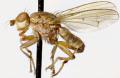
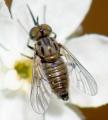
I thinkis is C. brassicaria. If you have a close look at pic 4, you can see basal scutellar bristles present. So it can't be auriceps. Antenna is relatively short but not marginal setae on ventral site of tergites (thank you very much for so many angles !), so no brevicornis.Epaullette is black so no pilipes. And it simply looks like brassicaria (colouration of red, no discal setae). Theo |
|
|
|
| Zeegers |
Posted on 03-10-2012 18:43
|
|
Member Location: Soest, NL Posts: 19363 Joined: 21.07.04 |
Hi Piluca My professor teached me 'It is not a bad thing to ask a dum question. Why not ? Because that is how you learn fast !' Then he paused for at least 10 seconds, to continue 'But do feel free to ask smart questions as well ! |
|
|
|
| Piluca_Alvarez |
Posted on 03-10-2012 19:46
|
|
Member Location: Madrid, Spain Posts: 2431 Joined: 06.11.10 |
Dear Theo, the saddest part of all this is that I couldn't see those basal scutellar bristles on picture 4, I paid attention mainly at picture 5 where I could see the scutellum clearer and only could see the pre-apical bristles and the very faint apical ones And then, when I pay even more attention after your considerantion I see that I considered as discals something that might be closer to marginals on T1+2. They just didn't look like marginals to me. Sure you can understand now how I ruled out brassicaria on the first place  And why on earth it had those two narrow lines in the middle of the presutural throrax?? I never use that as an ID tip, but they are always present in the C. auriceps I have checked.This is why Cylindromyia are so difficult to ID by pictures But they are good fun.I wouldn't have dared to say anything if you experts wouldn't be around to clear any mess |
|
|
|
| Zeegers |
Posted on 03-10-2012 20:10
|
|
Member Location: Soest, NL Posts: 19363 Joined: 21.07.04 |
But you agree they are there, those basal scutellars ? Theo |
|
|
|
| Piluca_Alvarez |
Posted on 03-10-2012 21:05
|
|
Member Location: Madrid, Spain Posts: 2431 Joined: 06.11.10 |
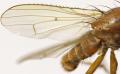
It is not exactly that I see them, I think they are those that I took for long pre-scutellar bristles. They totally deceived me, as I cannot see them to start on the basal margin of the scutellum although there are bristles there. Honestly, too difficult to see for me But really the presence or absence of the pv bristles on hind tibia would be the best to separate both groups. But I have to leave that enterely to you. I cannot see clearly that in those pictures. Perhaps the best would be that Belen post a cut of the scutellum of pic 4 and 5 and a cut of the hind tibia of picture 2 and 3. If I can see more detail, I might see it once and for all.And Theo, please, I don't doubt it is brassicaria. I wouldn't ever dare. It is just that I want to see it, so that I never make this mistake again. I truely want to learn |
|
|
|
| Belen |
Posted on 04-10-2012 19:07
|
|
Member Location: Galicia (NW Spain) Posts: 177 Joined: 27.05.07 |
Many thanks to both of them, really I'm learning a lot about Cylindromyia thanks to your conversation. Pilu, I think these pictures can help   |
|
|
|
| Jump to Forum: |