


Diptera.info :: Identification queries :: Diptera (adults)
 R5 cell question
|
|
| Graeme Cocks |
Posted on 09-05-2012 03:25
|
 Member Location: Townsville, Australia Posts: 3083 Joined: 09.09.08 |
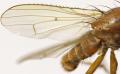
I am trying to work out what the R5 cell is, as refered to by ChrisR as being a good indicator of Sarcophagidae. If it is the cell I think it is, it looks much the same in other calyptarate families, in Australian flies anyway. I've drawn a line to what I think is the R5 cell on this picture of a wing from a Sarcophagid fly. Graeme Cocks attached the following image: 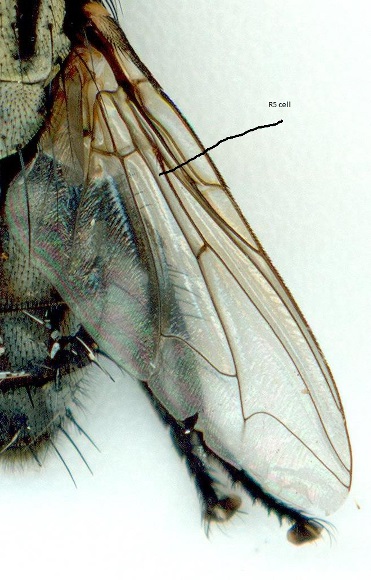 [88.05Kb] |
 |
|
| John Carr |
Posted on 09-05-2012 03:34
|
 Super Administrator Location: Colorado, USA Posts: 10662 Joined: 22.10.10 |
The line points to the basal r cell. R5 is the next distal cell, on the opposite side of r-m. |
|
|
|
| Graeme Cocks |
Posted on 09-05-2012 03:45
|
|
Member Location: Townsville, Australia Posts: 3083 Joined: 09.09.08 |
Thanks John, I now know which cell to compare. It looks much the same in Tachinidae though. |
|
|
|
| Graeme Cocks |
Posted on 09-05-2012 03:53
|
|
Member Location: Townsville, Australia Posts: 3083 Joined: 09.09.08 |
John, as an afterthought. If a tachinid has an elongate R5 cell, it will not have the short stub vein at the bend in M as Sarcophagids do. Cheers, Graeme |
|
|
|
| ChrisR |
Posted on 09-05-2012 08:44
|
 Super Administrator Location: Reading, England Posts: 7706 Joined: 12.07.04 |
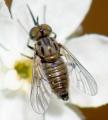
Spotting sarcophagids is really all about noting a combination of features. The elongate R5 (note how as it approaches the wing-tip it narrows strongly due to the bit of m after the bend being very concave) in combination with reddish eyes and 3 strong, dark longitudinal vitae ... and often a plumose arista, with a checker-board pattern of dusting on the abdomen.  This looks like a sarcophagid to me I'm not sure whether the appendix on m would be much of a guide ... tachinids often don't have it but a few do. Edited by ChrisR on 09-05-2012 08:46 Manager of the UK Species Inventory in the Angela Marmont Centre for UK Biodiversity at the Natural History Museum, London. |
|
|
|
| Graeme Cocks |
Posted on 09-05-2012 09:07
|
|
Member Location: Townsville, Australia Posts: 3083 Joined: 09.09.08 |
Thanks Chris for your comments. I was using the key on CSIRO's site for my comments re the appendix of m as an indication for Sarcophagidae. But as you point out this feature can also occur in Tachinidae. I note that spotting sarcophagids is about recognizing a combination of features. Cheers, Graeme |
|
|
|
| Jump to Forum: |