


Diptera.info :: Identification queries :: Diptera (adults)
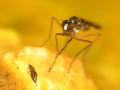
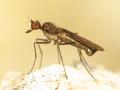
 Chironomus sp, female, UK
|
|
| Benus |
Posted on 28-04-2012 16:41
|
|
Member Location: London, UK Posts: 26 Joined: 11.01.12 |
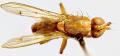
Hello dipterists! I've found this in a web in my garden in London just some day ago. Some tip?   
Edited by Benus on 30-04-2012 15:35 |
|
|
|
| Paul Beuk |
Posted on 28-04-2012 18:07
|
 Super Administrator Location: Netherlands Posts: 19403 Joined: 11.05.04 |
Chironomidae. Perhaps a female Chironomus?
Paul - - - - Paul Beuk on https://diptera.info |
 |
|
| Benus |
Posted on 28-04-2012 19:20
|
|
Member Location: London, UK Posts: 26 Joined: 11.01.12 |
Thanks for the help Paul, I've just modified the title of the tread. |
|
|
|
| John Carr |
Posted on 29-04-2012 02:19
|
 Super Administrator Location: Colorado, USA Posts: 10662 Joined: 22.10.10 |
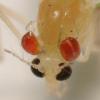
It could be Chironomus. A shot of the head and pronotum taken from a bit forward of directly above is helpful in this group. Chironomus has a shallow notch in the pronotum and, usually, distinct "frontal tubercles" above and between the bases of the antennae. These shots aren't quite close enough for me to see. If the lines are 1 mm apart, making wing length 7 mm, there are very few species so large. |
|
|
|
| Benus |
Posted on 30-04-2012 01:17
|
|
Member Location: London, UK Posts: 26 Joined: 11.01.12 |
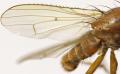
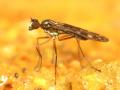
Hello John! Thanks for replying, the following img are the best that I can get from the photos that I took. About the dimensions, the graph pad that I've used is in millimeters, calculating the angle the wing is 8mm! #1 Benus attached the following image: 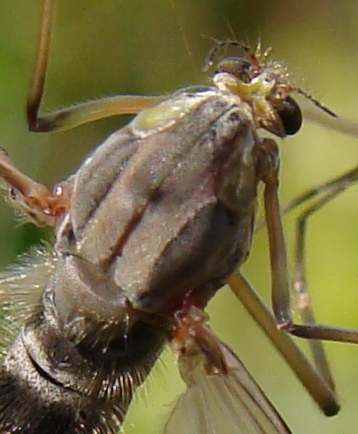 [81.34Kb] Edited by Benus on 30-04-2012 01:20 |
|
|
|
| Benus |
Posted on 30-04-2012 01:18
|
|
Member Location: London, UK Posts: 26 Joined: 11.01.12 |
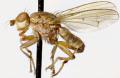
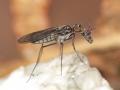
#2
Benus attached the following image: 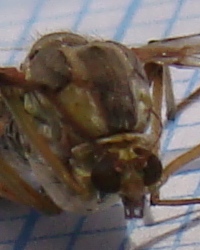 [32.91Kb] |
|
|
|
| Benus |
Posted on 30-04-2012 01:21
|
|
Member Location: London, UK Posts: 26 Joined: 11.01.12 |
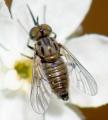
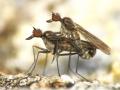
#3
Benus attached the following image: 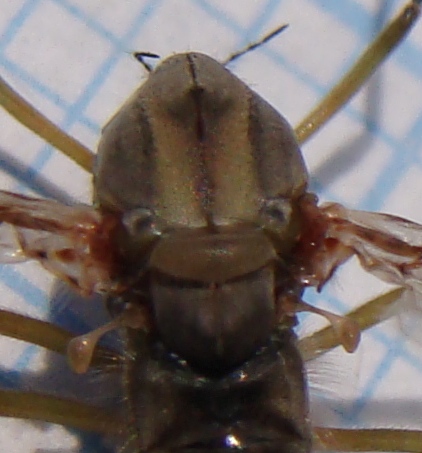 [83.4Kb] |
|
|
|
| John Carr |
Posted on 30-04-2012 01:54
|
|
Super Administrator Location: Colorado, USA Posts: 10662 Joined: 22.10.10 |
Female Chironomus. Might be recognizable to a European. The key I have is for males. Several species have similar color (vs. green or black). Chironomus plumosus is that large, but perhaps paler. The modern convention for Chironomidae and Ceratopogonidae is to measure wing length from basal crossveins to tip. |
|
|
|
| Benus |
Posted on 30-04-2012 02:43
|
|
Member Location: London, UK Posts: 26 Joined: 11.01.12 |
Just checked on Fauna Europaea http://www.faunae..., there are 31 species of the genus Chironomus presents in UK! Unfortunately there is no instrument to skim the list using dimension or color. I wikipedia i've found: "Adults of the sibling species C. muratensis and C. nudiventris cannot be distinguished from C. plumosus based on morphological characters." Do you think I can narrow the guess to this three species? Thank you for the info about wing lenght as well! |
|
|
|
| John Carr |
Posted on 30-04-2012 03:13
|
|
Super Administrator Location: Colorado, USA Posts: 10662 Joined: 22.10.10 |
There are a few more than 31 species in the key by Langton and Pinder, at least three undescribed or popular misapplications of valid names. Half of them can be ruled out quickly.. I don't know enough to narrow ID to a species group. Females of related species are often indistinguishable, either due to similarity or due to lack of effort to find distinguishing characters. |
|
|
|
| Benus |
Posted on 30-04-2012 15:21
|
|
Member Location: London, UK Posts: 26 Joined: 11.01.12 |
Thank you again for your help John. In the next few days I'll sieve some deposit in the trays of my garden, let's see if I find the related larvae! I'll post the result in the other section of the forum. Bye! |
|
|
|
| Jump to Forum: |