


Diptera.info :: Identification queries :: Diptera (adults)
 Muscidae
|
|
| Stephen R |
Posted on 27-05-2010 11:25
|
 Member Location: Clitheroe Lancashire UK Posts: 2396 Joined: 12.06.09 |
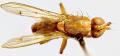
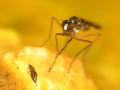
7mm Clitheroe England 14 May 2010. I can't key this out to anything sensible. Can you help? Stephen R attached the following image: 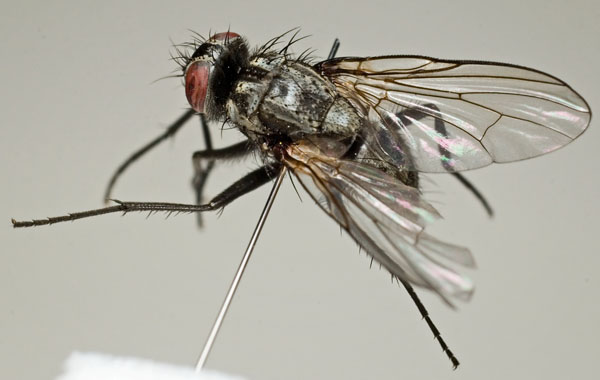 [67.83Kb] |
|
|
|
| Stephen R |
Posted on 27-05-2010 11:26
|
|
Member Location: Clitheroe Lancashire UK Posts: 2396 Joined: 12.06.09 |
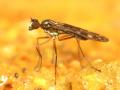
2
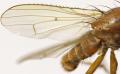
Stephen R attached the following image: 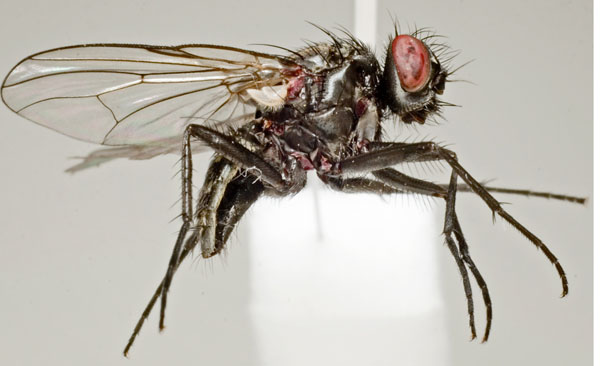 [71.63Kb] |
|
|
|
| Stephen R |
Posted on 27-05-2010 11:27
|
|
Member Location: Clitheroe Lancashire UK Posts: 2396 Joined: 12.06.09 |
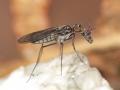
3
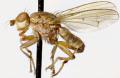
Stephen R attached the following image: 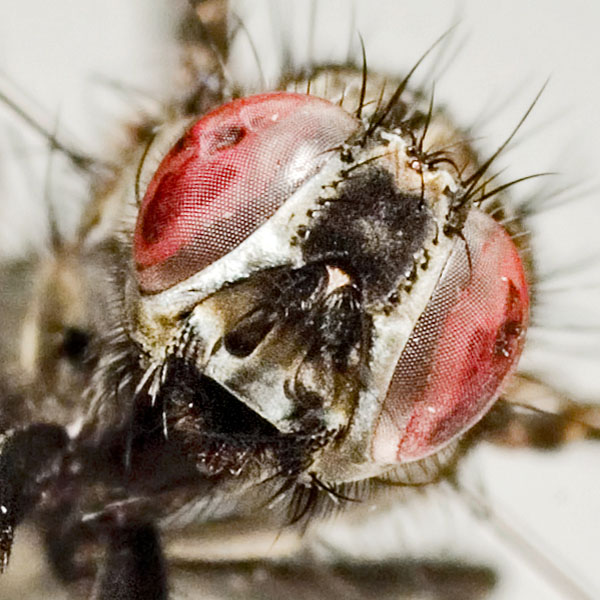 [129.34Kb] |
|
|
|
| Stephane Lebrun |
Posted on 27-05-2010 12:57
|
 Member Location: Le Havre, France Posts: 8248 Joined: 03.03.07 |
Please, to begin, can you check for presence of setulae on posterior/inner edge of hind coxa (that would suggest Thricops). It is an Azeliini (strong proclinate orbitale).
Stephane. |
|
|
|
| Stephen R |
Posted on 27-05-2010 13:41
|
|
Member Location: Clitheroe Lancashire UK Posts: 2396 Joined: 12.06.09 |
As far as I can see there are no hairs or bristles there. Plenty of strong bristles on the side facing you in a dorsal view of the fly, but as you look further round behind the coxa the surface is smooth and rounded. I'll try to get a useful photo, but it's difficult to get in there - the coxae are short and close together. Without dismembering the specimen I'm not sure what happens where they touch. |
|
|
|
| Stephen R |
Posted on 27-05-2010 14:49
|
|
Member Location: Clitheroe Lancashire UK Posts: 2396 Joined: 12.06.09 |
Here is a lateral view of the hind coxa
Stephen R attached the following image: 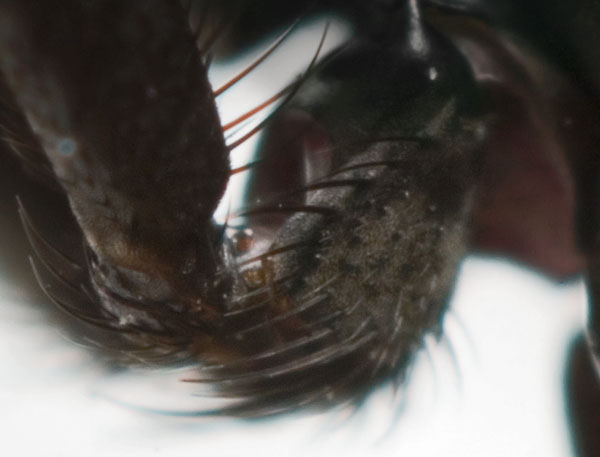 [67.1Kb] |
|
|
|
| Stephen R |
Posted on 27-05-2010 14:52
|
|
Member Location: Clitheroe Lancashire UK Posts: 2396 Joined: 12.06.09 |
and this is the hind coxae taken from the front of the fly. I may be confused about which is the posterior inner margin 
Stephen R attached the following image: 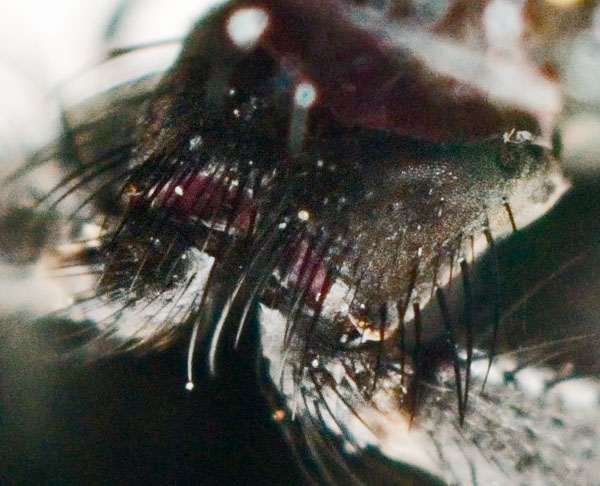 [114.77Kb] Edited by Stephen R on 27-05-2010 14:54 |
|
|
|
| Stephane Lebrun |
Posted on 27-05-2010 16:10
|
|
Member Location: Le Havre, France Posts: 8248 Joined: 03.03.07 |
OK, we have ruled out Thricops (hind margin of cx3 bare). It is either Hydrotaea or Potamia. I think the second, because the genae are rather high, and the subcosta is bent in the middle. So you have to check these points to confirm my guess : arista is plumose ? And katepisternum with 1:2 setae (1 in front, 2 behind, the lower posterior shorter than the upper, but conspicuous). Tell me... For your information, I attach your picture, annoted so that you can see where the setae are to be found on the hind coxa for genera Thricops (and Azelia). Stephane Lebrun attached the following image: 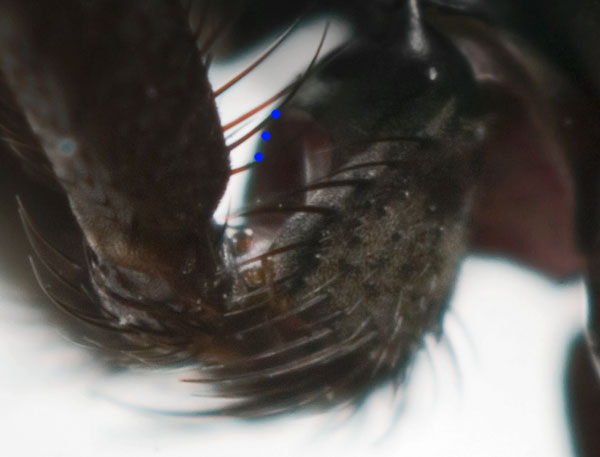 [47.61Kb] Stephane. |
|
|
|
| Stephen R |
Posted on 27-05-2010 18:17
|
|
Member Location: Clitheroe Lancashire UK Posts: 2396 Joined: 12.06.09 |
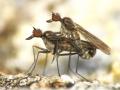
Many thanks Stephane. Actually Potamia was where I kept ending up in the key, but I misread the distribution tables and thought we didn't have it in Britain P. littoralis fits OK. The arista is distinctly plumose but the hairs are not very long, and the katepisternum is exactly as you describe. P. littoralis fits OK. The arista is distinctly plumose but the hairs are not very long, and the katepisternum is exactly as you describe.
Edited by Stephen R on 27-05-2010 18:22 |
|
|
|
| Jump to Forum: |