

Diptera.info :: Identification queries :: Diptera (adults)
 Phebellia nigripalpis?
|
|
| ChrisR |
Posted on 05-09-2009 17:31
|
 Super Administrator Location: Reading, England Posts: 7706 Joined: 12.07.04 |
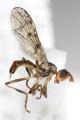
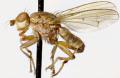
This was caught in a malaise trap in July/August 2001 in the forests of Bavaria, Germany. I hardly see Phebellia spp. here so could someone say whether it looks about right? It is about 7-8mm long.
ChrisR attached the following image: 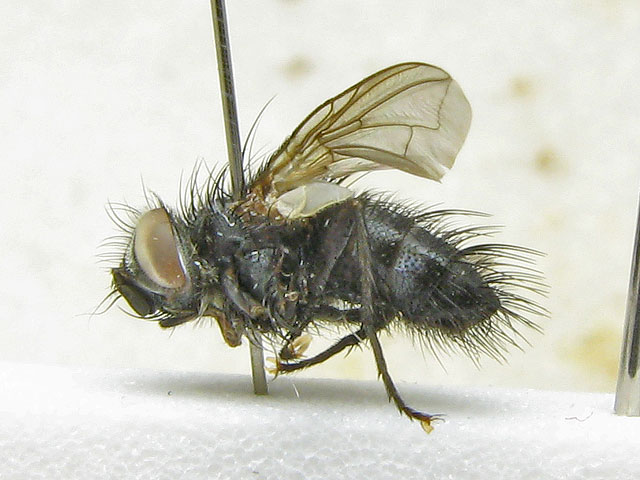 [60.86Kb] Edited by ChrisR on 05-09-2009 17:46 Manager of the UK Species Inventory in the Angela Marmont Centre for UK Biodiversity at the Natural History Museum, London. |
 |
|
| ChrisR |
Posted on 05-09-2009 17:32
|
|
Super Administrator Location: Reading, England Posts: 7706 Joined: 12.07.04 |
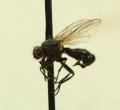
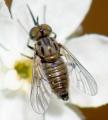
another...
ChrisR attached the following image: 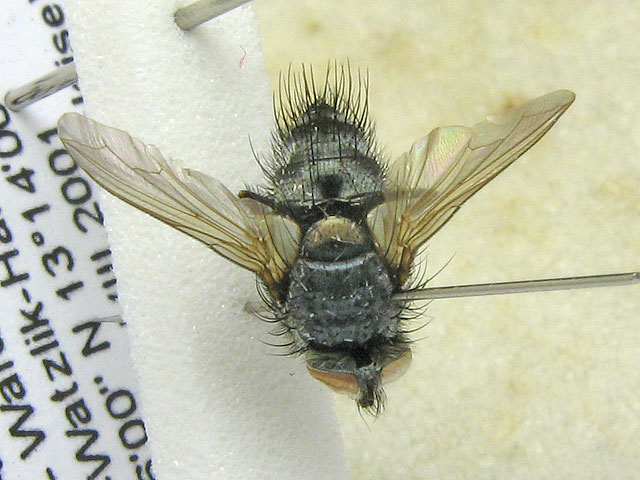 [72.81Kb] Manager of the UK Species Inventory in the Angela Marmont Centre for UK Biodiversity at the Natural History Museum, London. |
|
|
|
| ChrisR |
Posted on 05-09-2009 17:32
|
|
Super Administrator Location: Reading, England Posts: 7706 Joined: 12.07.04 |
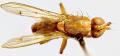
another...
ChrisR attached the following image: 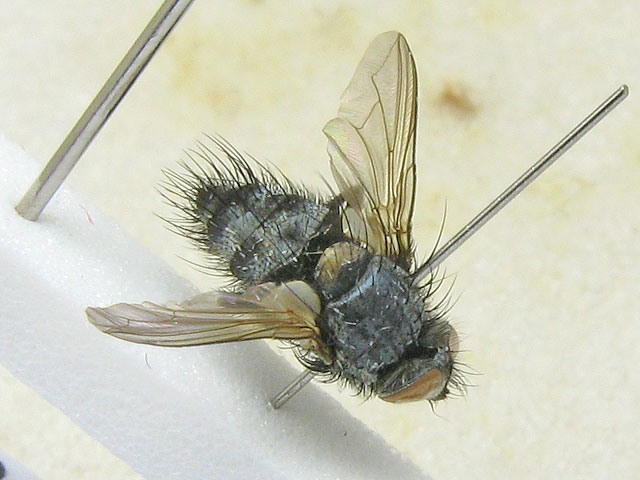 [56.53Kb] Manager of the UK Species Inventory in the Angela Marmont Centre for UK Biodiversity at the Natural History Museum, London. |
|
|
|
| Jaakko |
Posted on 06-09-2009 13:00
|
 Member Location: Joensuu, Finland Posts: 479 Joined: 04.08.08 |
Hi, Looks like a Phebellia. Difficult genus, although nigripalpis should be easy. Jaakko |
|
|
|
| ChrisR |
Posted on 06-09-2009 13:37
|
|
Super Administrator Location: Reading, England Posts: 7706 Joined: 12.07.04 |
Thanks for the confirmation - I have 2 males and a female - all of which have very dark palps, 3 dark vittae presuturally and no protruding mouth edge.  The pale orange/yellow scutellum is also really striking on all specimens. The pale orange/yellow scutellum is also really striking on all specimens.
Edited by ChrisR on 06-09-2009 13:41 Manager of the UK Species Inventory in the Angela Marmont Centre for UK Biodiversity at the Natural History Museum, London. |
|
|
|
| Jaakko |
Posted on 06-09-2009 18:58
|
|
Member Location: Joensuu, Finland Posts: 479 Joined: 04.08.08 |
Btw, is it really that small that you need a microneedle or what's your construct about? Phebellia are rather big here. P. glauca is by far the most common here then come stulta and nigripalpis. These guys visit flowers, especially Umbelliferaceae, so they are easy to spot. The species glauca-group vary and are pain to identify, especially when there is always many glauca per one of any other. Finding new stuff is always exciting! I ID'd today my first self-collected Elodia ambulatoria and two Angioneura acerba. |
|
|
|
| ChrisR |
Posted on 06-09-2009 19:06
|
|
Super Administrator Location: Reading, England Posts: 7706 Joined: 12.07.04 |
Wow - congratulations  I tend to side-pin and stage everything - it shows them off nicely and it's very easy to manage large samples. My specimens of P.nigripalpis are 8-9mm long - not small but not "big", as such. But they were in alcohol a long time so they shrank a little on drying 
Manager of the UK Species Inventory in the Angela Marmont Centre for UK Biodiversity at the Natural History Museum, London. |
|
|
|
| Zeegers |
Posted on 08-09-2009 20:21
|
|
Member Location: Soest, NL Posts: 19363 Joined: 21.07.04 |
Yes, looks like Ph. nigripalpis. Can't tell whether the apical scutellars are suberect, I take your word for it. This species - I place it currently in a separate genus Prooppia as do the Canadians - might be taken for a Phryxe in large numbers, but the vertex is much smaller, syntergite 1-2 has usually 4 central marginal bristles, etc. |
|
|
|
| ChrisR |
Posted on 09-09-2009 09:56
|
|
Super Administrator Location: Reading, England Posts: 7706 Joined: 12.07.04 |
Thanks Theo - it did remind me of Phryxe at first glance but in keying it definitely went a different path
Manager of the UK Species Inventory in the Angela Marmont Centre for UK Biodiversity at the Natural History Museum, London. |
|
|
|
| Jump to Forum: |