

Diptera.info :: Identification queries :: Diptera (adults)
 Protocalliphora falcozi (male) ? -> likely yes
|
|
| Axel D |
Posted on 18-03-2023 17:54
|
 Member Location: France Posts: 223 Joined: 16.10.15 |
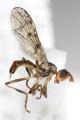
Hello I caught an unknown Calliphorid fly 2 days ago on a pole at the edge of a forest. Stem vein is hairy and abdomen is shiny blue. So it would be part of the genera Protocalliphora, Protophormia, Phormia and Trypocalliphora. AC setae are strong so it is not Protophormia. Calypters don't seem to have the good shape for Phormia and basicostae seem to be black. Trypocalliphora braueri (the single species of the genus which is présent in France) should have at least 3 notopleural setae, very narrow front and calypters of a différent colour. Therefore I came to the conclusion that my fly is a Protocalliphora. I have already seen very blue males of Protocalliphora which should be P. azurea, but this fly is quite different. 3 species are known in French mainland : P. azurea, P. falcozi and P. rognesi. I did not find much documentation to identify European species but by cross-checking different sources I think this one shoud be P. falcozi. I extracted the genitalia and it's very close of those shown for this species on this page. Moreover, male genitalia of P. azurea shown in this article have surstyli with a quite different shape. I didn't succeed in finding pictures of P. rognesi genitalia, but in this key of American species, P. rognesi is part of the group "Male surstylus digitate (as in Fig. 56), not appreciably curved" which is also quite different from my fly. Therefore, do you agree with my proposition ? This species doesn't seem to ba common ? Found in Bois de Vincennes, Paris, Île-de-France, France On the 16th of March, 2022 Body length : around 10 mm Picture #1 : dorsal view Axel D attached the following image: 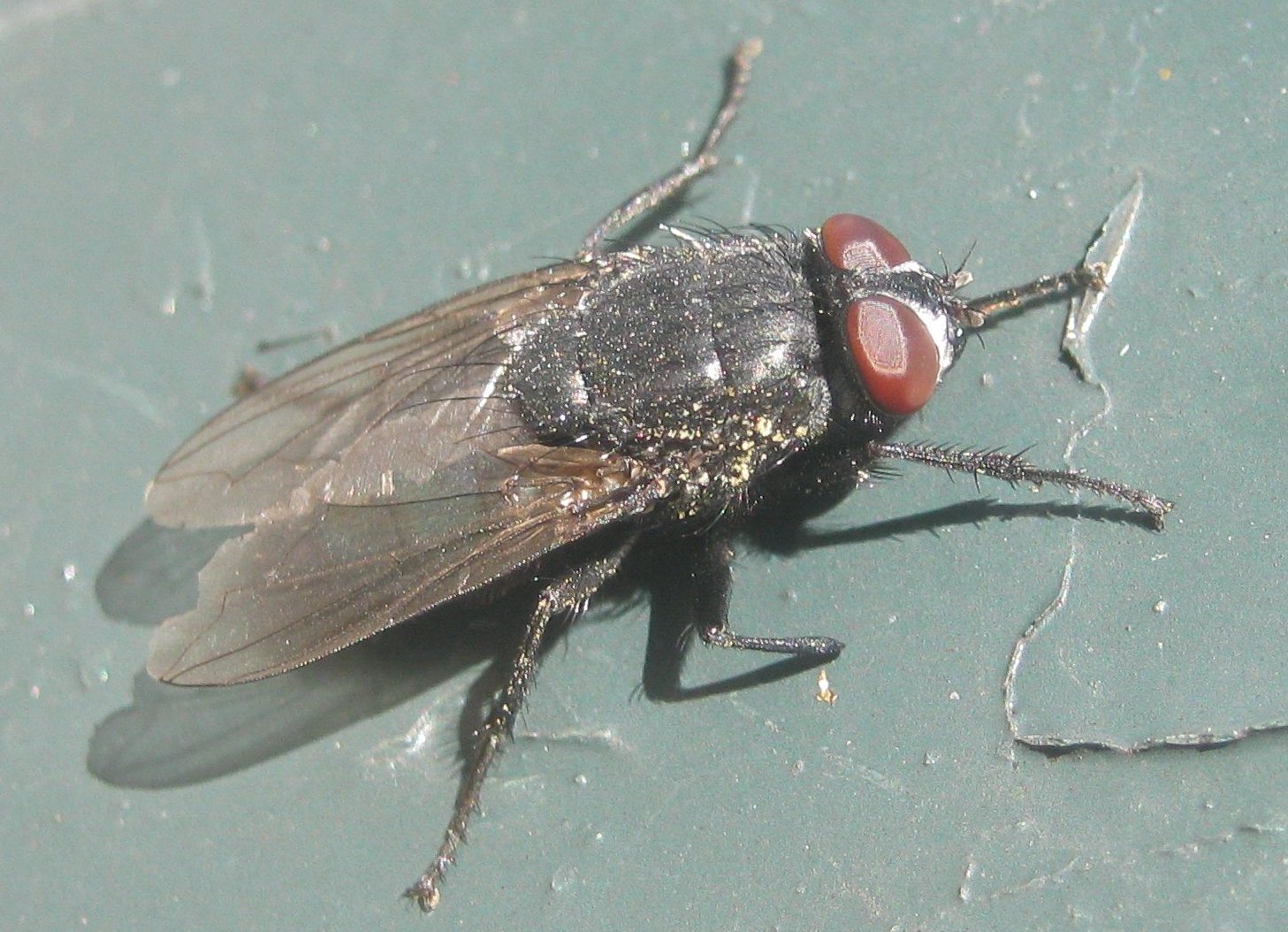 [281.98Kb] Edited by Axel D on 04-04-2023 12:55 |
|
|
|
| Axel D |
Posted on 18-03-2023 17:55
|
|
Member Location: France Posts: 223 Joined: 16.10.15 |
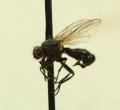
Picture #2 : side view
Axel D attached the following image: 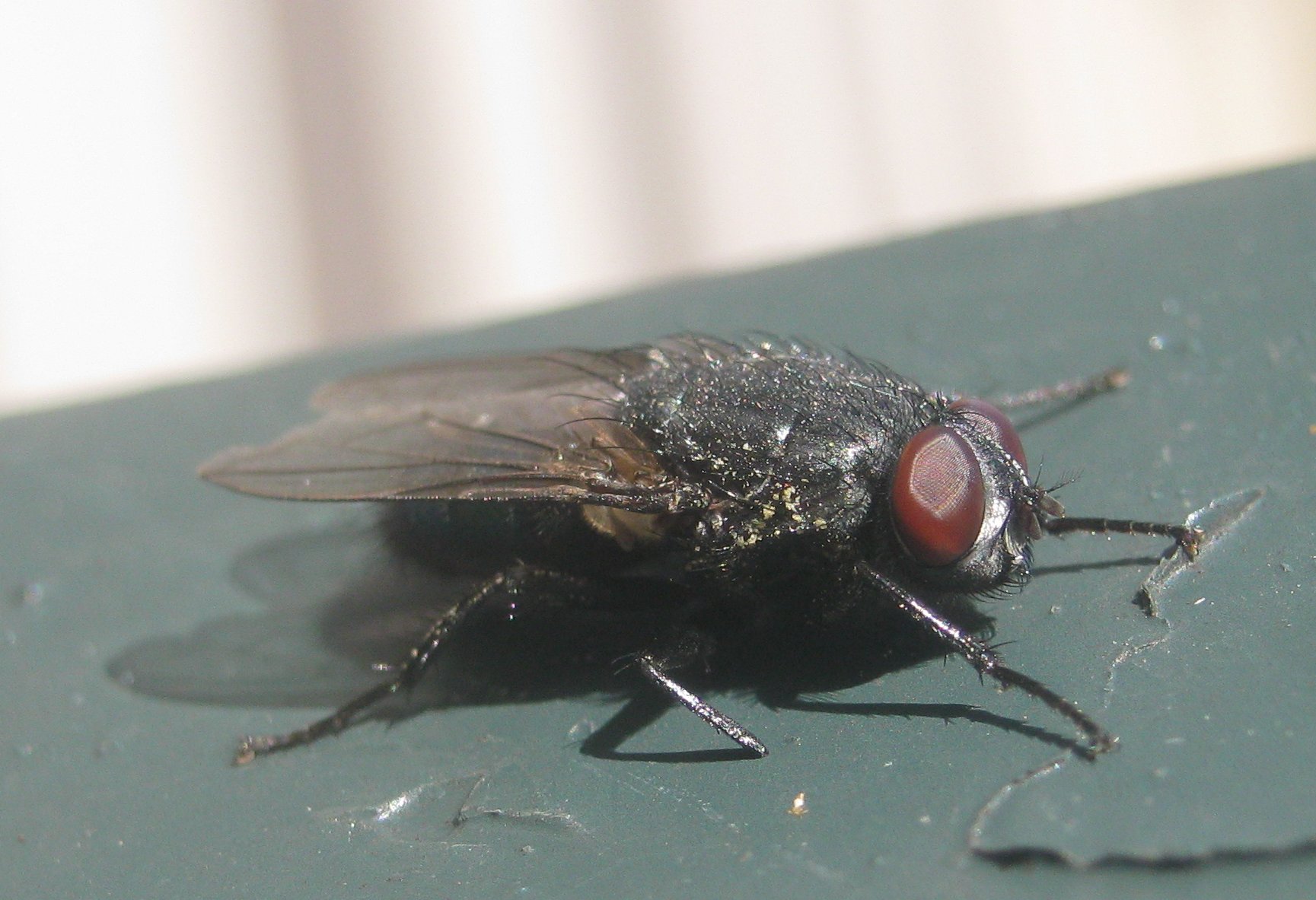 [263.29Kb] |
|
|
|
| Axel D |
Posted on 18-03-2023 17:56
|
|
Member Location: France Posts: 223 Joined: 16.10.15 |
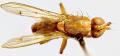
Picture #3 : fly in hand showing blue abdomen, shape of the calypters, AC setae...
Axel D attached the following image: 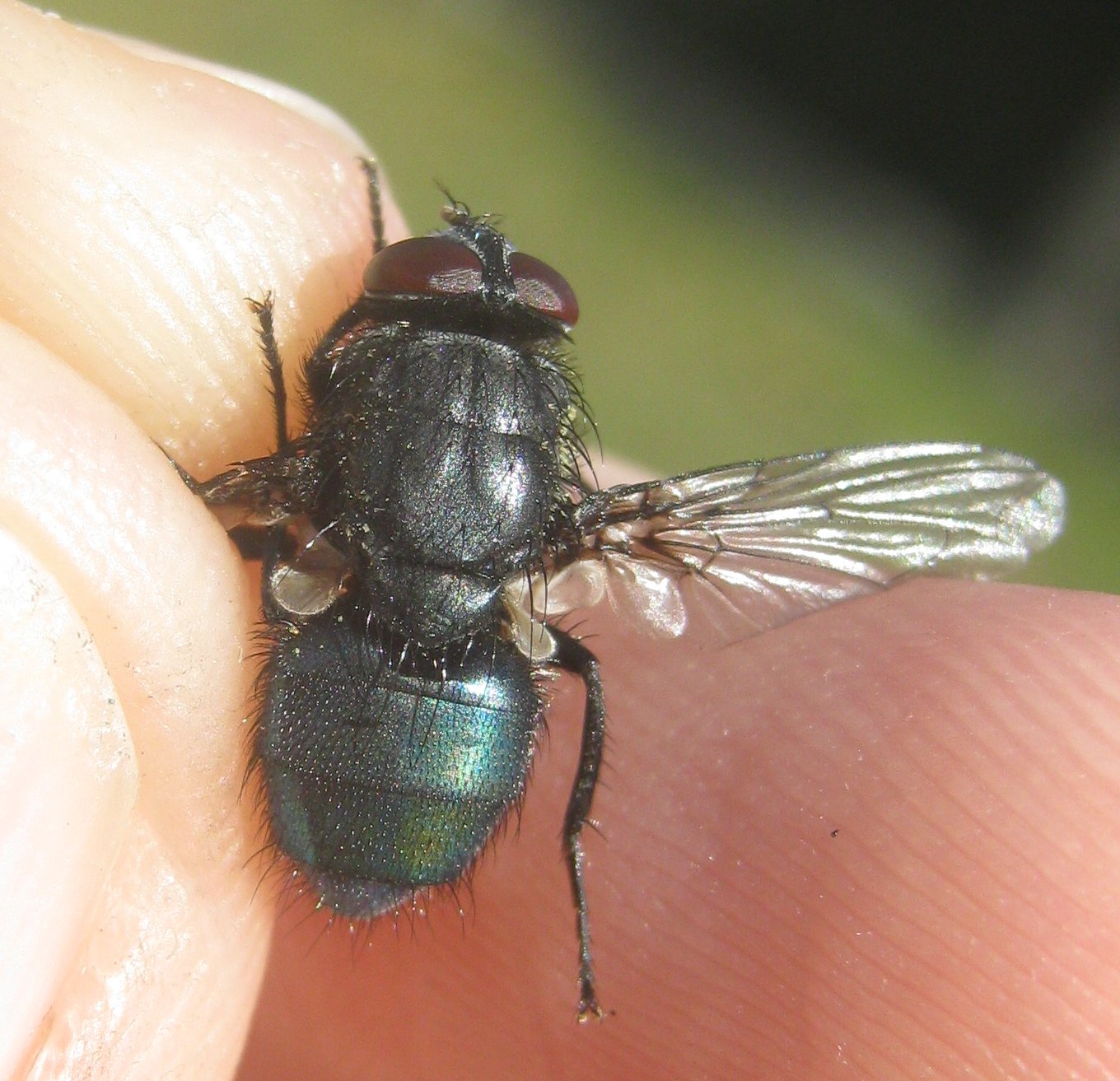 [288.86Kb] |
|
|
|
| Axel D |
Posted on 18-03-2023 17:57
|
|
Member Location: France Posts: 223 Joined: 16.10.15 |
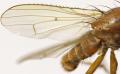
Picture #4 : hairy stem-vein
Axel D attached the following image: 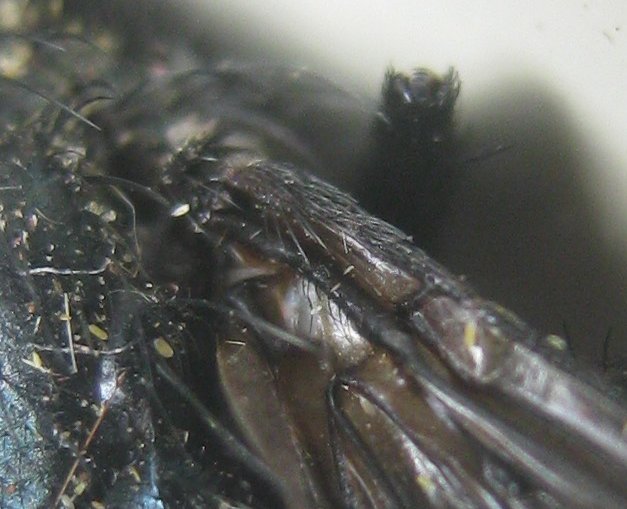 [68.5Kb] |
|
|
|
| Axel D |
Posted on 18-03-2023 17:58
|
|
Member Location: France Posts: 223 Joined: 16.10.15 |
Picture #5 : notopleural setae
Axel D attached the following image: 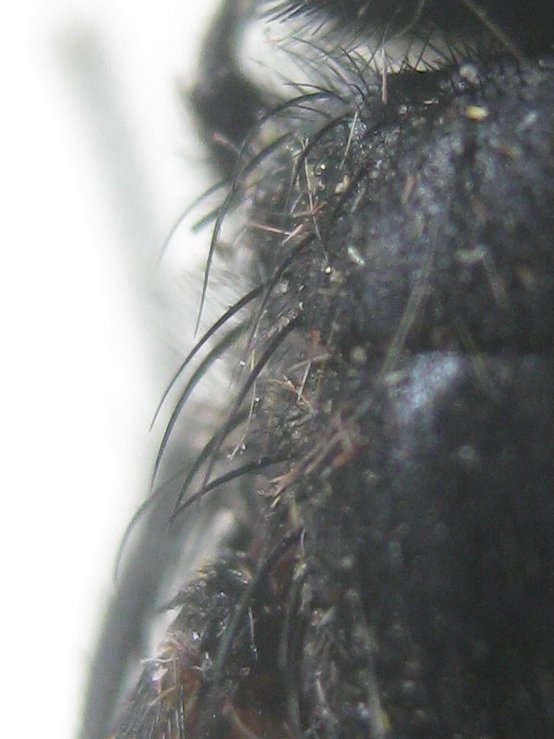 [66.79Kb] |
|
|
|
| Axel D |
Posted on 18-03-2023 17:58
|
|
Member Location: France Posts: 223 Joined: 16.10.15 |
Picture #6 : genitalia
Axel D attached the following image: 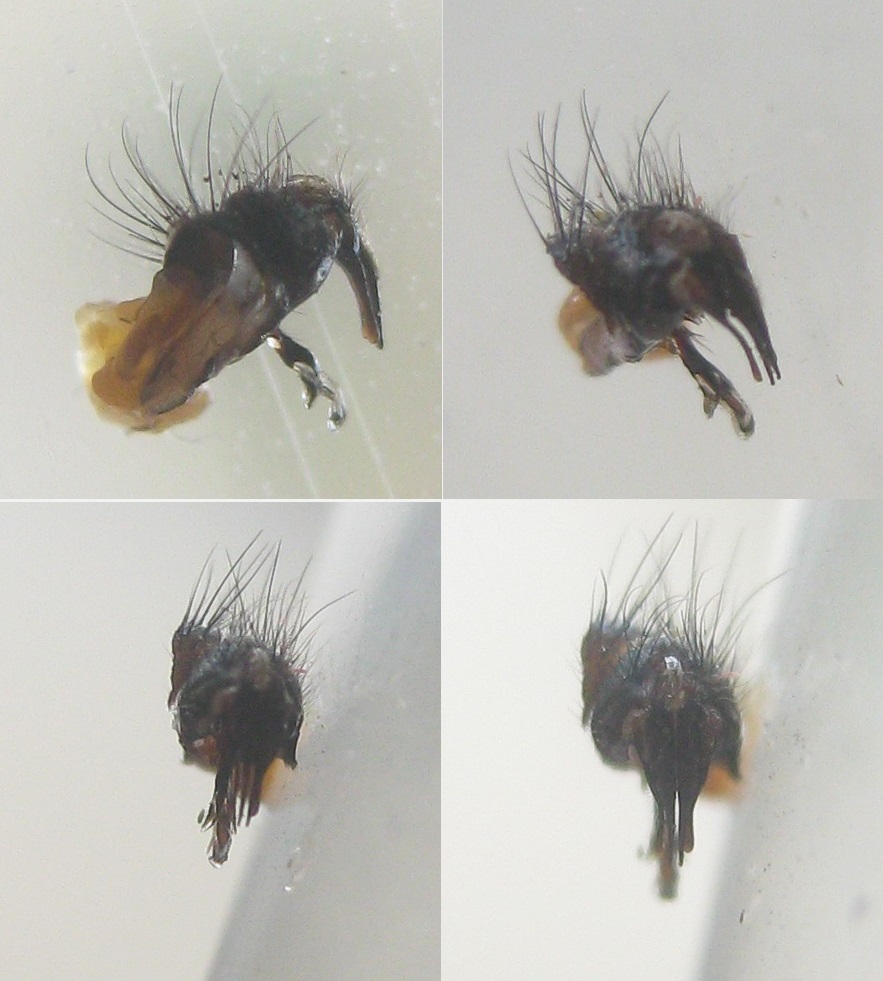 [184.43Kb] |
|
|
|
| eklans |
Posted on 19-03-2023 11:42
|
|
Member Location: Franconia, Germany Posts: 4614 Joined: 11.11.18 |
Hello, I've found your 3 Protocalliphora in the highly recommendable and affordable book "Olga Sivell: Blow flies, 2021". If my eyes don't deceive me, there are 2 av bristles at fore tibia. P. falcozi has only one - another image with a different angle could help to be sure. Genitalia look ok for P. falcozi: "cerci long and narrow, narrowing distally; surstyli narrow, shorter than cerci, slightly widened distally" Greetings, Eric |
|
|
|
| Axel D |
Posted on 19-03-2023 15:21
|
|
Member Location: France Posts: 223 Joined: 16.10.15 |
Thank you for your answer. In fact, I'm not sure there is any av bristle on fore tibia. See the next picture. In the case where it doesn't match P. falcozi, could it be a species which is unknown in France ? Picture #7 : fore legs Axel D attached the following image: 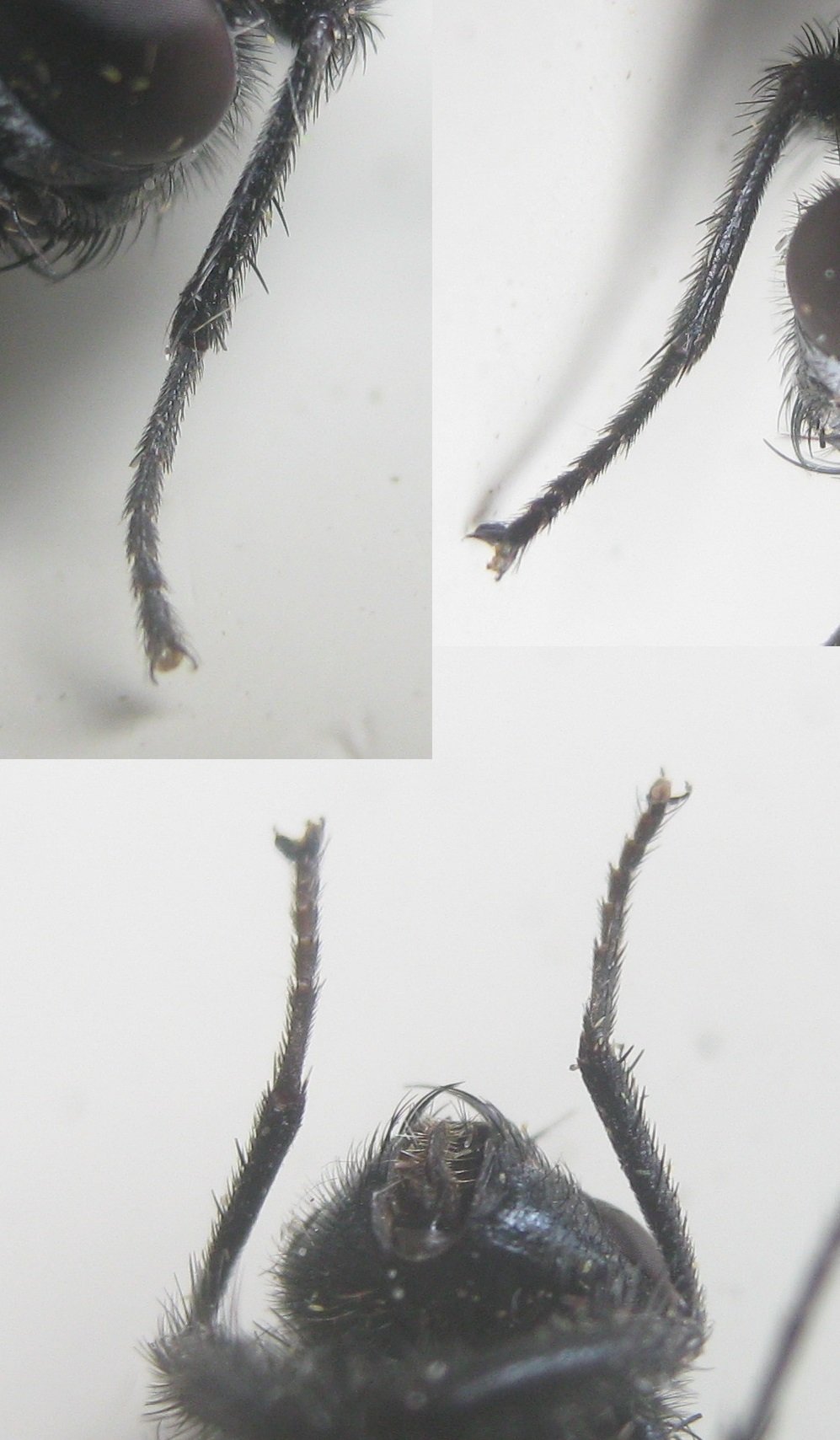 [179.77Kb] |
|
|
|
| eklans |
Posted on 19-03-2023 18:50
|
|
Member Location: Franconia, Germany Posts: 4614 Joined: 11.11.18 |
I've pointed to (what I think are) the 2 av bristles in your last image (included). All males Protocalliphora should have 1 or 2 av. The genitals of all other Protocalliphora are distincly different from those of your specimen and I think it would be worth inspecting the fore tibiae again - maybe I'm wrong with locating and you find sockets of broken bristles. eklans attached the following image: 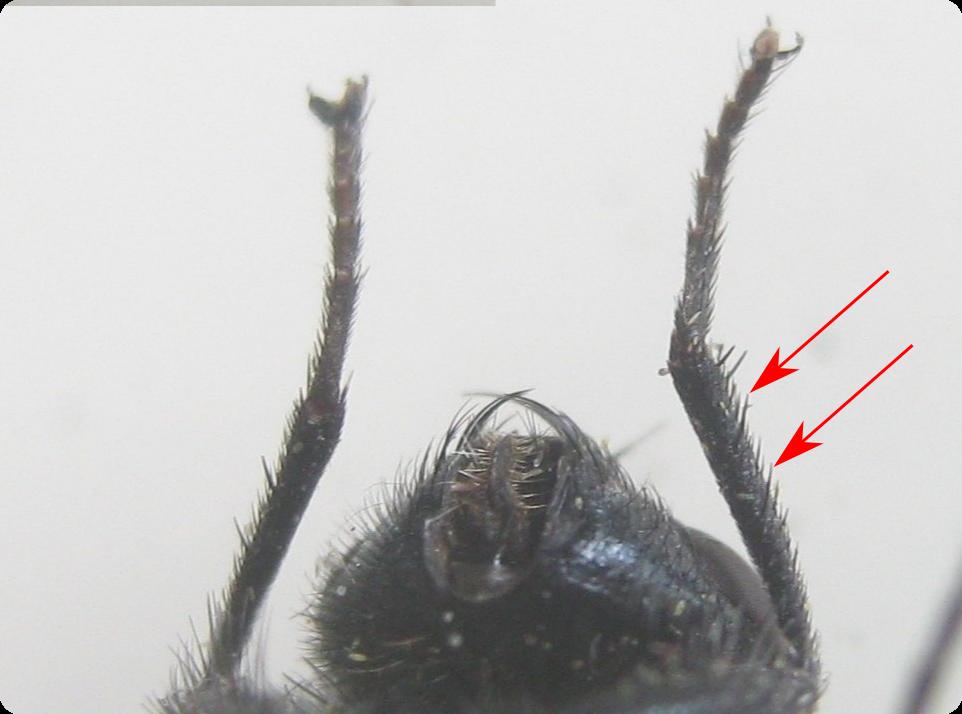 [45.93Kb] |
|
|
|
| Axel D |
Posted on 20-03-2023 13:41
|
|
Member Location: France Posts: 223 Joined: 16.10.15 |
I believe these are posterior bristles (pd I would say). av should be on the other side I think. I can also see several ad on an other angle of view but that's all for well-defined bristles. There may be broken bristles since this fly was clearly not a new born when I caught it. Unfortunately, I'm afraid I'm not able to see if there are sockets of broken bristles. I don't have a good microscope and with a magnifying glass (or on pictures), I can't see anything obvious. But, if the genitalia are different from the other species, can it be something else ? In another genus ? |
|
|
|
| eklans |
Posted on 20-03-2023 15:22
|
|
Member Location: Franconia, Germany Posts: 4614 Joined: 11.11.18 |
Unfortunately, I have no experience in identifying flies on their "inner values" and for me the genitals of your fly look like those from "Blowflies" by Olga Sivell. Also, there are many images at: http://www.spessa...lcozi.html. I'm rather confident, that your fly is P. falcozi! And: I've made a stupid mistake: I wrote av-bristle, but it should be the pv bristle!! Sorry for that! 1 pv: P. falcozi 2 pv: the other Protocalliphora Edited by eklans on 20-03-2023 15:38 Greetings, Eric |
|
|
|
| Jump to Forum: |