

Diptera.info :: Identification queries :: Diptera (adults)
 Tabanus sudeticus with black antennae?
|
|
| Sundew |
Posted on 09-09-2021 13:50
|
 Member Location: Berlin and Baden-Württemberg, Germany Posts: 3939 Joined: 28.07.07 |
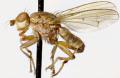
Hi, On 18th July I saw two Tabanus males taking a sun bath on a wood path, the distance between them was about 700 m. One looked typical sudeticus with reddish antennae. The other was very similar, but on the screen showed completely black antennae. (Difficult to say if also the hook on the 3rd segment was of different shape.) In the key https://www.eis-n...;TabId=563 the colour of the antennae is emphazised as decisive in many cases, so I wonder if I can label the one with the black antennae "sudeticus" nevertheless? Thanks for information, Sundew (Locality was southwestern Germany west of Stuttgart.) This is the typical T. sudeticus specimen. Sundew attached the following image: 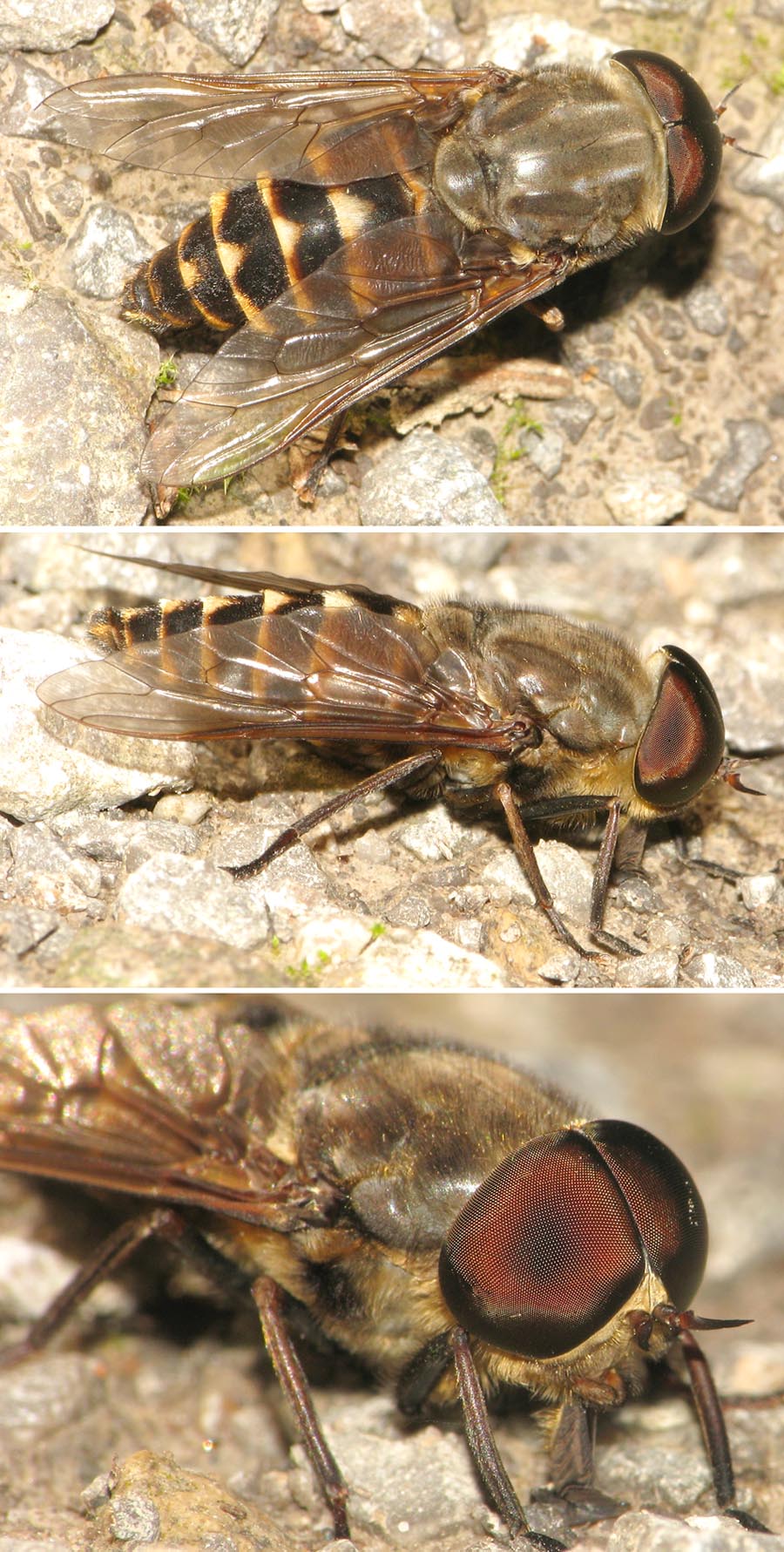 [287.9Kb] |
|
|
|
| Sundew |
Posted on 09-09-2021 13:50
|
|
Member Location: Berlin and Baden-Württemberg, Germany Posts: 3939 Joined: 28.07.07 |
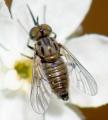
This is the one with black antennae.
Sundew attached the following image: 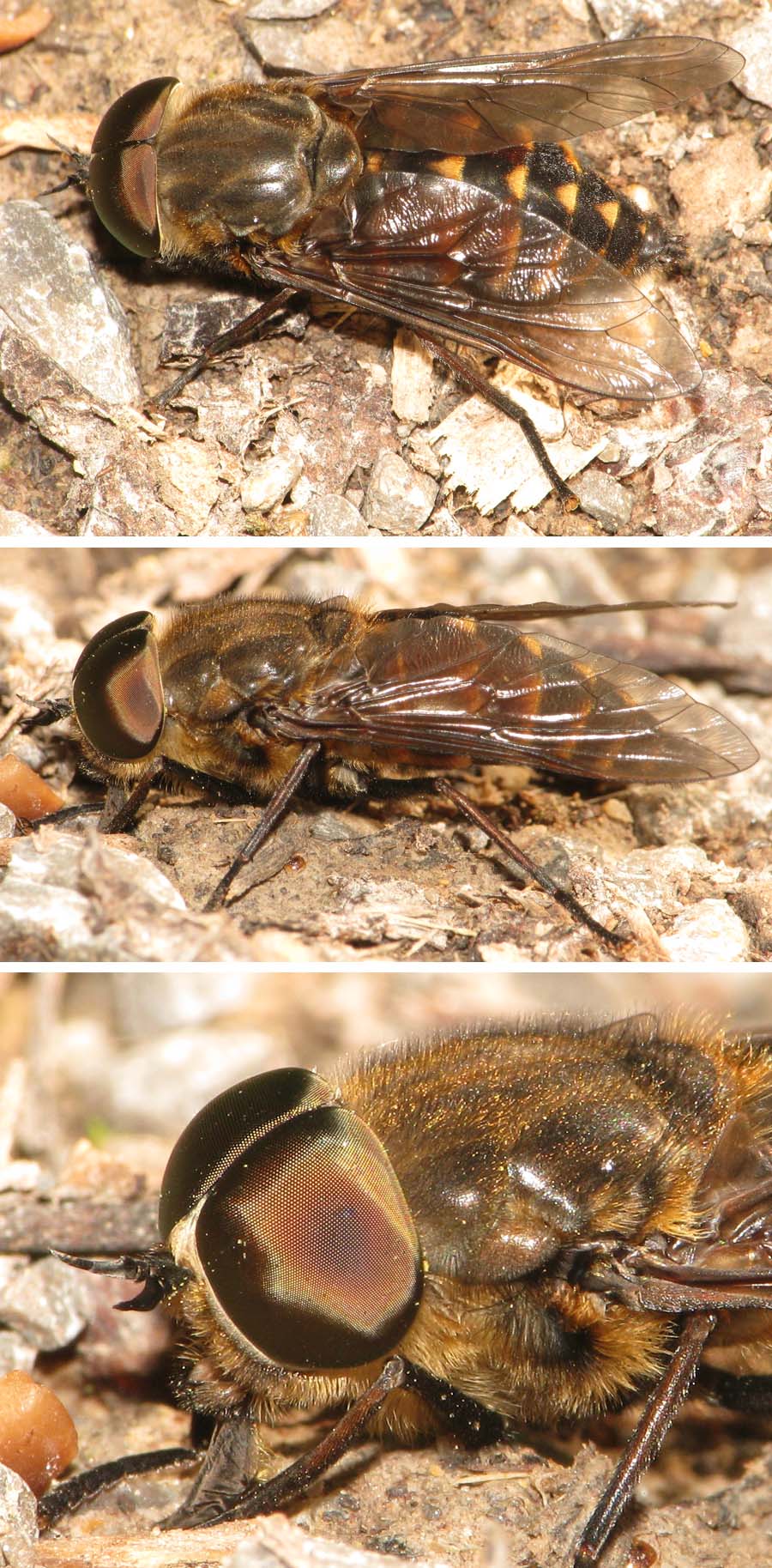 [283.57Kb] |
|
|
|
| Zeegers |
Posted on 09-09-2021 17:21
|
|
Member Location: Soest, NL Posts: 19363 Joined: 21.07.04 |
This is very scary indeed. As you correctly pointed out, this can hardly be sudeticus. That said, it is a male with enlarged facets, so both bovinus and spodopterus are off the table as well. Clearly no autumnalis or rectus. So that more or less leave the option of eggeri. aif you check the wing venation, you can see the first posterior cell is not contracting towards wing margin in sudeticus, and it does in the black antenna male. This supports eggeri. Eggeri has bern found in the north of France, so Stuttgart is not impossible. Still, I do not dare to make the final call without seeing its belly. Which is probably too much asked ? Theo |
|
|
|
| Sundew |
Posted on 09-09-2021 21:55
|
|
Member Location: Berlin and Baden-Württemberg, Germany Posts: 3939 Joined: 28.07.07 |
Unfortunately, the fly was not willing to throw itself on its back in front of me.... Instead, it disappeared very quickly after four photos. As far as the wing veins are concerned, you got confused by the middle picture, which probably shows a fold in the wing. P1 does not narrow significantly towards the tip. Here is another view of antennae and wing tip. I still suspect an aberrant T. sudeticus... As to T. eggeri: your description says on p. 53 "First antennal segment yellow, second red, third black with usually something red at the base." But in our case all three segments are black. Sundew attached the following image: 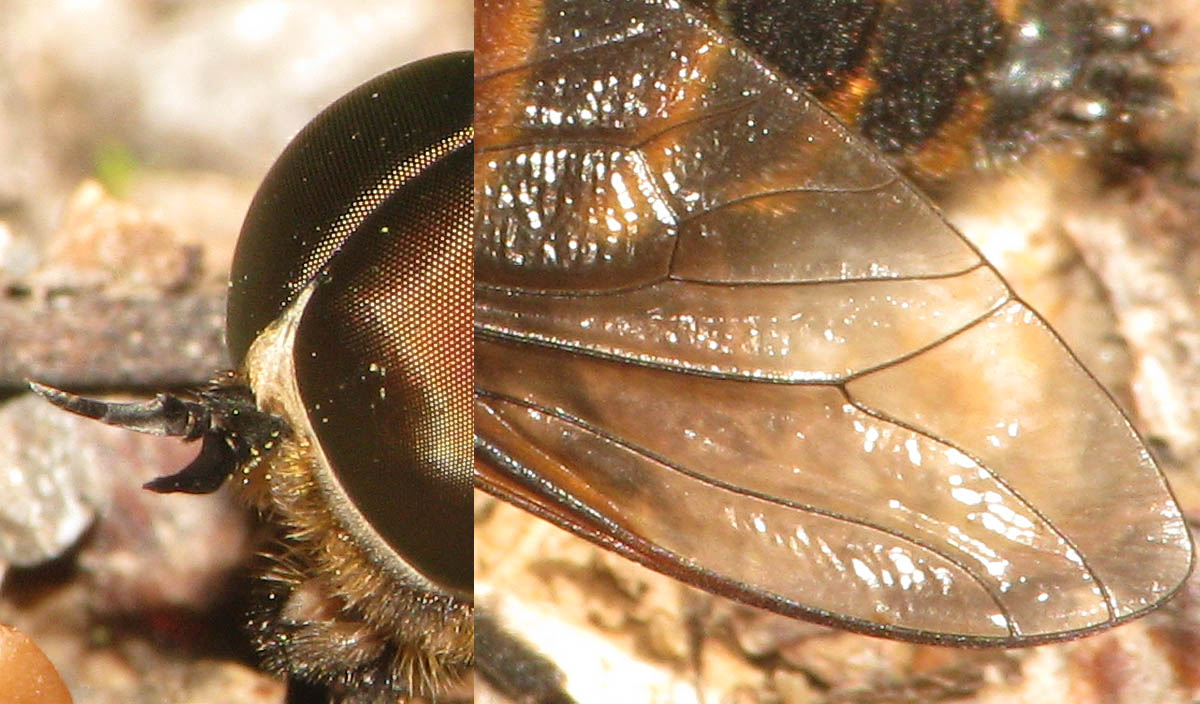 [170.3Kb] |
|
|
|
| Zeegers |
Posted on 11-09-2021 12:09
|
|
Member Location: Soest, NL Posts: 19363 Joined: 21.07.04 |
Yes, I know, but the antenna is even more red in sudeticus ! A sudeticus with all black antenna is “unacceptable”. The first posterior cell qualifies as “slightly” tapering, there is no error there. But having a second look at the eye, the facets are enlarged, but much less than in sudeticus. So there is our solution. It is either bovinus or spodopterus male. On dorsal view, the males of these are extremely similar. From what I can see, I tend towards spodopterus. Theo |
|
|
|
| Zeegers |
Posted on 11-09-2021 20:24
|
|
Member Location: Soest, NL Posts: 19363 Joined: 21.07.04 |
Spodopterus is considered extinct in Germany, though given the occurrence north of Paris it is bound to pop up sooner or later with this climate change. The eye has just the tiniest tough of green (compare both species in this thread: sudeticus has not), suggesting bovinus. All inconclusive, as far as I am concerned. Theo |
|
|
|
| Sundew |
Posted on 17-09-2021 21:04
|
|
Member Location: Berlin and Baden-Württemberg, Germany Posts: 3939 Joined: 28.07.07 |
Here is the head of one of my T. bovinus males. The eyes are greener, and the region around the antennae seems less hairy, so we can see that the basal antennal segments are rather brown... I am afraid we cannot solve the problem. Theo, you did a very good work nevertheless - thanks! (Maybe it's a hybrid??) Sundew attached the following image: 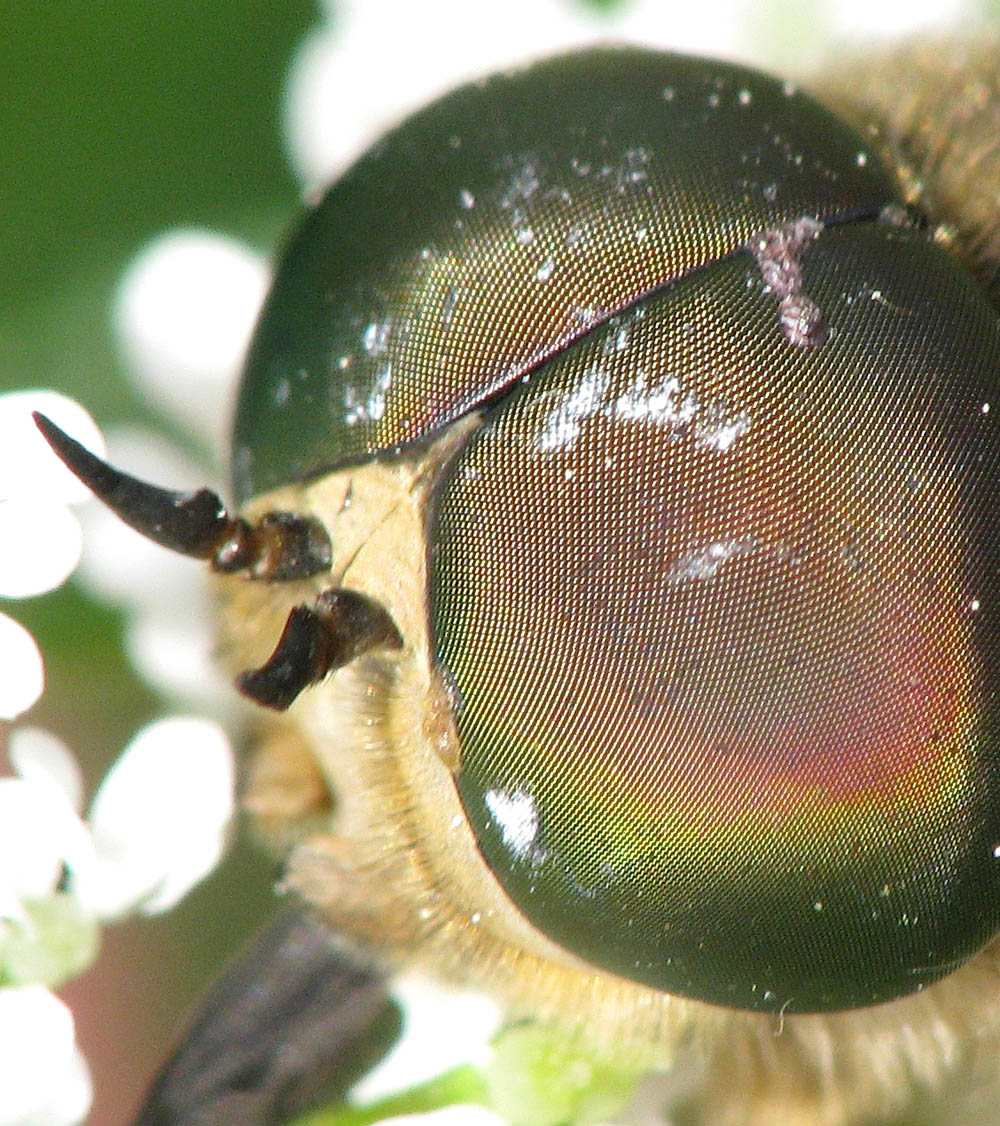 [295.11Kb] |
|
|
|
| Zeegers |
Posted on 19-09-2021 08:26
|
|
Member Location: Soest, NL Posts: 19363 Joined: 21.07.04 |
Thanks. The greenish is more obvious in the last pic and the antenne seems tomhave the tiniest bit of red at base of third segment, both supporting bovinus. Theo |
|
|
|
| Sundew |
Posted on 30-09-2021 13:03
|
|
Member Location: Berlin and Baden-Württemberg, Germany Posts: 3939 Joined: 28.07.07 |
Sure, the last picture shows a REAL bovinus from Brandenburg for comparison, and I find it different from the one under concern with the black antennae. I listed the deviating characters. That's why I wrote the problem cannot be solved and the one from the Stuttgart region might be a hybrid. You thought it was the same male, dear Theo, but it isn't, so the mystery remains. Sundew |
|
|
|
| Zeegers |
Posted on 30-09-2021 13:39
|
|
Member Location: Soest, NL Posts: 19363 Joined: 21.07.04 |
Ah, my mistake. In any case, due to the English translation of the “field guide” I looked at it again, this time added by my collection. The upper facets of the Stuttgart specimen, though less enlarged than in sudeticus, do qualify as enlarged beyond reasonable doubt. Hence, both bovinus and spodopterus are off the table (compare the Stuttgart specimen with the Berlin bovinus !) So, the only remaining option is eggeri which is normally much more orange, but I have one similar male (from France) in my collection.. Given its rarity in Germany, I am reluctant to give a final call without having seen the stermites, but it is not sudeticus, not bovinus and not spodopterus ….. If you ever seen one again, please check the belly ! Theo |
|
|
|
| Zeegers |
Posted on 30-09-2021 13:40
|
|
Member Location: Soest, NL Posts: 19363 Joined: 21.07.04 |
BTW, antenna tend to be darker in males than in females (so there is not really a contradiction with male eggeri there) Theo |
|
|
|
| Jump to Forum: |