



Diptera.info :: Identification queries :: Diptera (adults)
 Tachinid
|
|
| oceanlis2000 |
Posted on 18-02-2011 15:22
|
|
Member Location: Wales, UK Posts: 570 Joined: 15.06.10 |
Found another one, photos aren't great! 15 06 10 SO015553 Hope they are of some use With Best Wishes ELisabeth oceanlis2000 attached the following image: 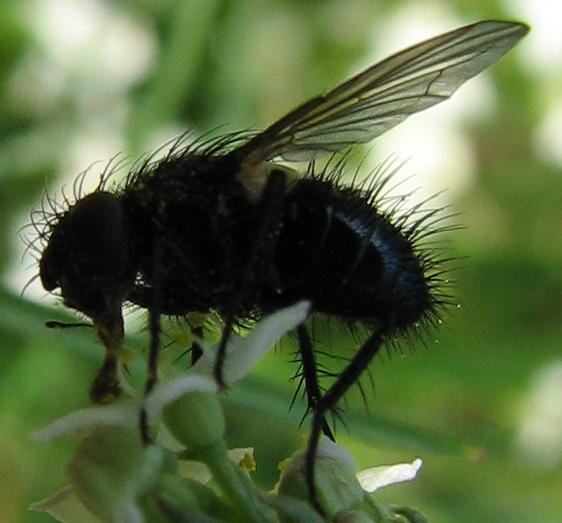 [47.09Kb] |
|
|
|
| oceanlis2000 |
Posted on 18-02-2011 15:23
|
|
Member Location: Wales, UK Posts: 570 Joined: 15.06.10 |
2
oceanlis2000 attached the following image: 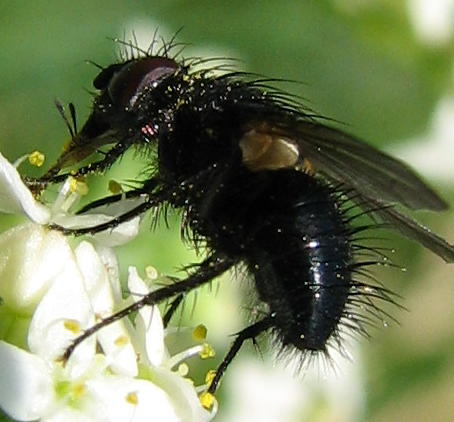 [40.65Kb] |
|
|
|
| oceanlis2000 |
Posted on 18-02-2011 15:23
|
|
Member Location: Wales, UK Posts: 570 Joined: 15.06.10 |
3
oceanlis2000 attached the following image: 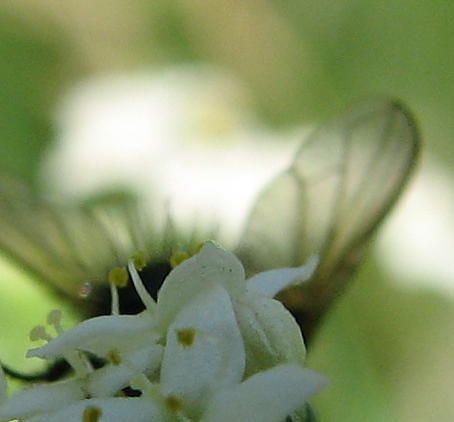 [28.32Kb] Edited by oceanlis2000 on 18-02-2011 15:25 |
|
|
|
| oceanlis2000 |
Posted on 18-02-2011 15:23
|
|
Member Location: Wales, UK Posts: 570 Joined: 15.06.10 |
The only feature I can see is that the palpus is black
Edited by oceanlis2000 on 18-02-2011 15:28 |
|
|
|
| ChrisR |
Posted on 18-02-2011 15:49
|
 Super Administrator Location: Reading, England Posts: 7706 Joined: 12.07.04 |
From what I can see it looks like Zophomyia temula 
Manager of the UK Species Inventory in the Angela Marmont Centre for UK Biodiversity at the Natural History Museum, London. |
 |
|
| oceanlis2000 |
Posted on 18-02-2011 16:19
|
|
Member Location: Wales, UK Posts: 570 Joined: 15.06.10 |
Thanks Chris May I ask what the charactersitic features are? |
|
|
|
| ChrisR |
Posted on 18-02-2011 16:30
|
|
Super Administrator Location: Reading, England Posts: 7706 Joined: 12.07.04 |
Actually I will revise my opinion ... more likely Dufouria sp. They are shiny, jet black with a long, sloping forehead/frons. Zophomyia would be similar but bigger, with orange wing bases, stronger bristles and a smaller head in relation to the body
Manager of the UK Species Inventory in the Angela Marmont Centre for UK Biodiversity at the Natural History Museum, London. |
|
|
|
| oceanlis2000 |
Posted on 21-02-2011 11:28
|
|
Member Location: Wales, UK Posts: 570 Joined: 15.06.10 |
Thanks Chris I had a look at your photos at Moor Copse and saw the orange wing bases and wondered if this was a variation, not T. grossa or Eurithia species I don't know Dufouria so will have to check it out, shame I haven't got a photo of the front part of the head! |
|
|
|
| ChrisR |
Posted on 21-02-2011 11:38
|
|
Super Administrator Location: Reading, England Posts: 7706 Joined: 12.07.04 |
Here is one that I have identified as Dufouria (chalybeata?) ... I hope it is! 
ChrisR attached the following image: 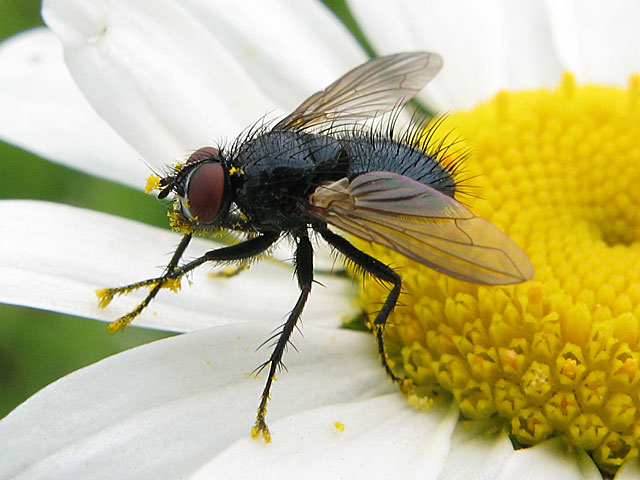 [63.79Kb] Manager of the UK Species Inventory in the Angela Marmont Centre for UK Biodiversity at the Natural History Museum, London. |
|
|
|
| Zeegers |
Posted on 21-02-2011 17:42
|
|
Member Location: Soest, NL Posts: 19239 Joined: 21.07.04 |
I totally agree with Chris, it is Dufouria, very likely chalybeata Theo |
|
|
|
| oceanlis2000 |
Posted on 22-02-2011 15:43
|
|
Member Location: Wales, UK Posts: 570 Joined: 15.06.10 |
Thanks Theo Any ideas of how this species differs from Dufouria nigrita (Fallén, 1810)? Elis |
|
|
|
| ChrisR |
Posted on 22-02-2011 16:04
|
|
Super Administrator Location: Reading, England Posts: 7706 Joined: 12.07.04 |
From Belshaw (1993): Key to the genus Dufouria Distinguish sexes using width of vertex: equal to three-quarters (females) or not more than one-quarter the width of an eye (males). No single character completely reliable (especially in females). 1. Tibia of the middle leg with only 2 bristles on its antero-dorsal surface, tibia of the hind leg with only 2 long bristles on its dorsal surface at the junction with the tarsus (the other 1 or 2 bristles are not more than half their length), male vertex narrower than the distance between the outer edges of the 2 posterior ocelli. [4-5mm in length, male wing with neither of the 2 costal spines longer than crossvein r m] ... nigrita (Fall.) - Tibia of the middle leg with at least 3 bristles on its antero-dorsal surface, tibia of the hind leg with at least 3 long bristles on its dorsal surface at the junction with the tarsus, male vertex at least as wide as the distance between the outer edges of the 2 posterior ocelli. [5-6mm in length, male wing with costal spines often longer than crossvein r m] ... chalybeata (Meig.) The 2 species are sometimes quite difficult to distinguish but chalybeata is the commonest in my experience. Edited by ChrisR on 22-02-2011 16:05 Manager of the UK Species Inventory in the Angela Marmont Centre for UK Biodiversity at the Natural History Museum, London. |
|
|
|
| oceanlis2000 |
Posted on 24-02-2011 15:21
|
|
Member Location: Wales, UK Posts: 570 Joined: 15.06.10 |
Thanks Chris This is really useful information, interestingly it doesn't mention the shoe size! Looking at your photo, it's a male and the tibia of leg 2 is well seen if we include the metatarsus/tibia junction there are 3 strong bristles on the antero-dorsal side of the tibia (the rest I'm assuming come under hairs)- is this right? with nigrita there would only be 2 Very suble differences between the 2 species so thanks again for the sending Elis |
|
|
|
| ChrisR |
Posted on 24-02-2011 18:18
|
|
Super Administrator Location: Reading, England Posts: 7706 Joined: 12.07.04 |
Yes, the difference can be in 1 bristle ... and then you find that the differences are variable in some specimens! 
Manager of the UK Species Inventory in the Angela Marmont Centre for UK Biodiversity at the Natural History Museum, London. |
|
|
|
| Jump to Forum: |