| ||||||||||||||||
 |
||
|
||
 Users Online
Forum Threads
Newest Threads
· female Oxyna flavipe...· Tephritis · Tachinidae? Buqueti... · male Oxyna nebulosa? · Phthiria sp.? Hottest Threads
Theme Switcher
Last Seen Users
Latest Photo Additions
|
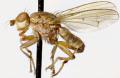
More Information about: type specimen
Comments
Post Comment
Please Login to Post a Comment.
| Date and time
Login
Temporary email?
Due to fact this site has functionality making use of your email address, any registration using a temporary email address will be rejected.
Paul Donate
Latest Articles
· Voltinism in Chaoborus
· Vitaliy Nikolaevich ... · Mating behaviour and... · Oviposition into the... · African Invertebrates Syrph the Net
License Agreement - Click to Download Public files of Syrph the Net can be downloaded HERE Last updated: 25.08.2011 Shoutbox
You must login to post a message. 29.04.26 15:16 What a piece of sad news to learn about Mr. Chandler's passing, a great loss indeed
24.04.26 15:48 I have just received the very sad news that Peter Chandler has died after a fall at home yesterday. I have no other details at the moment. We shall miss him terribly.
20.02.26 13:31 Canada plans to eliminate the Diptera group at the CNC. See post in the News section of the main page.
18.02.26 09:33 Anyone have scans of the Genus Semaranga in:
1)Kanmiya, K. (1983) A systematic study of the Japanese Chloropidae (Diptera).
2) Andersson, H. (1977 Taxonomic and Phylogenetic studies on Chloropid
10.02.26 19:36 Hello Moumoule !
07.01.26 15:52 Pipunculidae from Mongolia! I am looking for specialist who is committed to ID these. There will be a lot of material coming from my expeditions.
06.12.25 21:37 He last posted here in April, identifying some Chloropidae.
04.12.25 20:02 Dr Michael von Tschirnhaus, a leading expert on Chloropidae and Agromyzidae, died on 16 September 2025 at the age of 86. He will be greatly missed by the international community. R.I.P.
03.12.25 12:46 Anyone has the scan of "Harkness, R. D.; Ismay, J. W. 1976: A new species of Trachysiphonella (Dipt., Chloropidae) from Greece, associated with an ant Cataglyphis bicolor (F.) (Hym., Formicidae)
01.12.25 22:29 I will try to fix the messages this month. We have to make some other configuration changes before software goes out of support at end of year.
|

|
images in Diptera Gallery and Forum of their respective owners Powered by PHP-Fusion copyright © 2002 - 2026 by Nick Jones. Released as free software without warranties under GNU Affero GPL v3. SimpleAsThat |
||
| Render time: 0.11 seconds | 277,829,180 unique visits | ||