


Diptera.info :: Identification queries :: Diptera (eggs, larvae, pupae)
 Eyes of Chaoborus larva
|
|
| Nikita Vikhrev |
Posted on 01-10-2019 15:21
|
 Member Location: Moscow, Russia Posts: 9554 Joined: 24.05.05 |
On the 1st image alive larva Chaoborus with large black eye.
Nikita Vikhrev attached the following image: 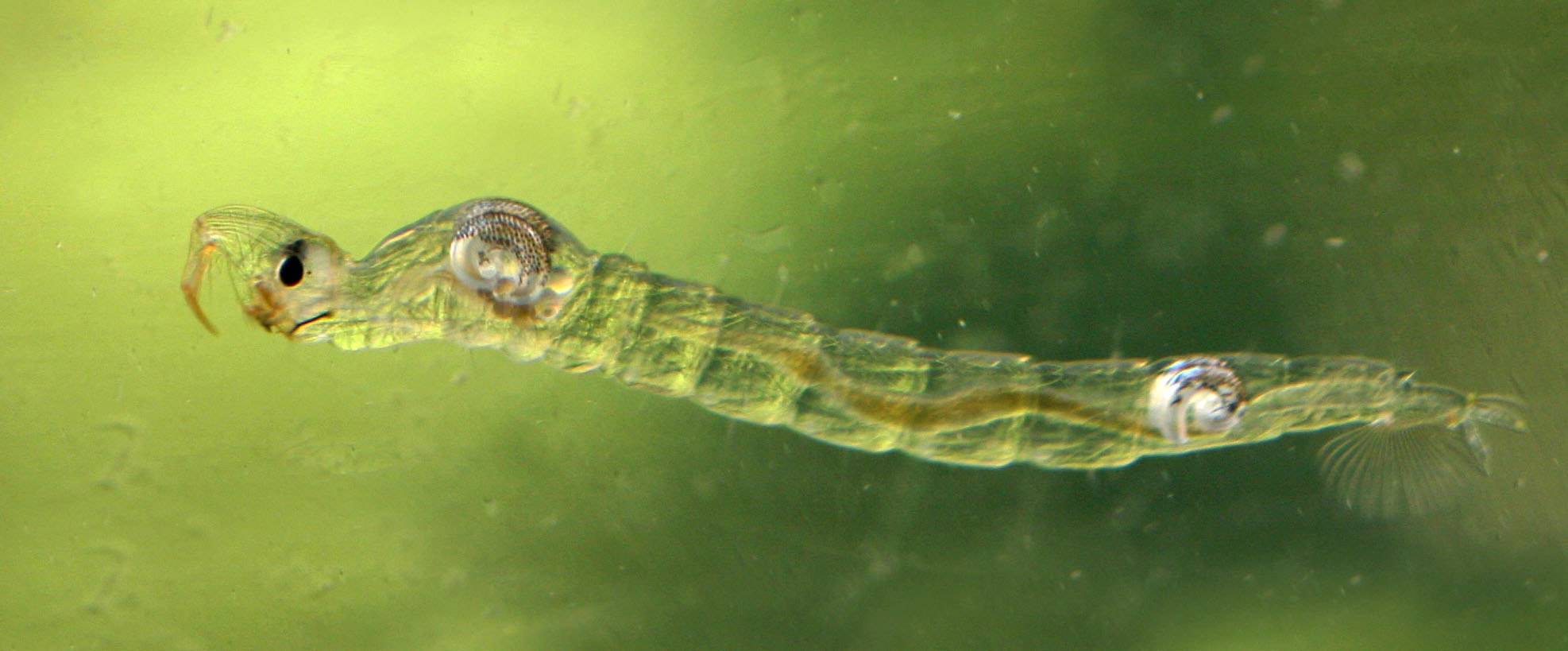 [187.43Kb] Nikita Vikhrev - Zool Museum of Moscow University |
|
|
|
| Nikita Vikhrev |
Posted on 01-10-2019 15:22
|
|
Member Location: Moscow, Russia Posts: 9554 Joined: 24.05.05 |
On the 2nd image head of larva Chaoborus from article in Plos One. Eye is marked as “compound eye”.
Nikita Vikhrev attached the following image: 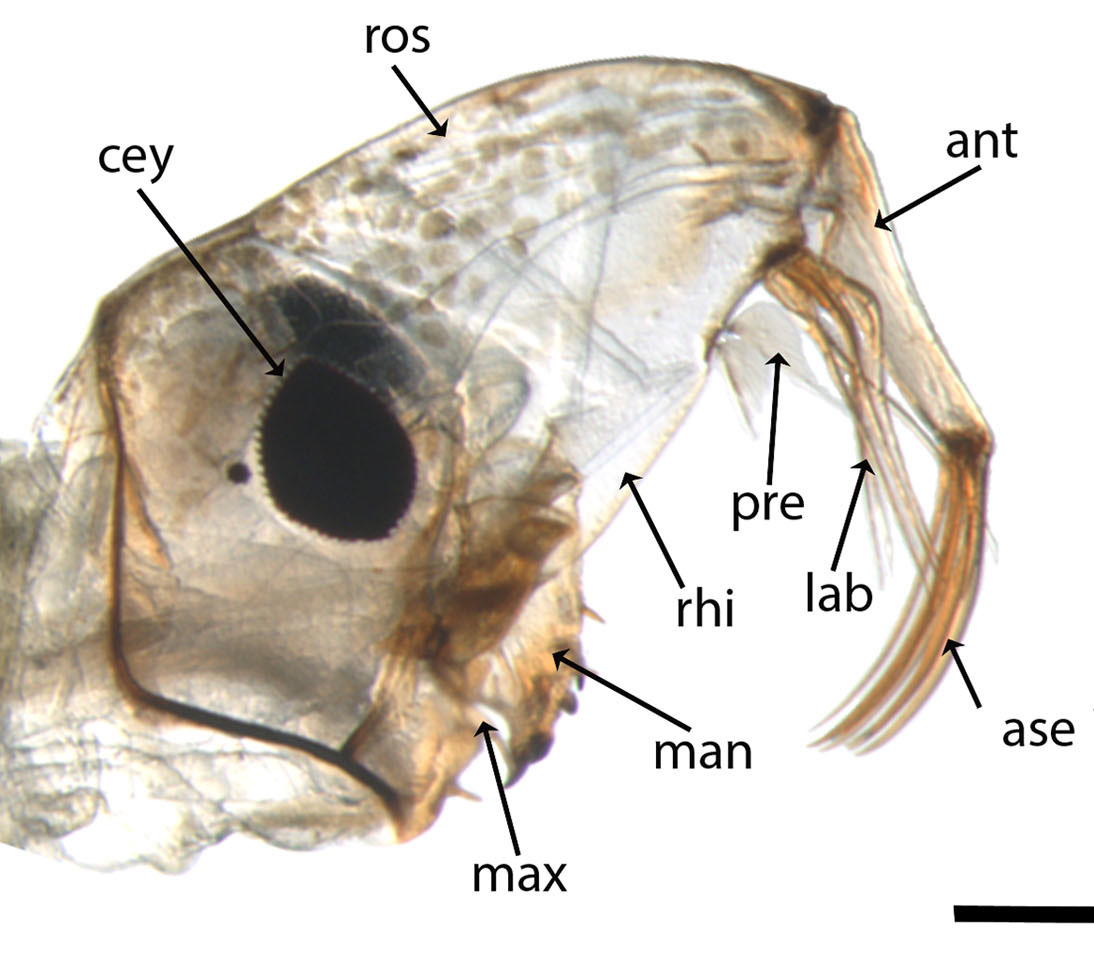 [156.06Kb] Nikita Vikhrev - Zool Museum of Moscow University |
|
|
|
| Nikita Vikhrev |
Posted on 01-10-2019 15:24
|
|
Member Location: Moscow, Russia Posts: 9554 Joined: 24.05.05 |
In Manual of Nearctic Diptera Chaoborus larva eyes described as follows: “Larval and developed adult eyes both visible on last (= 4th) instar.” I was sure that compound eyes are absent in larvae of Diptera. Please, question: is Chaoborus the exclusion and its larva uses adult compound eye on larval stage? Or what? Nikita Vikhrev - Zool Museum of Moscow University |
|
|
|
| Tony Irwin |
Posted on 03-10-2019 09:58
|
 Member Location: Norwich, England Posts: 7344 Joined: 19.11.04 |
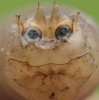
That's an interesting question. The compound eyes may or may not be functional, but if the larva is not using the information from them, then it's not really using them at all. We know that the larvae of several species of Chaoborus feed at night, and my understanding is that they rely on detecting water movement, rather than vision, to find their prey and avoid being eaten by others. Vision (using their simple eyes) is used to assess light levels and determine whether it's time to go up or down in the water column. It may be that other larvae with less transparent cuticles also have developing compound eyes within them, but as we can't see them, we assume they're not there. Tony ---------- Tony Irwin |
|
|
|
| Nikita Vikhrev |
Posted on 03-10-2019 14:54
|
|
Member Location: Moscow, Russia Posts: 9554 Joined: 24.05.05 |
Tony, to tell the truth, your perly is exactly what I was hoping for. Thank you! I’m writing a small popular paper about Chaoborus and it is why I found this question. I asked several colleagues, but no one thought about this contradiction. Finally I came to the same conclusions as you: - imaginal compound eyes are visible on glassworm head because the worm is glassware; - does glassworm uses these eyes or not – is another question (I did not find any investigation concerning that). By the way, I had one more doubt on “complex catching basket built of head appendages” (Kruppert et al. (2019) Zooplankters’ nightmare: The fast and efficient catching basket of larval phantom midges (Diptera: Chaoborus). PloS ONE, 14(3): e0214013). Is it modified antenna or something else? In most dipteran larvae there is no antenna. But I found that in related Culicidae larvae also have well developed antenna, so Chaoborid’s catching basket should really be modified antenna. Nikita Vikhrev - Zool Museum of Moscow University |
|
|
|
| Tony Irwin |
Posted on 03-10-2019 17:54
|
|
Member Location: Norwich, England Posts: 7344 Joined: 19.11.04 |
Regarding antennae in dipterous larvae - I think all Nematocera and Lower Brachycera do have them, although sometimes they are very small. Certainly Chaoborus uses its modified antennae as the primary catching tool, but the other parts of the labrum and mandibles are important to ensure that the prey is held securely. Without them, I think the catching efficiency would be quite low.
Tony ---------- Tony Irwin |
|
|
|
| Nikita Vikhrev |
Posted on 04-10-2019 19:56
|
|
Member Location: Moscow, Russia Posts: 9554 Joined: 24.05.05 |
Thank you, Tony! I corrected as you advised. By the way, the text is published today: https://elementy.ru/kartinka_dnya/992/Steklyannyy_cherv Nikita Vikhrev - Zool Museum of Moscow University |
|
|
|
| Jump to Forum: |