


Diptera.info :: Identification queries :: Diptera (adults)
 dead Tachinid No2 -> Metiopa (Sarcophag.)
|
|
| Carnifex |
Posted on 23-08-2019 20:26
|
 Member Location: Vienna, Austria Posts: 2052 Joined: 23.06.15 |
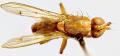
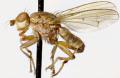
Hi, in the University building, I regularly check what has been dying on the window sills  Some flies are still in an acceptable state, that I have hopes an ID is possible. Although they usually have lost some bristles, there are some magicians here that might successfully deal with the task. Here is the second one. This individual is smaller, but again, I find the lower calypter quite large:   
Edited by Carnifex on 29-08-2019 14:36 Cheers, Lorin Font Color All requests are from the urban area of Vienna, if not otherwise stated. My Diptera observations (and other living forms) can be found here, and corrections or comments over there would also be appreciated. |
|
|
|
| Zeegers |
Posted on 24-08-2019 07:33
|
|
Member Location: Soest, NL Posts: 19327 Joined: 21.07.04 |
Hi Lorin, Looks loke a Sarcophagidae: Oebalia ? Theo |
|
|
|
| Carnifex |
Posted on 24-08-2019 16:47
|
|
Member Location: Vienna, Austria Posts: 2052 Joined: 23.06.15 |
Thanks Theo. I know next to nothing about that genus and also do not have ID features for Sarcophagids. Two species are listed for Austria - O. minuta and O. cylindrica. Can one of those be confirmed or excluded?
Cheers, Lorin Font Color All requests are from the urban area of Vienna, if not otherwise stated. My Diptera observations (and other living forms) can be found here, and corrections or comments over there would also be appreciated. |
|
|
|
| Carnifex |
Posted on 25-08-2019 09:59
|
|
Member Location: Vienna, Austria Posts: 2052 Joined: 23.06.15 |
Ok, I found a key for European Obalia: They do not have bristles on the facial ridge, except for O. minuta, which is described to have 4-7 bristles. Another member of Miltogramminae? Cheers, Lorin Font Color All requests are from the urban area of Vienna, if not otherwise stated. My Diptera observations (and other living forms) can be found here, and corrections or comments over there would also be appreciated. |
|
|
|
| John Carr |
Posted on 25-08-2019 12:45
|
 Super Administrator Location: Colorado, USA Posts: 10666 Joined: 22.10.10 |
Metopia? Proclinate and reclinate orbitals overlap. |
 |
|
| Zeegers |
Posted on 25-08-2019 15:32
|
|
Member Location: Soest, NL Posts: 19327 Joined: 21.07.04 |
I am not saying your fly is Oebalia, but this pic seems to contradict your statement https://diptera.info/photogallery.php?photo_id=8919 Maybe it is Bessa (Tachindae) after all Theo |
|
|
|
| Carnifex |
Posted on 25-08-2019 16:53
|
|
Member Location: Vienna, Austria Posts: 2052 Joined: 23.06.15 |
Which statement, Theo? I wrote: They do not have bristles on the facial ridge, except for O. minuta, which is described to have 4-7 bristles I don't see that contradicted by the photo. The key I used was from T. Pape, The Sarcophagidae Of Fennoscandia and Denmark. I will have a closer look at the specimen, to first find out which family it belongs to Edited by Carnifex on 25-08-2019 16:53 Cheers, Lorin Font Color All requests are from the urban area of Vienna, if not otherwise stated. My Diptera observations (and other living forms) can be found here, and corrections or comments over there would also be appreciated. |
|
|
|
| johnes81 |
Posted on 25-08-2019 18:32
|
 Member Location: Berlin, Germany Posts: 1980 Joined: 15.10.16 |
I don't see that contradicted by the photo. I see hairs on the facial ridge so i wonder if you own the book or if you are viewing sample pages? if you own the book, then page 13 will show you that there are hairs on the facial ridge. as usual, you do not show necessary features useful for an id. I don't see a photo of the face in this thread. Theo is very knowledgeable and he may able to help you with the right series of photos. To place it in a genus using keys: hind coxae, mid tibia, vibrissae, face, lunula, vibrissal angle, arista, notopleuron, wings and costal spine, palpi and many other features. I don't see alot of these features visible in these photos. Use a microscope which can zoom in closer than a macro lens for things such as the arista. Best wishes, John John and Nini. Naturalists not experts. |
|
|
|
| Zeegers |
Posted on 26-08-2019 11:20
|
|
Member Location: Soest, NL Posts: 19327 Joined: 21.07.04 |
check the postscutellum, that must settle it. Theo |
|
|
|
| John Carr |
Posted on 26-08-2019 12:51
|
|
Super Administrator Location: Colorado, USA Posts: 10666 Joined: 22.10.10 |
Check whether the bristles are on the facial ridge or the inner part of the parafacial. |
|
|
|
| Carnifex |
Posted on 28-08-2019 21:17
|
|
Member Location: Vienna, Austria Posts: 2052 Joined: 23.06.15 |
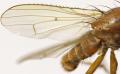
Ok, here we go, maybe some more features help to narrow it down. The postscutellum:  Frontal View. I never worked with the character 'facial ridge' before, but I guess the bristles here belong to the parafacial area?  A view on the (under)wing:  More features can be provided, but for now, I hope it can already narrowed down a bit Cheers, Lorin Font Color All requests are from the urban area of Vienna, if not otherwise stated. My Diptera observations (and other living forms) can be found here, and corrections or comments over there would also be appreciated. |
|
|
|
| John Carr |
Posted on 28-08-2019 23:53
|
|
Super Administrator Location: Colorado, USA Posts: 10666 Joined: 22.10.10 |
The essential characters of Metopia according to Pape's Catalogue of Sarcophagidae: - Lower reclinate orbital bristle positioned between row of proclinate orbitals and frontals. - Lunule setose. - First flagellomere long. - Parafacial plate with an inner row of bristles running close to facial ridge. - Postcranial setae black. - Tegula black. - Wing vein R4+5 with setal row extending almost to crossvein r-m or beyond. |
|
|
|
| Carnifex |
Posted on 29-08-2019 11:57
|
|
Member Location: Vienna, Austria Posts: 2052 Joined: 23.06.15 |
Dear John, thanks for that list. I can confirm all the characters, although I'm not quite sure about the color of the tegula, but it at least darker than the basicosta. So Metopia it should be. Here the wing bristles:  
Edited by Carnifex on 29-08-2019 13:26 Cheers, Lorin Font Color All requests are from the urban area of Vienna, if not otherwise stated. My Diptera observations (and other living forms) can be found here, and corrections or comments over there would also be appreciated. |
|
|
|
| Jump to Forum: |