


Diptera.info :: Identification queries :: Diptera (adults)
 Aedes vexans?
|
|
| mwkozlowski |
Posted on 21-07-2019 10:17
|
 Member Location: Warsaw, Poland Posts: 800 Joined: 17.10.06 |
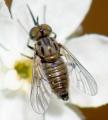
This unluccky female was found in the car after a trip to Vistula valey filled with Aedes vexans. itself, it was filled with blood, probabely take from my dog. When I coghut it to a vial it seemed to be in a good condition, but shortly became weak and here nearly dead. Coud it be the piosonous blood of the dog thad had been treated aganst ticks. Is it Aedes (it was bigger then average)? How to distinquish at hand Aedes from Culex? I ugently need Culex for filming its oviposition. Thenks in advace!!! mwkozlowski attached the following image: 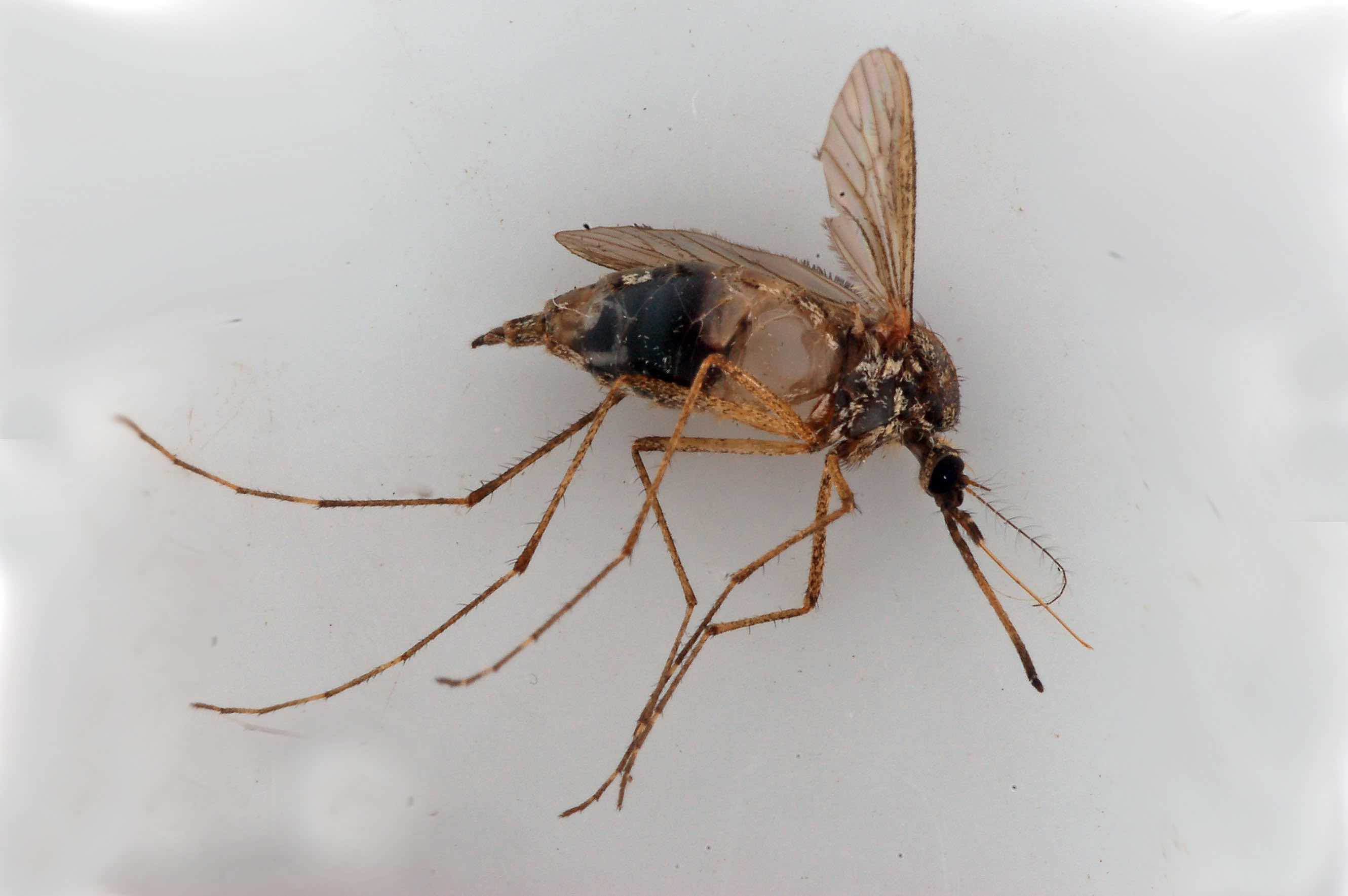 [151.72Kb] Edited by mwkozlowski on 21-07-2019 10:18 very general entomologist |
|
|
|
| Tony Irwin |
Posted on 21-07-2019 14:10
|
 Member Location: Norwich, England Posts: 7352 Joined: 19.11.04 |
That's an interesting question - whether a dog treated for ticks and fleas would also kill a mosquito that bit it? Possibly, though of course a mosquito is on the dog for less time than other ectoparasites. I don't think this is Aedes vexans - the pale rings on the hind tarsus are too wide. It could be Ochlerotatus annulipes, but females in poor condition are very difficult to identify. Aedes (and Ochlerotatus) can be easily distinguished from Culex in that they have a tapered abdomen, with a prominent ovipositor. In Culex (and Culiseta and Coquillettidia), the abdomen has a blunt, rounded end. Most Culex lack pale rings on the tarsi, a feature shared by very few Culiseta and Coquillettidia. If you want to find Culex for filming, look for old containers of leafy water in shady parts of a garden. The distinctive egg rafts of Culex will indicate their presence. Usually there will be eggs, larvae, pupae and adults available. Tony ---------- Tony Irwin |
|
|
|
| mwkozlowski |
Posted on 21-07-2019 22:08
|
|
Member Location: Warsaw, Poland Posts: 800 Joined: 17.10.06 |
Thank you Tony. In the script of the film (horror film!) there are scenes of oviposition and transformation. It is not easy at present to find water in containers (to dry). I distributed water in bowls in different shady places but with no success do date. I also try to attract to myself mosquitos (as do my friends) but Culex is not coming
Edited by mwkozlowski on 21-07-2019 22:09 very general entomologist |
|
|
|
| Tony Irwin |
Posted on 22-07-2019 10:05
|
|
Member Location: Norwich, England Posts: 7352 Joined: 19.11.04 |
If you have a pet chicken, you may have more success attracting Culex. Cx.pipiens is one of the commonest species, and it is primarily a bird feeder! Good luck with the search - keep the bowls topped up and you will get some soon, I'm sure. 
Tony ---------- Tony Irwin |
|
|
|
| mwkozlowski |
Posted on 22-07-2019 10:40
|
|
Member Location: Warsaw, Poland Posts: 800 Joined: 17.10.06 |
Ok, I will contact the Zoo, they have various poultry and watering devices!
very general entomologist |
|
|
|
| Jump to Forum: |