


Diptera.info :: Identification queries :: Diptera (adults)
 Villa hottentotta?
|
|
| Andreas Haselboeck |
Posted on 06-10-2007 21:29
|
 Member Location: Stuttgart / Germany Posts: 612 Joined: 15.07.07 |
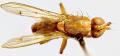
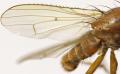
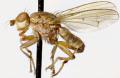
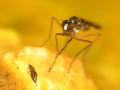
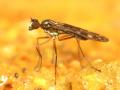
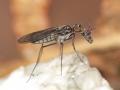
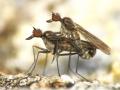
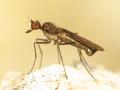
Hello! Who can help to identify this Bombyliidae? Found today near Frankfurt/Main Airport (Germany), heathland with large open sand areas. Size 12mm. Is it Villa hottentotta or Villa spec.... Regards Andreas 
Edited by Andreas Haselboeck on 06-10-2007 21:30 Andreas Haselboeck Stuttgart / Germany http://www.naturs... |
 |
|
| Sundew |
Posted on 06-10-2007 21:50
|
 Member Location: Berlin and Baden-Württemberg, Germany Posts: 3939 Joined: 28.07.07 |
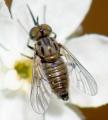
The males of Villa hottentotta have a dark back (see http://fauneflore...villa2.jpg), so I suppose the species is correct. Greetings, Sundew |
|
|
|
| Zeegers |
Posted on 07-10-2007 08:33
|
|
Member Location: Soest, NL Posts: 19310 Joined: 21.07.04 |
I'm not an expert, but it doesn't look like hottentota to me. The yellow abdominal bands seem too narrow. Theo |
|
|
|
| Sundew |
Posted on 07-10-2007 18:35
|
|
Member Location: Berlin and Baden-Württemberg, Germany Posts: 3939 Joined: 28.07.07 |
Well, you can google several reliable pictures of males that have no yellow bands at all  . Therefore I am fully convinced that I photographed a Villa hottentotta male sitting before our house entrance in Berlin on 16 September (see below). Abdominal bands are hardly recognizable... . Therefore I am fully convinced that I photographed a Villa hottentotta male sitting before our house entrance in Berlin on 16 September (see below). Abdominal bands are hardly recognizable...Sundew Sundew attached the following image: 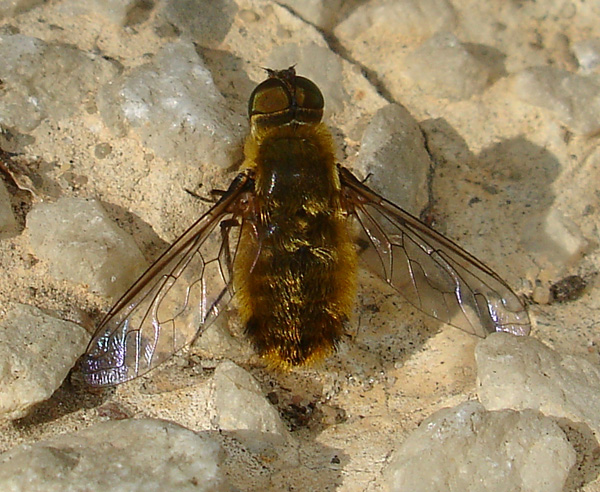 [173.47Kb] |
|
|
|
| Zeegers |
Posted on 07-10-2007 20:15
|
|
Member Location: Soest, NL Posts: 19310 Joined: 21.07.04 |
Villa is a very difficult genus. Misidentifications are easy to find. I'm afraid there is no such thing as a reliable googled hottontota. I'm saying, be cautious in this case Theo |
|
|
|
| Sundew |
Posted on 07-10-2007 22:05
|
|
Member Location: Berlin and Baden-Württemberg, Germany Posts: 3939 Joined: 28.07.07 |
Dear Theo, of course you are absolutely right that misidentifications of photographed animals cannot be ruled out. I also admit that I am very cautious as to googled information. On the other hand, of the six species of Villa known in Berlin and Brandenburg, only V. hottentotta has been found since 1950. So the probability that my photo shows this species is rather high, and there is congruence with other sources that indicate only hardly recognizable abdominal bands in V. hottentotta males. Therefore Andreas' photo could show a V. hottentotta as well with rather high probability - it is a matter of statistics rather than determination, of course. I do not know the looks of the males of the rarer species and willingly accept correction by a specialist, if he/she is able to see more in the photo. So let's say "Villa cf. hottentotta" ! !Greetings, Sundew |
|
|
|
| jorgemotalmeida |
Posted on 08-10-2007 02:49
|
 Member Location: Viseu - PORTUGAL Posts: 9296 Joined: 05.06.06 |
Villa genus is not easy inside the Bombyliidae, but Usia spp. and Lomatia spp. seems to be more harder. |
|
|
|
| Andreas Haselboeck |
Posted on 08-10-2007 08:10
|
|
Member Location: Stuttgart / Germany Posts: 612 Joined: 15.07.07 |
Thank you all! Villa is realy a difficult thing. So, I will say Villa cf. hottentotta. Thank you very much! Sorry, I speak english not very well...  Regards Andreas Andreas Haselboeck Stuttgart / Germany http://www.naturs... |
|
|
|
| David Gibbs |
Posted on 08-10-2007 09:26
|
 Member Location: Bristol, UK Posts: 833 Joined: 17.06.06 |
after carefully comparing your photos with my specimens i conclude that they cannot be identified. the only thing i can say is that they appear to be closer to my continental specimens of modesta than to hottentotta. Unfortunately i have no specimens of paniscus which, if truly a separate species, is very similar to both modesta and hottentotta. one thing i can say for certain, any photo of this group of Villa which has not been collected, and in the case of males dissected, is very unlikely to be reliably named. even specimens are very difficult to name and this will remain the case untill the whole genus is revised. |
|
|
|
| Jump to Forum: |