


Diptera.info :: Identification queries :: Diptera (adults)
 Metallic.....muscid ?
|
|
| Tony T |
Posted on 03-09-2007 23:55
|
 Member Location: New Brunswick, Canada Posts: 664 Joined: 08.02.07 |
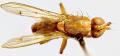
1 September 2007, NB, Canada. Length: 7.5mm Seems too small for a Calliphorid, also could not see any setae on meron. EDIT: I looked through the gallery and saw Nikita's image of Eudasyphora cyanicolor a species that occurs in NA; could this be the same species? Tony T attached the following image: 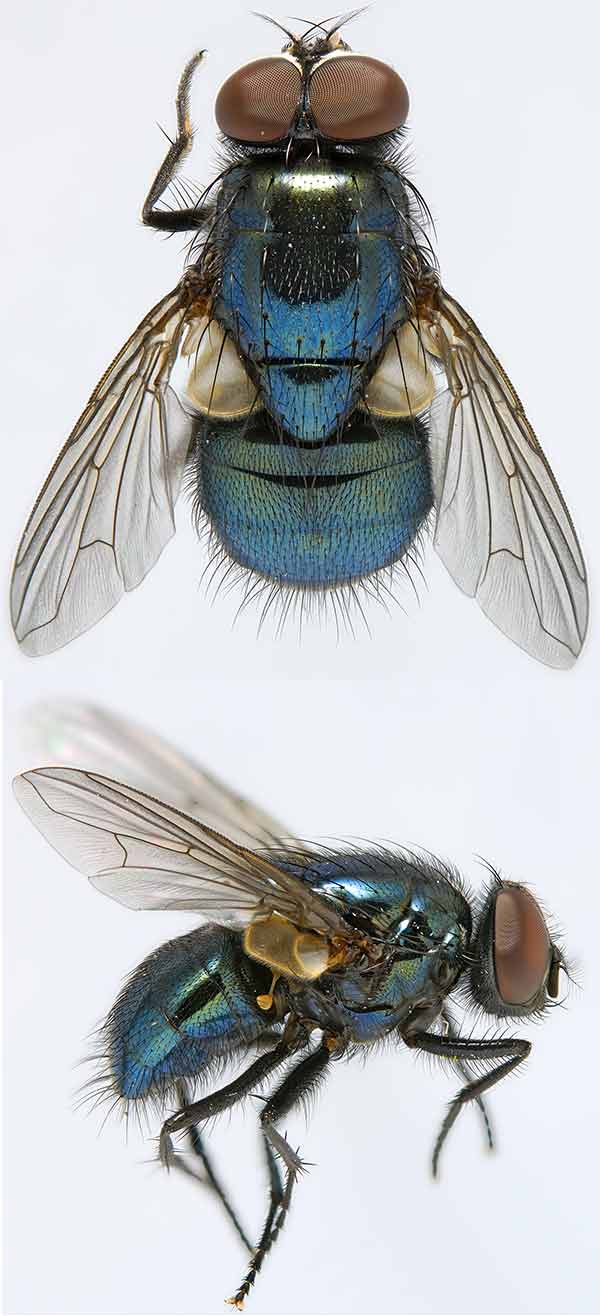 [61.53Kb] Edited by Tony T on 04-09-2007 02:49 |
|
|
|
| Nikita Vikhrev |
Posted on 04-09-2007 08:31
|
 Member Location: Moscow, Russia Posts: 9561 Joined: 24.05.05 |
Hi Tony. Small and all-metallic looks more like Pyrellia. Also Neomyia may have not sharply curved M (N.nudissima). Eudasyphora has setae on R1 ventraly. Has it yours? Nikita Nikita Vikhrev - Zool Museum of Moscow University |
|
|
|
| Tony T |
Posted on 04-09-2007 14:22
|
|
Member Location: New Brunswick, Canada Posts: 664 Joined: 08.02.07 |
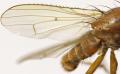
Thanks Nikita. Superimposed setae on base of wing (scanned from a book) that closely resembles my fly. Setae are larger than actual but position is accurate. Tony T attached the following image: 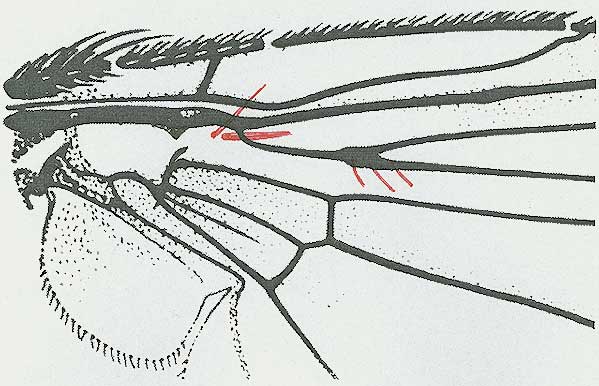 [45.11Kb] |
|
|
|
| Tony T |
Posted on 08-09-2007 14:06
|
|
Member Location: New Brunswick, Canada Posts: 664 Joined: 08.02.07 |
Does this drawing help? |
|
|
|
| Nikita Vikhrev |
Posted on 08-09-2007 16:17
|
|
Member Location: Moscow, Russia Posts: 9561 Joined: 24.05.05 |
Yes Tony. I think that 3 short setae on radial node is ok, but I don't understand what 2 long setae out of wing membraine means. I regard its as some "artefact" (if not - I have no idea so far) In this case - It isn't Eudasyphora without setae on R1 Neomyia has this setae till crossvein and usually sharply curved M So, really looks like Pyrellia for me... Nikita Nikita Vikhrev - Zool Museum of Moscow University |
|
|
|
| Tony T |
Posted on 08-09-2007 19:19
|
|
Member Location: New Brunswick, Canada Posts: 664 Joined: 08.02.07 |
Thanks Nikita. My drawing is inaccurate, those 2 setae actually arise at the extreme lower border of the vein and not from the membrane. Seems that there is 1 sp. in NA (Pyrellia cadaverina), 1 sp. of Neomyia (cornicina) and 3 spp. of Eudasyphora of which 1 (cyanicolor Zetterstedt) was originally described as a Pyrellia. |
|
|
|
| Nikita Vikhrev |
Posted on 08-09-2007 19:44
|
|
Member Location: Moscow, Russia Posts: 9561 Joined: 24.05.05 |
N.cornicina has prst ac, your fly hasn't. Fits ok with Pyrellia cadaverina Nikita Nikita Vikhrev - Zool Museum of Moscow University |
|
|
|
| Stephane Lebrun |
Posted on 08-09-2007 20:35
|
 Member Location: Le Havre, France Posts: 8248 Joined: 03.03.07 |
Pyrellia should have only one postsut. intra-alar, no ? I can see 2 ia here. Thus, R1 setulose + 2 ia -> Eudasyphora ?
Stephane. |
|
|
|
| Nikita Vikhrev |
Posted on 08-09-2007 21:26
|
|
Member Location: Moscow, Russia Posts: 9561 Joined: 24.05.05 |
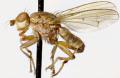
You are right Stephane, 2 post ia. But in this case R4+5 has to be setulose till crossvein as in attached image. Tony, please, check the wing again, setae on R4+5 may be not easy visible. Nikita Nikita Vikhrev attached the following image: 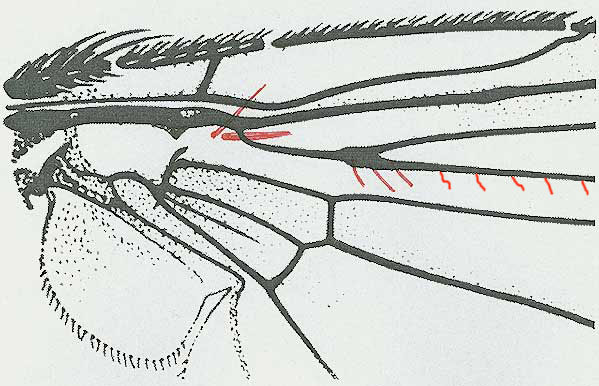 [92.72Kb] Nikita Vikhrev - Zool Museum of Moscow University |
|
|
|
| Tony T |
Posted on 08-09-2007 22:53
|
|
Member Location: New Brunswick, Canada Posts: 664 Joined: 08.02.07 |
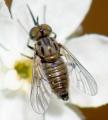
Nikita Vikhrev wrote: You are right Stephane, 2 post ia. But in this case R4+5 has to be setulose till crossvein as in attached image. Tony, please, check the wing again, setae on R4+5 may be not easy visible. Nikita Sorry to have caused so much discussion, just wish I could reciprocate by helping with Palaearctic flies. This specimen has setae on both dorsal and ventral surfaces of that vein almost all the way to the cross vein. I think you can see both sets of setae on the enlargemenrt of the dorsal wing. Also including, for my future reference, an enlargement of the thorax to show the 2 postsutural intralar setae (and their shadows). Tony T attached the following image: 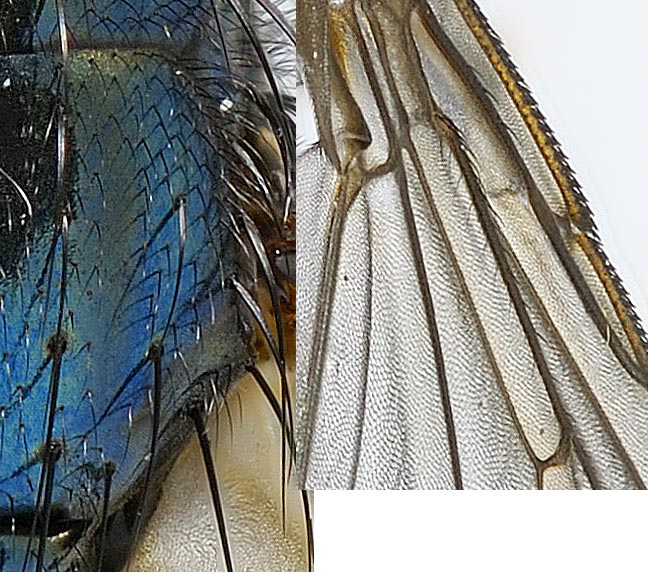 [105.73Kb] |
|
|
|
| Susan R Walter |
Posted on 09-09-2007 11:43
|
 Member Location: Touraine du Sud, central France Posts: 1802 Joined: 14.01.06 |
Fantastic - I am so impressed with the discussion and the photos here. Well done to all involved.
Susan |
 |
|
| Stephane Lebrun |
Posted on 09-09-2007 12:53
|
|
Member Location: Le Havre, France Posts: 8248 Joined: 03.03.07 |
Don't be sorry Tony, I think this kind of discussion is very instructive. Your photos would be deserving of figuring in a good book on Muscidae ! In conclusion, I think we can say Eudasyphora. Stephane. |
|
|
|
| jorgemotalmeida |
Posted on 09-09-2007 13:21
|
 Member Location: Viseu - PORTUGAL Posts: 9296 Joined: 05.06.06 |
I think that would be a good idea to create a special section called STICKY threads.. for those that have very interesting posts like this one! |
|
|
|
| Jump to Forum: |