


Diptera.info :: Identification queries :: Diptera (adults)
Who is here? 1 guest(s)
 Villa hottentotta
|
|
| crex |
Posted on 14-08-2007 19:18
|
 Member Location: Sweden Posts: 1996 Joined: 22.05.06 |
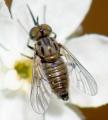
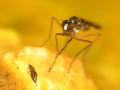
Location: Near Stockholm, Sweden Date: 2007-AUG-14 Habitat: Park, lawn near bushes. Hope it is possible to ID this sunbathing Bombyliid. Could it be a Villa hottentotta? crex attached the following image: 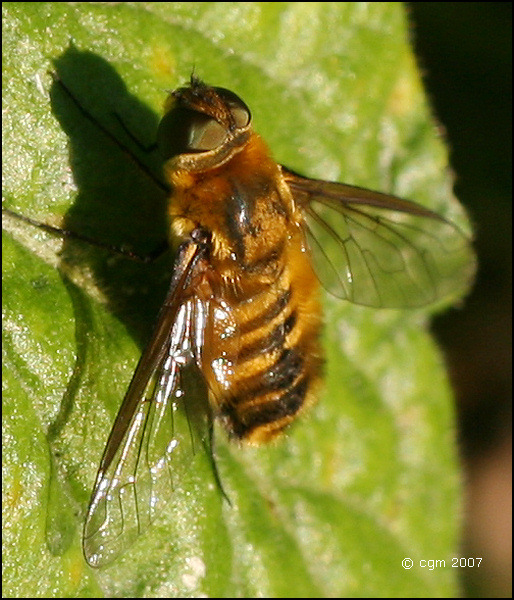 [180.07Kb] Edited by crex on 14-08-2007 19:48 |
|
|
|
| Kahis |
Posted on 14-08-2007 19:39
|
 Member Location: Helsinki, Finland Posts: 1999 Joined: 02.09.04 |
Not only could it be - it is a female of V. hottentotta 
Kahis |
 |
|
| crex |
Posted on 14-08-2007 19:46
|
|
Member Location: Sweden Posts: 1996 Joined: 22.05.06 |
Perfect. My third Bombyliidae  Thanks Jere! Thanks Jere! |
|
|
|
| jorgemotalmeida |
Posted on 14-08-2007 19:57
|
 Member Location: Viseu - PORTUGAL Posts: 9296 Joined: 05.06.06 |
Which are the other two, crex? |
|
|
|
| Kahis |
Posted on 14-08-2007 21:12
|
|
Member Location: Helsinki, Finland Posts: 1999 Joined: 02.09.04 |
My guess: Bombylius major and Hemipenthes maurus  . . Those two are by far the most bombylids in northern Europe, with Villa hottentotta probably holding third position. Kahis |
|
|
|
| jorgemotalmeida |
Posted on 14-08-2007 21:23
|
|
Member Location: Viseu - PORTUGAL Posts: 9296 Joined: 05.06.06 |
if the warming global is really a reality (I don?t trust in warming global), it could be possible to get more and more tropical species in Iberian peninsula I think... and the common species here now, could be more common in North countries.. How many species of bombyliids were spotted in your countries? (in average..) |
|
|
|
| Kahis |
Posted on 14-08-2007 21:39
|
|
Member Location: Helsinki, Finland Posts: 1999 Joined: 02.09.04 |
jorgemotalmeida wrote: if the warming global is really a reality (I don?t trust in warming global), it could be possible to get more and more tropical species in Iberian peninsula I think... and the common species here now, could be more common in North countries.. How many species of bombyliids were spotted in your countries? (in average..)I doubt you'll get real tropical species - there's the little thing called Sahara between you and the tropics, and it will not go away with global warming 19 species of bombylids in Finland. Not really impressive, but at least we beat Britain. If there is anything bombylids really do not like, it's rain
Edited by Kahis on 14-08-2007 22:12 Kahis |
|
|
|
| jorgemotalmeida |
Posted on 14-08-2007 21:47
|
|
Member Location: Viseu - PORTUGAL Posts: 9296 Joined: 05.06.06 |
as you know Sahara has frequently sand storms, it could push some insects to the North? Or no? Even so, of course, they must keep all integrity.. |
|
|
|
| crex |
Posted on 14-08-2007 22:09
|
|
Member Location: Sweden Posts: 1996 Joined: 22.05.06 |
jorgemotalmeida wrote: Which are the other two, crex? Hemipenthes maurus & Hemipenthes morio. I think I have seen Bombylius major a few times, but I've been unlucky when trying to get them "on film". I have seen Bombyliidae in sunny, a bit sandy lawns and dry spots so I gather they like that. Edited by crex on 14-08-2007 22:11 |
|
|
|
| Kahis |
Posted on 14-08-2007 22:11
|
|
Member Location: Helsinki, Finland Posts: 1999 Joined: 02.09.04 |
jorgemotalmeida wrote: as you know Sahara has frequently sand storms, it could push some insects to the North? Or no? Even so, of course, they must keep all integrity.. Would not be the first time A few years ago we got a cloud of Saharan sand in Finland, leaving a visible coat of grit on cars and other shiny surfaces. In the 19th century, when migratory locusts were still a problem, some flew all the way to Finland 8|. Happily only as single individuals, not swarms of 10^10 hungry bugs
Kahis |
|
|
|
| jorgemotalmeida |
Posted on 14-08-2007 22:11
|
|
Member Location: Viseu - PORTUGAL Posts: 9296 Joined: 05.06.06 |
yes. open sites and very sunny are very good to spot these flies. I never saw H. maurus so far..  |
|
|
|
| Jump to Forum: |