


Diptera.info :: Identification queries :: Diptera (adults)
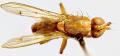
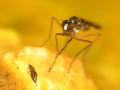
 Eginia ocypterata, July 10, 2007
|
|
| Dmitry Gavryushin |
Posted on 11-07-2007 10:43
|
 Member Location: Moscow region, Russia Posts: 3346 Joined: 17.10.05 |
Size 7 to 7.5 mm. Title changed [Anthomyidae? to Eginia ocypterata] Dmitry Gavryushin attached the following image: 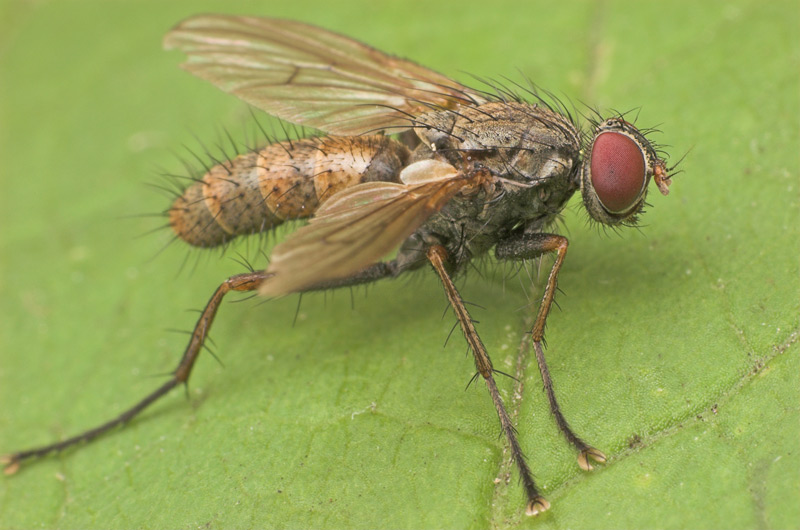 [115.13Kb] Edited by Dmitry Gavryushin on 27-07-2007 18:06 |
|
|
|
| Dmitry Gavryushin |
Posted on 11-07-2007 10:44
|
|
Member Location: Moscow region, Russia Posts: 3346 Joined: 17.10.05 |
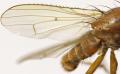
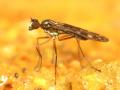
A dorsal view.
Dmitry Gavryushin attached the following image: 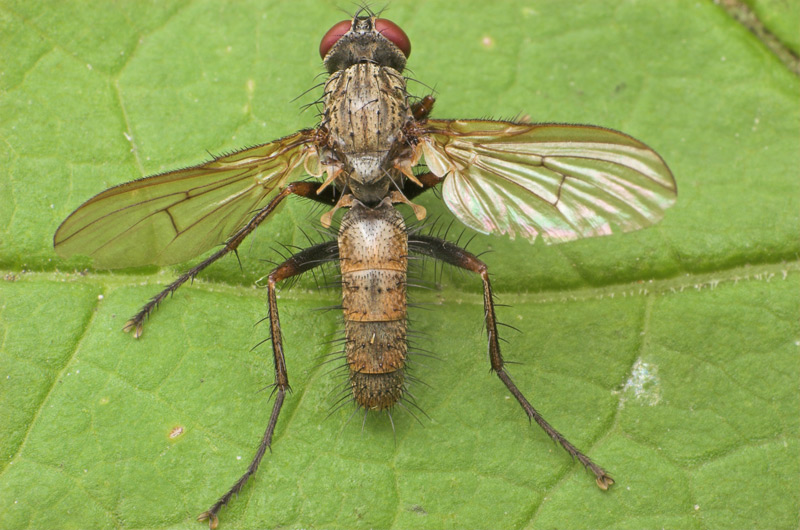 [155.5Kb] |
|
|
|
| Dmitry Gavryushin |
Posted on 11-07-2007 10:45
|
|
Member Location: Moscow region, Russia Posts: 3346 Joined: 17.10.05 |
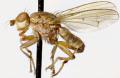
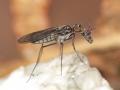
The head (just in case, a different specimen).
Dmitry Gavryushin attached the following image:  [88.22Kb] |
|
|
|
| Liekele Sijstermans |
Posted on 21-07-2007 22:13
|
|
Member Location: Geldermalsen Netherlands Posts: 305 Joined: 16.04.05 |
It is very quiet on this thread. I am not sure, but I have an opinion. It reminds me of Eginia ocypterata. That is a difficult fly to identify from a picture. It is difficult to assign at family level at all. It looks like a scatophagid, parasite with meral bristles as in tachinidae, but now placed in Muscidae. Therefor picture could be compared with specimens in collection. Unfortunatedly I do not have a specimen in my collection. It is rare. I found some drawings of Eginia. Hindlegs have more bristles in Eginia, but that might be a difference between male (on drawing) and female (on this picture?). Black, did you collect specimens? And where did you take the pictures? Liekele |
|
|
|
| Dmitry Gavryushin |
Posted on 22-07-2007 19:36
|
|
Member Location: Moscow region, Russia Posts: 3346 Joined: 17.10.05 |
Many thanks for your suggestion Liekele. Yes I've got one specimen, collected in the vicinity of Naro-Fominsk, Moscow region, Russia. |
|
|
|
| Kahis |
Posted on 22-07-2007 20:19
|
 Member Location: Helsinki, Finland Posts: 1999 Joined: 02.09.04 |
Whatever the name is , it is nothing I've seen before. So please, tell us if and when you can confirm it is Eginia.
Kahis |
 |
|
| Dmitry Gavryushin |
Posted on 22-07-2007 20:29
|
|
Member Location: Moscow region, Russia Posts: 3346 Joined: 17.10.05 |
Sure I will Jere  . . |
|
|
|
| Liekele Sijstermans |
Posted on 24-07-2007 10:38
|
|
Member Location: Geldermalsen Netherlands Posts: 305 Joined: 16.04.05 |
Please check for positive identification: Is it male or female? Has it hairs on ventral surface of scutellum, laterally or in the middle? Is meron with or without bristles near hind margin (before hind spiracle)? Does anal vein reach or nearly reach the wing margin? Liekele |
|
|
|
| Dmitry Gavryushin |
Posted on 24-07-2007 15:07
|
|
Member Location: Moscow region, Russia Posts: 3346 Joined: 17.10.05 |
OK I'll try (I doubt I can see ventral surface of scutellum, though...) |
|
|
|
| Susan R Walter |
Posted on 24-07-2007 18:25
|
 Member Location: Touraine du Sud, central France Posts: 1802 Joined: 14.01.06 |
Dima The hairs on the ventral surface of Anthomyids are surprisingly easy to see with good light and even just 10x magnification - they point downwards, and tend to run round the outer edge. They are a really useful character. Susan |
|
|
|
| Dmitry Gavryushin |
Posted on 24-07-2007 18:55
|
|
Member Location: Moscow region, Russia Posts: 3346 Joined: 17.10.05 |
Now I understand, thanks a lot Susan. |
|
|
|
| Nikita Vikhrev |
Posted on 27-07-2007 12:22
|
 Member Location: Moscow, Russia Posts: 9561 Joined: 24.05.05 |
I examined specimen. Liekele was absolutely right - Eginia ocypterata Mg.! Fly has I wonderful hypopleural bristles! Nikita Nikita Vikhrev - Zool Museum of Moscow University |
|
|
|
| Liekele Sijstermans |
Posted on 27-07-2007 14:06
|
|
Member Location: Geldermalsen Netherlands Posts: 305 Joined: 16.04.05 |
Black, I hope Paul will add your beautifull pictures to the gallery. For him the difficult choice in which family it belongs: Muscidae or Eginiidae. As far as I know, it is a rare species. Regards, Liekele |
|
|
|
| Dmitry Gavryushin |
Posted on 27-07-2007 14:32
|
|
Member Location: Moscow region, Russia Posts: 3346 Joined: 17.10.05 |
Many thanks Nikita (commissioned to solve that  ) and Liekele. Fauna Europaea places it in Muscidae/Phaoniinae/Eginiini. ) and Liekele. Fauna Europaea places it in Muscidae/Phaoniinae/Eginiini. |
|
|
|
| Nikita Vikhrev |
Posted on 27-07-2007 14:42
|
|
Member Location: Moscow, Russia Posts: 9561 Joined: 24.05.05 |
There is one important note. In Gregor at all key for "Muscidae of Central Europe" in description of Eginia "anal vein does not reach the posterior wing margin". According old Stackelberg's key "A do reach wing margin" At least this specimens fits Stackelberg description - A obviosly reach wing margin as in Anthomyiidae. Nikita Nikita Vikhrev - Zool Museum of Moscow University |
|
|
|
| Tony Irwin |
Posted on 27-07-2007 20:40
|
 Member Location: Norwich, England Posts: 7347 Joined: 19.11.04 |
With an anal vein that runs to the wing margin, and meral bristles, this really bends the rules for Muscidae, so it's great that Black has taken these wonderful pictures. This fly would have given me quite a headache if I had tried to identify it!
Tony ---------- Tony Irwin |
|
|
|
| Xespok |
Posted on 27-07-2007 21:30
|
 Member Location: Debrecen, Hungary Posts: 5551 Joined: 02.03.05 |
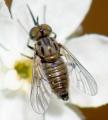
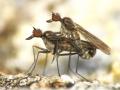
I wonder, whether these images posted by me earlier might show the same species.
Gabor Keresztes Japan Wildlife Gallery Carpathian Basin Wildlife Gallery |
|
|
|
| Zeegers |
Posted on 28-07-2007 09:31
|
|
Member Location: Soest, NL Posts: 19310 Joined: 21.07.04 |
In your pictures the bristles on tergites are much smaller. So, I doubt it. Theo |
|
|
|
| Paul Beuk |
Posted on 28-07-2007 18:46
|
 Super Administrator Location: Netherlands Posts: 19403 Joined: 11.05.04 |
Antennal segments are differently shaped as well.
Paul - - - - Paul Beuk on https://diptera.info |
|
|
|
| Jump to Forum: |