


Diptera.info :: Identification queries :: Diptera (adults)
 Orange fly from Holland (where else from?)
|
|
| Cor Zonneveld |
Posted on 03-06-2007 16:39
|
 Member Location: Amstelveen, the Netherlands Posts: 840 Joined: 14.10.06 |
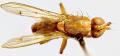
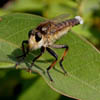
Orange is a national colour in the Netherlands, where I saw this fly! I found it on a oozing oak tree, hided in the shadow side down in grass. The tree was in deciduous forest in the dunes (Amsterdamse Waterleiding Duinen). I realize the photograph is not too much to go on, but I never saw a completely orange fly, so I hope an ID is possible nevertheless. Medium sized, say about 8 - 10 mm.
Cor Zonneveld attached the following image:  [131.83Kb] Thanks for your attention Cor Zonneveld |
 |
|
| Nikita Vikhrev |
Posted on 03-06-2007 18:10
|
 Member Location: Moscow, Russia Posts: 9561 Joined: 24.05.05 |
I'd say it is Phaonia pallida.
Nikita Vikhrev - Zool Museum of Moscow University |
|
|
|
| Cor Zonneveld |
Posted on 03-06-2007 19:40
|
|
Member Location: Amstelveen, the Netherlands Posts: 840 Joined: 14.10.06 |
Thanks! I guess it is a male (touching eyes), or am I mistaken? I wonder what its known distribution is?
Thanks for your attention Cor Zonneveld |
|
|
|
| Juergen Peters |
Posted on 03-06-2007 20:19
|
 Member Location: northwest Germany Posts: 14435 Joined: 11.09.04 |
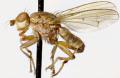
Hello! Nikita Vikhrev wrote: I'd say it is Phaonia pallida. I just wanted to post a similar fly from Germany, found yesterday. I was not sure if it was P. pallida or perhaps Pegomya silacea from the Anthomyiidae. Juergen Peters attached the following image:  [61.98Kb] Best regards, Jürgen -=-=-=-=-=-=-=-=-=-=-=-=-=-=-=-= Juergen Peters Borgholzhausen, Germany WWW: http://insektenfo... -=-=-=-=-=-=-=-=-=-=-=-=-=-=-=-= |
|
|
|
| Nikita Vikhrev |
Posted on 03-06-2007 20:32
|
|
Member Location: Moscow, Russia Posts: 9561 Joined: 24.05.05 |
Hi Cor and Juergen. I've just logined to Diptera.info to tell that I have doubts in my ID of Cor's fly - it may be as well Pegomya testacea of Anthomyiidae - thorax seems too shining and A1 seems reaching wing margin. In case of Juergen fly blackish tarsi get out Pegomya and my test it really looks as Ph.pallida. But I'm not ready to give positive ID... Nikita Vikhrev - Zool Museum of Moscow University |
|
|
|
| Stephane Lebrun |
Posted on 03-06-2007 20:50
|
 Member Location: Le Havre, France Posts: 8248 Joined: 03.03.07 |
Kahis said one day that Pegomyia never have four post-sutural dc. So I think both are actually males Phaonia pallida. Regards Stephane. |
|
|
|
| Juergen Peters |
Posted on 03-06-2007 20:53
|
|
Member Location: northwest Germany Posts: 14435 Joined: 11.09.04 |
Stephane Lebrun wrote: Kahis said one day that Pegomyia never have four post-sutural dc. So I think both are actually males Phaonia pallida. Many thanks, Nikita and Stephane! Edited by Juergen Peters on 03-06-2007 22:49 Best regards, Jürgen -=-=-=-=-=-=-=-=-=-=-=-=-=-=-=-= Juergen Peters Borgholzhausen, Germany WWW: http://insektenfo... -=-=-=-=-=-=-=-=-=-=-=-=-=-=-=-= |
|
|
|
| Nikita Vikhrev |
Posted on 03-06-2007 21:26
|
|
Member Location: Moscow, Russia Posts: 9561 Joined: 24.05.05 |
Thank you for your encouragement, Stephane. Today I'm working with Muscidae and Anthomyiidae collected in Kursk region and time from time I feel that I understand nothing at all anymore in this orange bastard One pleasure only - orange Lauxaniidae was given directly to Dr. Shatalkin One pleasure only - orange Lauxaniidae was given directly to Dr. Shatalkin Nikita Nikita Vikhrev - Zool Museum of Moscow University |
|
|
|
| Xespok |
Posted on 04-06-2007 06:21
|
 Member Location: Debrecen, Hungary Posts: 5551 Joined: 02.03.05 |
In addition I think the abdomen is too thick for Pegomya. So I would also join the chorus saying Ph. pallida. This species seems to be rather common in Hungary.
Gabor Keresztes Japan Wildlife Gallery Carpathian Basin Wildlife Gallery |
|
|
|
| Kahis |
Posted on 04-06-2007 07:29
|
 Member Location: Helsinki, Finland Posts: 1999 Joined: 02.09.04 |
Definitely Muscidae. There are some other all-yellow species. Thricops diaphanus comes to mind, but I think this one is not diaphanus.
Kahis |
|
|
|
| Jump to Forum: |