


Diptera.info :: Identification queries :: Diptera (adults)
 Sciomyzidae --> Sciomyza testacea
|
|
| Haleun |
Posted on 17-10-2014 17:56
|
|
Member Location: Hannover, Germany Posts: 716 Joined: 29.10.11 |
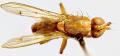
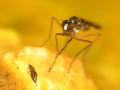
Hi, these pictures of an appr. 4 - 5 mm fly is from July 20, taken in Bad Sachsa, Harz mountains, Germany in a shady place under trees. Could it be a Sciomyza species? Thank you for your answers! Hans Haleun attached the following image: 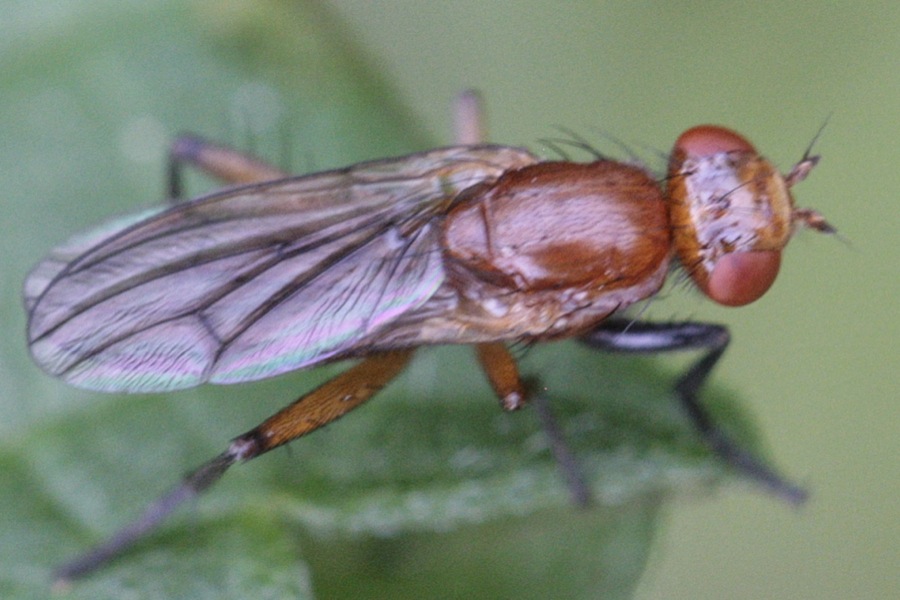 [130.14Kb] Edited by Haleun on 20-10-2014 22:14 |
|
|
|
| Haleun |
Posted on 17-10-2014 17:59
|
|
Member Location: Hannover, Germany Posts: 716 Joined: 29.10.11 |
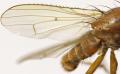
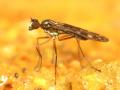
Sorry for the poor quality but I got only these two shots. It was too windy.
Haleun attached the following image: 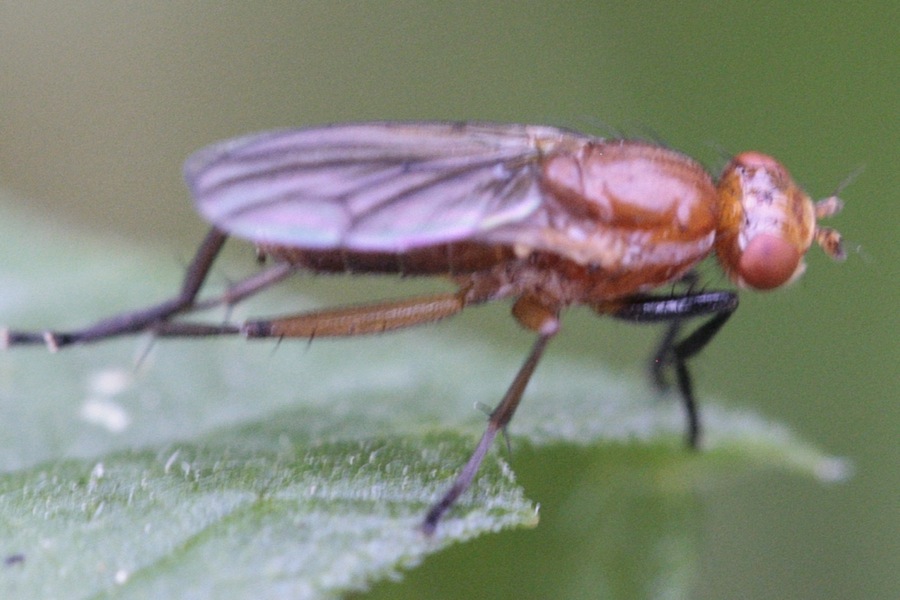 [125.9Kb] |
|
|
|
| jonas |
Posted on 17-10-2014 19:05
|
|
Member Location: Posts: 351 Joined: 06.05.07 |
Nice Sciomyza testacea |
|
|
|
| Haleun |
Posted on 18-10-2014 18:09
|
|
Member Location: Hannover, Germany Posts: 716 Joined: 29.10.11 |
Thank you so much, Jonas! So I might be a bit proud of that. Cheers, Hans |
|
|
|
| Fred Fly |
Posted on 18-10-2014 18:31
|
|
Member Location: Germany Posts: 396 Joined: 19.07.11 |
I'm personally tending to Sciomyza dryomyzina as in http://www.diptera.info/photogallery.php?photo_id=6048 (which shows a female and not a male) and not to S. testacea. |
|
|
|
| jonas |
Posted on 20-10-2014 07:55
|
|
Member Location: Posts: 351 Joined: 06.05.07 |
Hi Piet, I agree... In females, the color of the third antennal segment is not always clear to me. Especially in the top picture, the third segment appears truly dark. In the second indeed they are only slightly infuscated. To illustrate my point: This picture (a male this time) http://www.diptera.info/photogallery.php?photo_id=4762 is badly identified - right?? I think this should be S. dryomyzina and not S. testacea. - The tibia 1 and tarses are clearly black, indicating S. dryomyzina (feature, apparently only to be used in males) - And the antennae are slightly blackish (indicating S. testacea). So the 'orange' third segment can in fact be more dark as well for S. dryomyzina. I mean, antennae for S. testacea should be clearly black black (eg this picture: http://www.dipter...to_id=4702) Anyhow, I was a bit too fast since I was led too much by the first picture of black antennae - while they are in fact only slightly blackish :-) Bye Jonas |
|
|
|
| Haleun |
Posted on 20-10-2014 14:34
|
|
Member Location: Hannover, Germany Posts: 716 Joined: 29.10.11 |
Hi Piet and Jonas, thank you very much for your helpful discussion! I appreciate your precise identification (in the end)! Cheers, Hans |
|
|
|
| Nikita Vikhrev |
Posted on 20-10-2014 15:01
|
 Member Location: Moscow, Russia Posts: 9561 Joined: 24.05.05 |
Dear Jonas and Piet. I have to say that I’d rather agree with name S. testacea by Jonas. I regard the situation as follows: 1. According to Rozkosny, 1987 (A review of the Palaearctic Sciomyzidae): Postpedicel yellow - dryomyzina Postpedicel black – testacea Well, not very convincing difference, but at least clear. 2. According to Vala, 1989 (Faune de France, Dipteres Sciomyzidae): Postpedicel yellow. Male t1 and tar1 not entirely dark - dryomyzina Postpedicel black. Male t1 and tar1 entirely dark – testacea And the drawing of genitalia which are in my opinion similar for all Sciomyza including simplex. As for colour of postpedicel and fore leg, I have in Zool Museum, Moscow a lot of specimens of Sciomyza which may be named either dryomyzina or testacea depending on one’s personal preference. I’d rather prefer the colour of fore leg, that is why I like Jonas’s ID more than Piet’s. But the main reason why I regard this image as S. testacea is: it is the same species and Sciomyza testacea Macquart 1835 is older name than Sciomyza dryomyzina Zetterstedt 1846 Nikita Vikhrev - Zool Museum of Moscow University |
|
|
|
| Haleun |
Posted on 20-10-2014 22:13
|
|
Member Location: Hannover, Germany Posts: 716 Joined: 29.10.11 |
Dear Nikita, Jonas and Piet, I tend to accept Nikita's opinion. So I change the header to S. testacea again. Best regards to you all of you from Hans |
|
|
|
| Fred Fly |
Posted on 21-10-2014 17:45
|
|
Member Location: Germany Posts: 396 Joined: 19.07.11 |
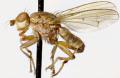
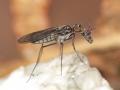
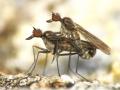
Dear Nikita, your main reason is surely an interesting point of view. At present I see two similar species of Sciomyza in Europe and accept dryomyzina and testacea as their valid names. These species are not easy to separate, especially their females, based on the characters given in recent keys. Vala's book is in most parts not more then an evalutation of literature and in too many cases not really helpful for determination of rare respectively difficult species. I now picked out four females of Sciomyza, two of them I would place to testacea and two I see as dryomyzina, which have exact the same coloration of legs as Hans specimen. Of these I made some fast shots of heads in frontal and in lateral view. Associated with the „black“ or „yellow“ color of third antennal segment you can hopefully see that there is a pair of specimens with a broad head, short face and low gena and a group with a higher head, much more produced face and higher eyes and gena etc. The problem is that the keys are fixed on coloration of antenna and descriptions on leg color. Both species seems to be variable in these characters, possibly the reason to conclude that there is only one species. Nearly all specimens I have seen of dryomyzina have the third antennal segment darkened dorsally, orange-brow to blackish, sometimes mostly darkened and only the base yellow. Several testacea I have examined have the 3rd segmend black but the base yellow ventrally. With my small material I would say that the female of dryomyzina has always the base of arista orange and the 3rd antennal might be darkened dorsally as in Hans specimen. In testacea the female has usually the 3rd segment blackish for most parts and the base of arista black. Thats the reason why I'm tending to say Hans specimen is belonging to dryomyzina. Both species have typical characters located at the head which are not visible on Hans pictures. Regards Piet Fred Fly attached the following image: 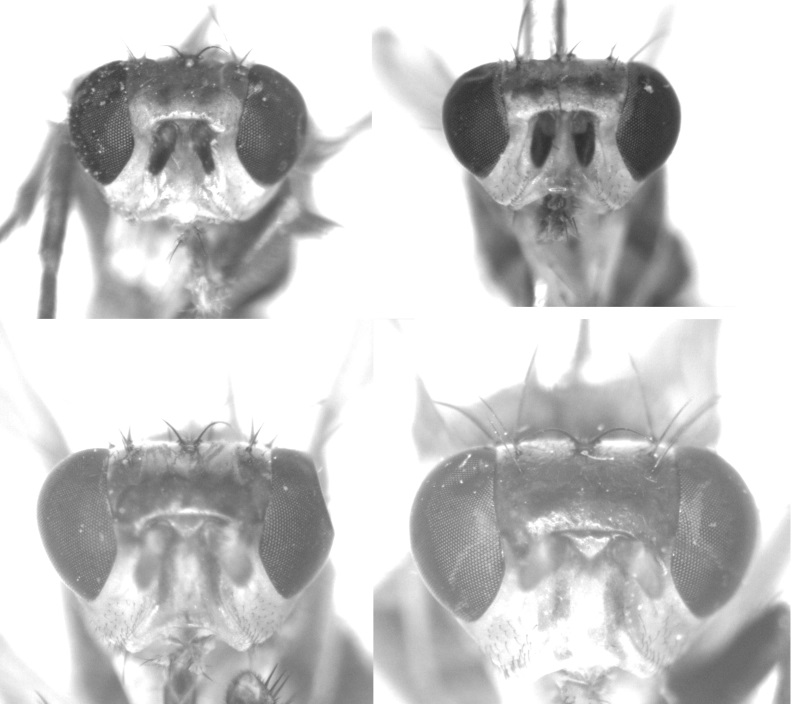 [99.66Kb] Edited by Fred Fly on 21-10-2014 17:46 |
|
|
|
| Fred Fly |
Posted on 21-10-2014 17:47
|
|
Member Location: Germany Posts: 396 Joined: 19.07.11 |
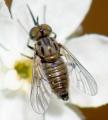
..
Fred Fly attached the following image: 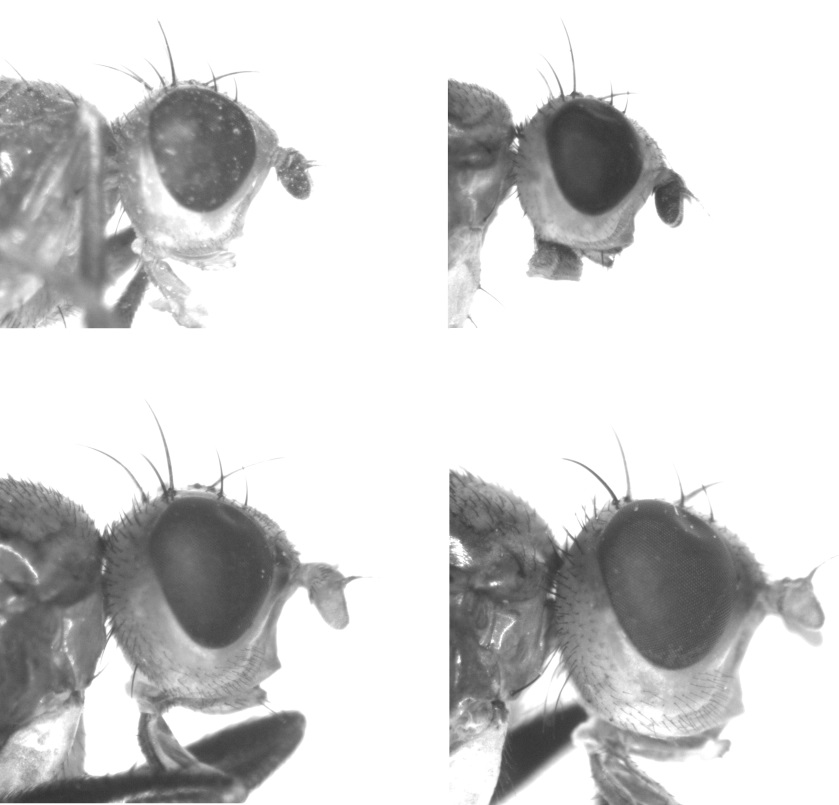 [93.64Kb] |
|
|
|
| Nikita Vikhrev |
Posted on 22-10-2014 20:49
|
|
Member Location: Moscow, Russia Posts: 9561 Joined: 24.05.05 |
Dear Piet, thank you for your reply. It is very interesting. I wish that your new sets of characters will turn to be satisfactory and replaced the unsatisfactory ones presently offered. In this case the new key for Sciomyza should be published as soon as possible. (I can add that it seems to me that “yellow” specimens are usually substantially bigger than “black” ones.) In my turn, if you put on Diptera.info (or send by e-mail) your project of key for Sciomyza I’ll check our ZMUM material and report you how the new key works. So far, I still suspect that testacea, dryomyzina, sebezhica and pulchra are the same variable species… Nikita Nikita Vikhrev - Zool Museum of Moscow University |
|
|
|
| Jump to Forum: |