

Diptera.info :: Identification queries :: Diptera (adults)
 Tabanidae, Pagoniinae ID please
|
|
| KateL |
Posted on 22-10-2012 19:40
|
|
Member Location: Posts: 4 Joined: 19.10.12 |
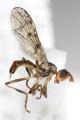
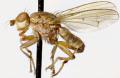
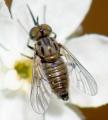
This fly was in dry scrubby habitat at the Colca Canyon, Peru on 25th Sept 2012. We think it's a beefly, but any further ID would be gratefully received. Thanks. (Edit: well I got that wrong!) KateL attached the following image: 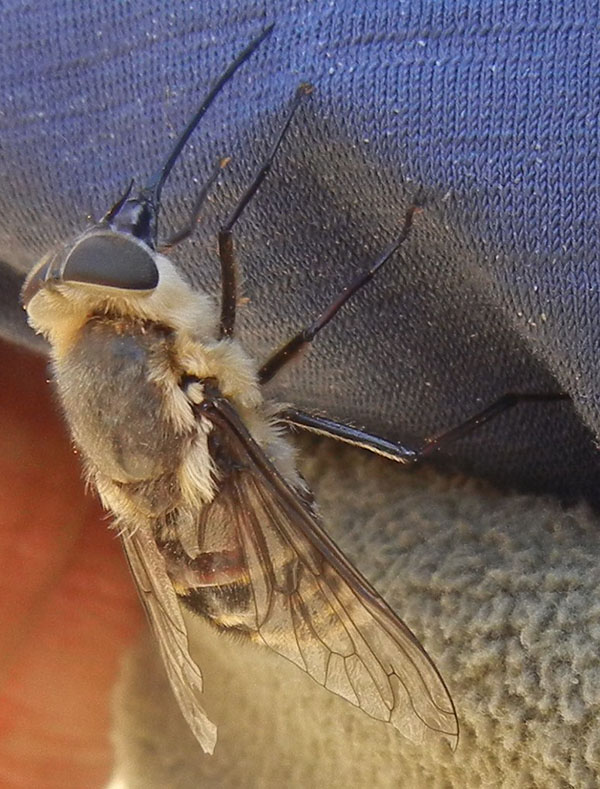 [154.56Kb] Edited by KateL on 23-10-2012 09:38 |
|
|
|
| KateL |
Posted on 22-10-2012 19:41
|
|
Member Location: Posts: 4 Joined: 19.10.12 |
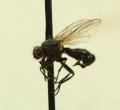
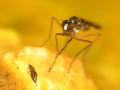
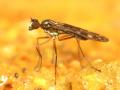
Here's another photo giving a better impression of the relative length of the proboscis:
KateL attached the following image: 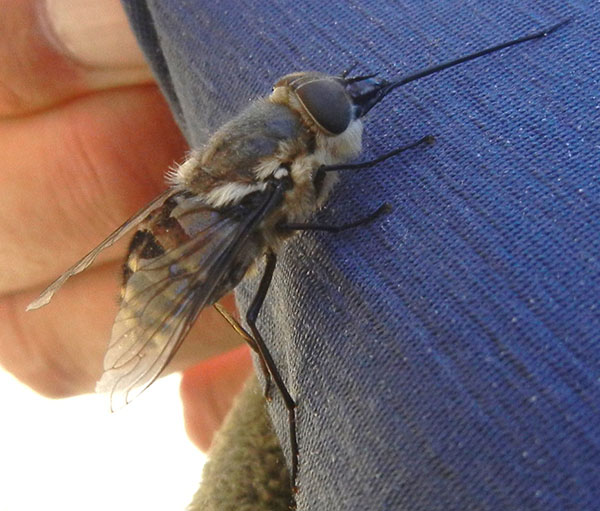 [108.12Kb] |
|
|
|
| sd |
Posted on 22-10-2012 20:17
|
|
Member Location: Suffolk, UK Posts: 893 Joined: 11.10.07 |
This is a horsefly, Tabanidae, subfamily Pangoniinae (which have a long proboscis, causing confusion with Bombyliidae) Steve |
|
|
|
| KateL |
Posted on 22-10-2012 22:12
|
|
Member Location: Posts: 4 Joined: 19.10.12 |
Thanks, that's very helpful. We'd considered that it might be a horsefly, but a friend thought that the wavy parallel radial veins made it a beefly. I don't know what the etiquette is here about off-topic questions - am I allowed to ask what it does with that probsocis? Is it just a nectar feeder or does it bite like the horseflies I'm more familar with? Edited by KateL on 22-10-2012 22:13 |
|
|
|
| John Carr |
Posted on 23-10-2012 01:40
|
 Super Administrator Location: Colorado, USA Posts: 10696 Joined: 22.10.10 |
A Pangoninae in Central America with that wing would be Scione but I have no information about Peruvian Tabanidae. At least some species in the genus bite. |
 |
|
| sd |
Posted on 23-10-2012 19:51
|
|
Member Location: Suffolk, UK Posts: 893 Joined: 11.10.07 |
Yes, those that bite then hover to suck up the blood! Steve |
|
|
|
| KateL |
Posted on 23-10-2012 20:24
|
|
Member Location: Posts: 4 Joined: 19.10.12 |
That's amazing! Do the blood feeders also feed on nectar? Is it likely that a species with such a long proboscis as this one is a blood feeder? Do the relatively long hind legs give any clues on the flies feeding behaviour? Thanks! Kate |
|
|
|
| Zeegers |
Posted on 27-10-2012 10:28
|
|
Member Location: Soest, NL Posts: 19363 Joined: 21.07.04 |
Kate, Start collecting and I can help you out If you did: give me a PM. Greetings Theo |
|
|
|
| Jump to Forum: |