

Diptera.info :: Identification queries :: Diptera (adults)
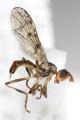
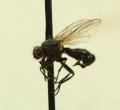
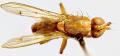
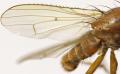
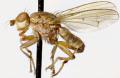
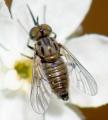
 Diptera (Ephydridae) Setacera
|
|
| Boza47 |
Posted on 04-10-2012 13:23
|
|
Member Location: Serbia, Europe Posts: 100 Joined: 03.10.12 |
Sept. 2012, Serbia, Batajnica
Boza47 attached the following image: 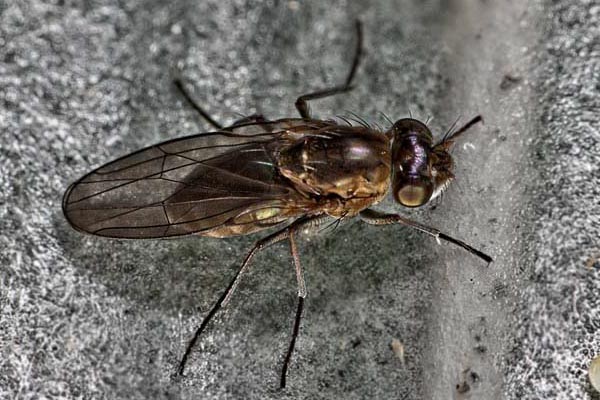 [65.82Kb] Edited by Boza47 on 09-10-2012 08:17 |
|
|
|
| Roger Thomason |
Posted on 04-10-2012 15:11
|
 Member Location: Mossbank,Shetland Isles. Posts: 5269 Joined: 17.07.08 |
Ephydridae |
|
|
|
| Boza47 |
Posted on 04-10-2012 17:24
|
|
Member Location: Serbia, Europe Posts: 100 Joined: 03.10.12 |
Thank You, Roger |
|
|
|
| Tony Irwin |
Posted on 04-10-2012 19:21
|
 Member Location: Norwich, England Posts: 7353 Joined: 19.11.04 |
Setacera (Bristle on outer face of left antenna is just visible.)
Tony ---------- Tony Irwin |
|
|
|
| Boza47 |
Posted on 04-10-2012 20:43
|
|
Member Location: Serbia, Europe Posts: 100 Joined: 03.10.12 |
Thank You, Tony Since i am specialized more in moths, will You tell me, please; which part of the fly is most important for identification. Regards |
|
|
|
| ChrisR |
Posted on 04-10-2012 22:02
|
 Super Administrator Location: Reading, England Posts: 7706 Joined: 12.07.04 |
Tony might be able to give you some hints on how it might be possible to go further. But in general it varies between groups and species - an identification is usually made from a lot of very fine details. It is always best to take a lot of photos from different angles and in that way you might have shown some of the necessary characters. But in some species identifications from photos are impossible because we must see the genitalia (internal structures) or features that are hidden on surfaces that the fly doesn't show in life 
Manager of the UK Species Inventory in the Angela Marmont Centre for UK Biodiversity at the Natural History Museum, London. |
 |
|
| Boza47 |
Posted on 05-10-2012 07:41
|
|
Member Location: Serbia, Europe Posts: 100 Joined: 03.10.12 |
Thank You. I suspected, it would not be easy. I take pictures of the moths, mainly, but very often, many flies come to my paper lamp with mercury bulb, sitting of a small table (table painted Kodak-gray, for latter color verification, during editing). Flies are, as moths, very exited by UV radiation too, but unlike moths, flies would not rest for more than few seconds. In daylight, situation is even worse. Not an easy task! |
|
|
|
| Tony Irwin |
Posted on 05-10-2012 11:56
|
|
Member Location: Norwich, England Posts: 7353 Joined: 19.11.04 |
I can't add much to what Chris says. If it is identifiable from a photo, usually a dorsal and a lateral image are required. Frontal (face-on) can also be useful, but often the flies don't co-operate. As a rule, the more shots the better, but some groups are just too difficult - even with a specimen they can be very challenging! 
Tony ---------- Tony Irwin |
|
|
|
| Jump to Forum: |