

Diptera.info :: Identification queries :: Diptera (adults)
 Rhinophoridae: Phyto angustifrons =Cirillia angustifrons (female)
|
|
| rafael_carbonell |
Posted on 02-10-2012 22:53
|
 Member Location: Beuda, Girona, Catalonia Posts: 691 Joined: 23.03.06 |
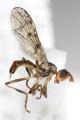
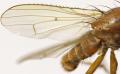
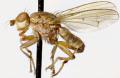
This small fly (4.5 mm) was found dead indoors (Spain: Catalonia: Girona: Beuda: UTM31T DG7477, 395 m) the 26th july 2008, and it has the main features of the family (row of bristles at meron, subscutellum bulged but half membranous, a large petiole on the wing and an angled vein-M) as it seen here http://tachinidae...page_id=25. Which species could it be? rafael_carbonell attached the following image: 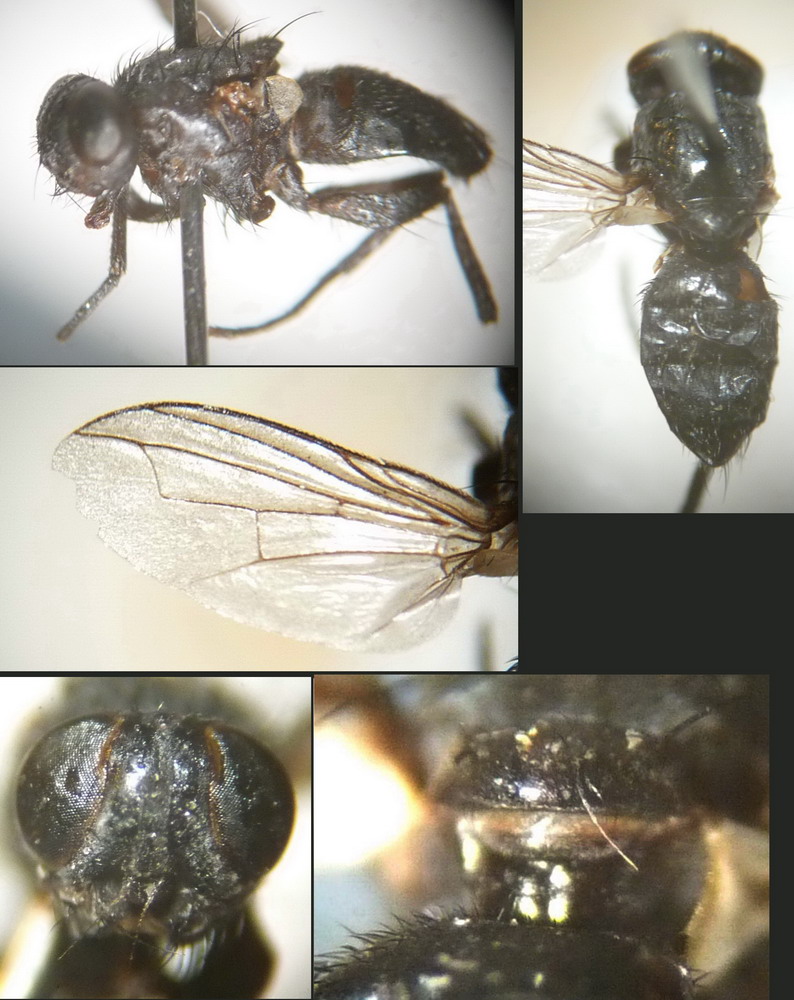 [188.03Kb] Edited by rafael_carbonell on 24-10-2012 17:40 |
|
|
|
| ChrisR |
Posted on 03-10-2012 00:58
|
 Super Administrator Location: Reading, England Posts: 7706 Joined: 12.07.04 |
Yes, Rhinophoridae, I think.
Manager of the UK Species Inventory in the Angela Marmont Centre for UK Biodiversity at the Natural History Museum, London. |
 |
|
| rafael_carbonell |
Posted on 03-10-2012 09:41
|
|
Member Location: Beuda, Girona, Catalonia Posts: 691 Joined: 23.03.06 |
Thanks Chris, but it doesn't fit with any known spanish species Best wishes, Rafael |
|
|
|
| Zeegers |
Posted on 03-10-2012 18:49
|
|
Member Location: Soest, NL Posts: 19355 Joined: 21.07.04 |
There is no such Rhinophorid. The shiny black parafrontals strongly suggest Catharosia (Tachinidae), a Tachinid with a Rhinophorid-calypter. The wings seem clear though, that confuses me. Or is it the flash ? Theo |
|
|
|
| rafael_carbonell |
Posted on 03-10-2012 19:45
|
|
Member Location: Beuda, Girona, Catalonia Posts: 691 Joined: 23.03.06 |
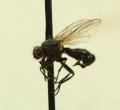
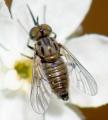
Could the ethyl acethate has rubbered the colour? Or could it be Catharosia albisquama? Theo, tomorrow I will send you three tachinid flies, including this one. This night I will finish with the tachinids. Rafael rafael_carbonell attached the following image: 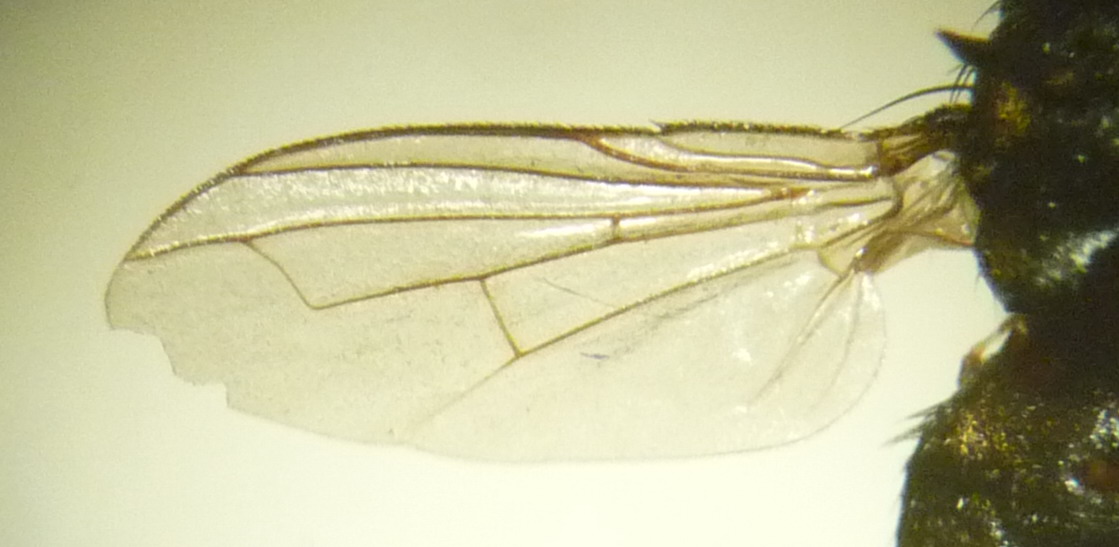 [117.63Kb] |
|
|
|
| Zeegers |
Posted on 03-10-2012 20:23
|
|
Member Location: Soest, NL Posts: 19355 Joined: 21.07.04 |
Or it could be Litophasia, but as I remember, the bend in vein M was more curved in Litophasia. If it is more than 4 mm. it is too big for Catharosia (sorry, missed that in first read). Anyhow, if you are going to send material, you might include this one. Theo |
|
|
|
| ChrisR |
Posted on 03-10-2012 20:25
|
|
Super Administrator Location: Reading, England Posts: 7706 Joined: 12.07.04 |
Interesting  I will watch this one with interest I will watch this one with interest
Manager of the UK Species Inventory in the Angela Marmont Centre for UK Biodiversity at the Natural History Museum, London. |
|
|
|
| rafael_carbonell |
Posted on 03-10-2012 23:37
|
|
Member Location: Beuda, Girona, Catalonia Posts: 691 Joined: 23.03.06 |
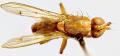
When I was studying it I also thought be it could be an Oestridae as palpi where very short. It has 2 inter-alar bristles (separated by a distance greater than the distance between the first seta and the suture), but three achrostichal before suture (the one in the middle long and stronger). Proboscis not too long, at most as long as the head. Arista with only very fine hairs. Tergite 2 hollowed to about a 1/4 to the posterior edge. (I see some long bristles at the posterior border of T3 and T4, but may be they are "shifted discal ones" . Frons approx. as wide as the eye. Thus the unique possibility left is Catharosia, I've measured it under the binocular so it's 4.5 or 4.6 mm. . Frons approx. as wide as the eye. Thus the unique possibility left is Catharosia, I've measured it under the binocular so it's 4.5 or 4.6 mm.
rafael_carbonell attached the following image: 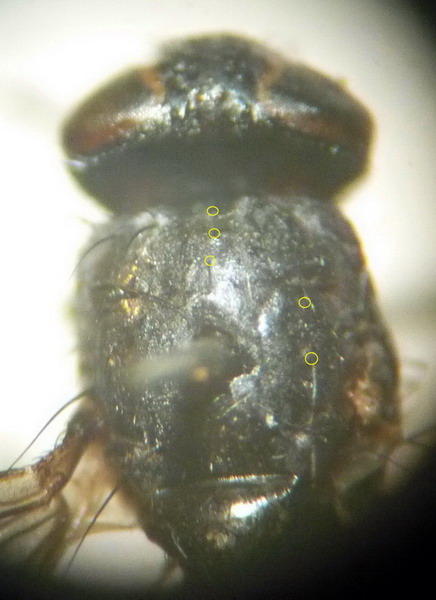 [57.53Kb] Edited by rafael_carbonell on 03-10-2012 23:53 |
|
|
|
| Zeegers |
Posted on 04-10-2012 19:55
|
|
Member Location: Soest, NL Posts: 19355 Joined: 21.07.04 |
Under the microscope, it should be relatively easy to see whether or not it is Catharosia (despite the not optimal status) Theo |
|
|
|
| rafael_carbonell |
Posted on 24-10-2012 17:37
|
|
Member Location: Beuda, Girona, Catalonia Posts: 691 Joined: 23.03.06 |
Theo told me in a private message it was a female of Cirilla (=Phyto) angustifrons (new for Iberian p.), so Chris was right Greetings to both for your work |
|
|
|
| Zeegers |
Posted on 27-10-2012 10:25
|
|
Member Location: Soest, NL Posts: 19355 Joined: 21.07.04 |
Never could have guessed that from the picture ! Theo |
|
|
|
| rafael_carbonell |
Posted on 25-01-2023 23:06
|
|
Member Location: Beuda, Girona, Catalonia Posts: 691 Joined: 23.03.06 |
Ok |
|
|
|
| Jump to Forum: |