

Diptera.info :: Identification queries :: Diptera (adults)
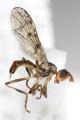
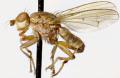
 female Conarete
|
|
| John Sankey |
Posted on 25-09-2012 18:31
|
|
Member Location: Ottawa Canada Posts: 160 Joined: 24.04.12 |
length 1.9 mm 24 August 2012 The abdomen looks distinctive to me, but if any other view will help get it to family/tribe, let me know John Sankey attached the following image: 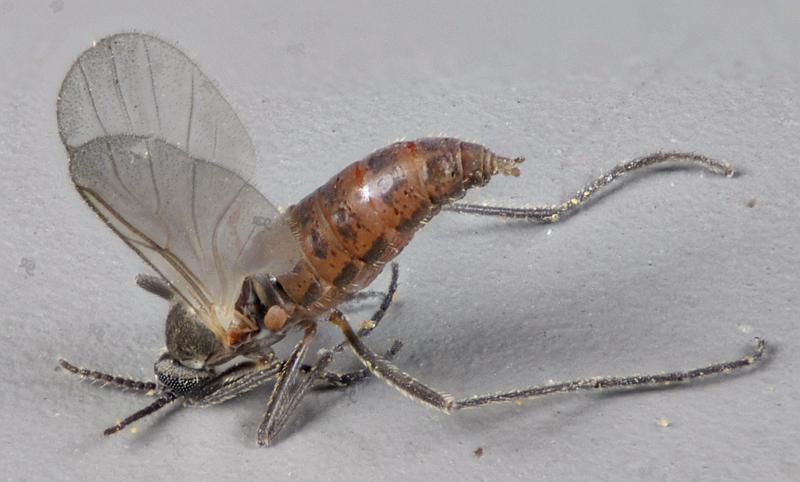 [44.31Kb] Edited by John Sankey on 16-10-2012 13:33 |
 |
|
| Gnats2meetu |
Posted on 25-09-2012 21:05
|
 Member Location: York, U.K. Posts: 303 Joined: 06.07.09 |
Wing not simple enough for a Cecidomyiidae, Sciaridae it is then....now what genus/tribe hmmmm.
Edited by Gnats2meetu on 25-09-2012 21:05 Bobby D Jorvík |
|
|
|
| John Sankey |
Posted on 25-09-2012 23:56
|
|
Member Location: Ottawa Canada Posts: 160 Joined: 24.04.12 |
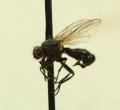
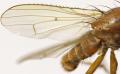
MND Sciaridae key is 90% venation...
John Sankey attached the following image: 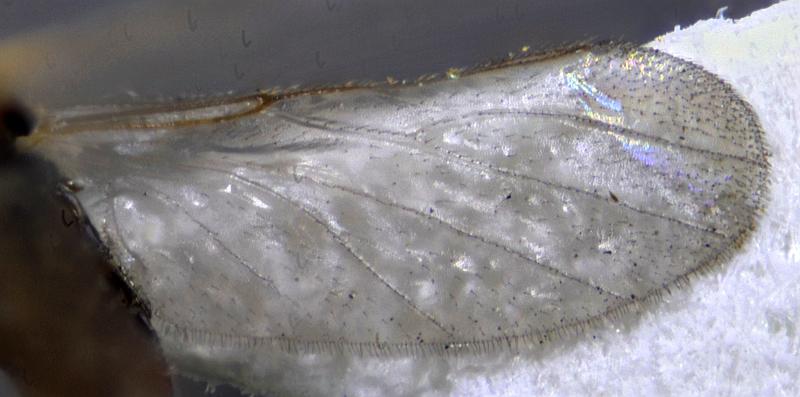 [40.09Kb] |
|
|
|
| John Carr |
Posted on 26-09-2012 00:04
|
 Super Administrator Location: Colorado, USA Posts: 10696 Joined: 22.10.10 |
Lestremia? |
|
|
|
| Paul Beuk |
Posted on 26-09-2012 08:48
|
 Super Administrator Location: Netherlands Posts: 19403 Joined: 11.05.04 |
Absence of spurs on the tibiae would suggest Lestremiinae
Paul - - - - Paul Beuk on https://diptera.info |
|
|
|
| John Sankey |
Posted on 26-09-2012 14:09
|
|
Member Location: Ottawa Canada Posts: 160 Joined: 24.04.12 |
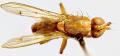
Concensus on venation seems to be, going counterclockwise from root A2 A1 CuA M3 M2 M1 R5 If so, I get Cecidomyiidae 1 5 tarsomeres, 1st long, m1+2 present = Lestremiinae 3 macropterous 6 CuA simple, M3 present 8 R5 long, antenna >6 flagellomeres longer than wide, tibia w/o spines 9 M3 free 10 medial fork longer than stem 31 female 38 macropterous 39 ... John Sankey attached the following image: 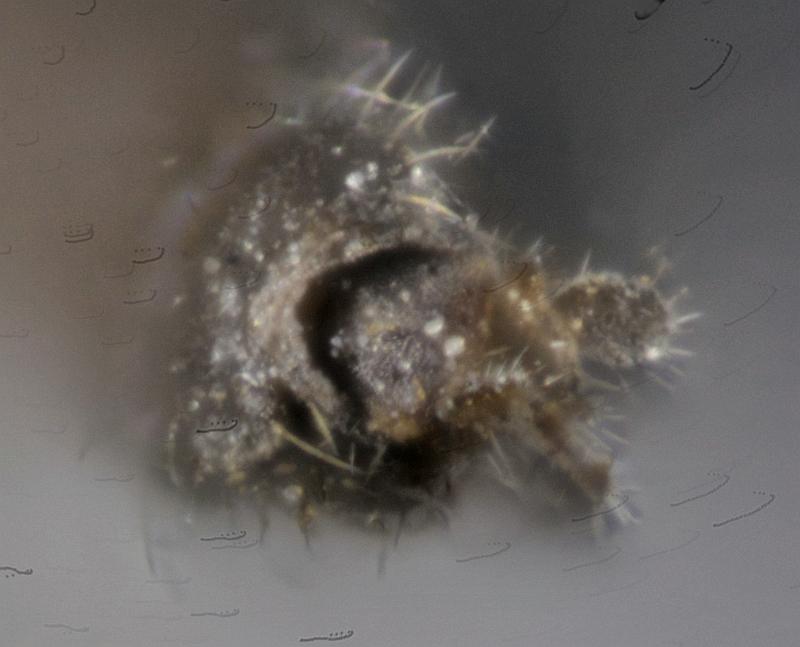 [36.39Kb] Edited by John Sankey on 27-09-2012 06:33 |
|
|
|
| Gnats2meetu |
Posted on 26-09-2012 19:44
|
|
Member Location: York, U.K. Posts: 303 Joined: 06.07.09 |
I'm still a rookie  . I was going to say gall midge but I didn't know that some of them have M1 and M2 veins.... I must study these more sometime. Is it only the Lestremiinae that have this wing characteristic? (MND= Manual of Nearctic Diptera?)- When you say 90% venation John what do you mean by this? . I was going to say gall midge but I didn't know that some of them have M1 and M2 veins.... I must study these more sometime. Is it only the Lestremiinae that have this wing characteristic? (MND= Manual of Nearctic Diptera?)- When you say 90% venation John what do you mean by this?
Edited by Gnats2meetu on 26-09-2012 19:52 Bobby D Jorvík |
|
|
|
| John Sankey |
Posted on 26-09-2012 20:20
|
|
Member Location: Ottawa Canada Posts: 160 Joined: 24.04.12 |
just that about 90% of the Sciaridae MND couplets involve venation, so a good wing photo was first on the list to get. With Cecidomyiidae, genitals, tarsus and antenna base are next.
John Sankey attached the following image: 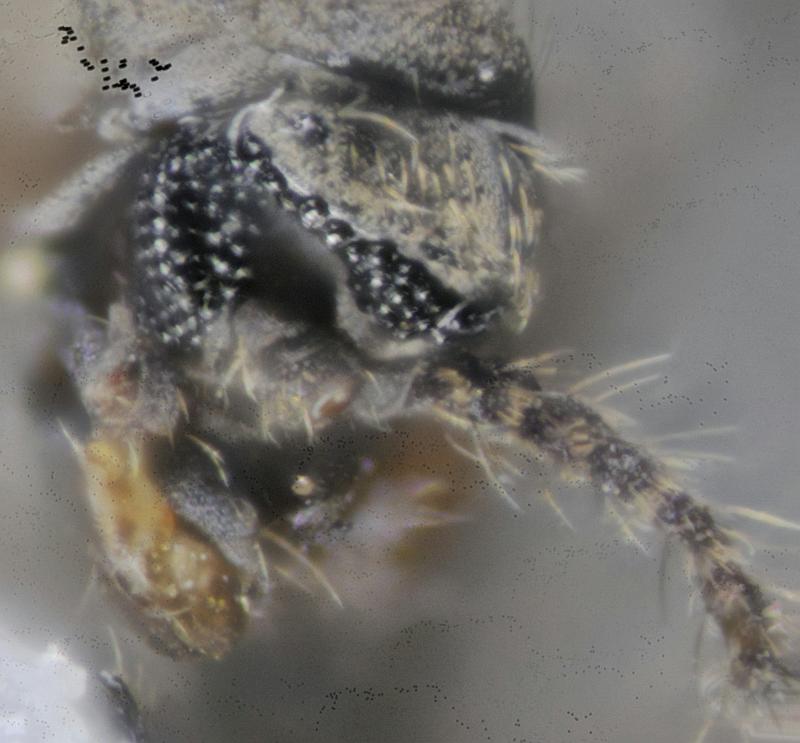 [56.09Kb] Edited by John Sankey on 26-09-2012 23:59 |
|
|
|
| John Carr |
Posted on 26-09-2012 20:44
|
|
Super Administrator Location: Colorado, USA Posts: 10696 Joined: 22.10.10 |
Vein names differ in older and newer sources, e.g. the detached M3 may be considered a detached branch of CuA instead (explaining why CuA is unforked when M3 is present). I think this is a female. Characters to check: Is pedicel larger than scape, or distinctly smaller? How many segments in flagellum? The last might be very small. Can you see thinner "necks" between segments of antennae? Normally they are obvious, but the common species of Lestremia has them reduced in females. Does the fore tarsus have the "sole" of bristles illustrated in MND? How many ocelli? How wide is the eye bridge? Should be 1-4 facets. |
|
|
|
| John Sankey |
Posted on 27-09-2012 00:45
|
|
Member Location: Ottawa Canada Posts: 160 Joined: 24.04.12 |
I see pedicel larger than scape (#8); 10 flagellomeres if the last is so small it blends with the 9th (#1); necks perhaps 20% of flagellomere length (#8). The fore tarsus has hairs as in MND 69 (#1).
Edited by John Sankey on 27-09-2012 14:09 |
|
|
|
| John Carr |
Posted on 27-09-2012 01:17
|
|
Super Administrator Location: Colorado, USA Posts: 10696 Joined: 22.10.10 |
Conarete or Allarete vernalis (Felt) depending on the hairs on the fore tarsus. In the female, species of Conarete are distinguished by number of ocelli (2 vs. 0), width of eye bridge (1-4 facets), and wing color. Unless Jaschoff's revision has changed the species, which is possible. I have Pritchard's chapter of Insects of Connecticut from 1958. Allarete is described by Pritchard: "The medial fork of the wing is distinctive in that the branches are similar, neither infuscated, and with densely set setae." Color of your fly does not match the male of A. vernalis: http://books.goog...;lpg=PA141. The stem of M is too long for the other species. |
|
|
|
| John Sankey |
Posted on 27-09-2012 14:06
|
|
Member Location: Ottawa Canada Posts: 160 Joined: 24.04.12 |
I see a pad on the end of the fore tarsi, but if it's made of hairs they're too fine for me to resolve. If the bump visible at the top of #8 is an ocellus, then there are two of them. The eye has roughly three sides to it, with the rear being four facets more or less - is that the eye bridge? All in all, it seems that Conarete is more probable... Many thanks for your insights, John - I've still got a lot to learn but this discussion helps a lot. Edited by John Sankey on 28-09-2012 13:10 |
|
|
|
| Jump to Forum: |