


Diptera.info :: Identification queries :: Diptera (adults)
 Solieria pacifica [Tachinidae]
|
|
| Susan R Walter |
Posted on 24-02-2007 19:35
|
 Member Location: Touraine du Sud, central France Posts: 1802 Joined: 14.01.06 |
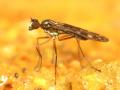
One for Team Tachinidae please  I've run this through Tschoring's key and it went quite smoothly to Solieria pacifica. Naturally, this makes me nervous  although I am somewhat heartened to see that Siphona is in the same sub-family as Solieria and my initial impression was of a very chunky Siphona. although I am somewhat heartened to see that Siphona is in the same sub-family as Solieria and my initial impression was of a very chunky Siphona.From 22 July 2006, east London cemetery park, female (I think), 8mm. Susan R Walter attached the following image: 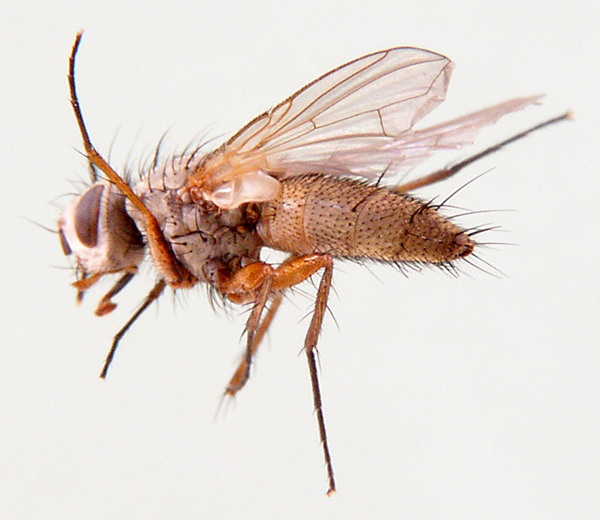 [137.14Kb] Susan |
 |
|
| Susan R Walter |
Posted on 24-02-2007 19:36
|
|
Member Location: Touraine du Sud, central France Posts: 1802 Joined: 14.01.06 |
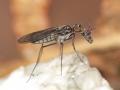
Another view.
Susan R Walter attached the following image: 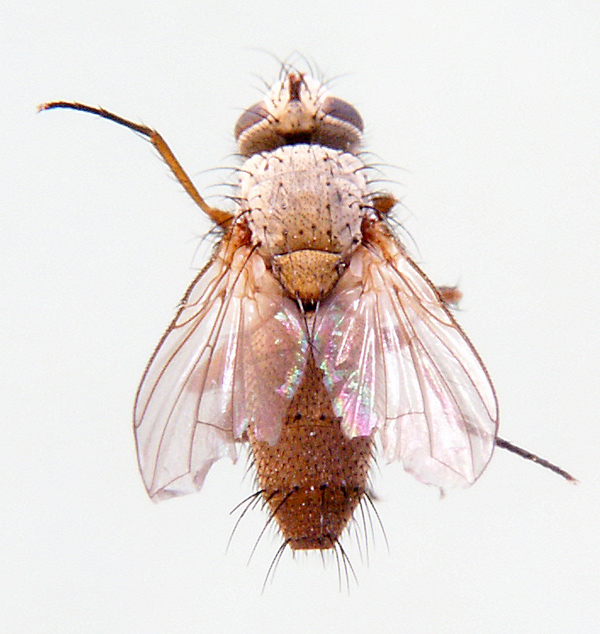 [180.66Kb] Susan |
|
|
|
| ChrisR |
Posted on 25-02-2007 03:25
|
 Super Administrator Location: Reading, England Posts: 7706 Joined: 12.07.04 |
Hmm, well it looks like a Solieria alright (light brown colour; 2 pairs of scutellars; no long angled proboscis etc). Not sure about the species though - double-check you haven't got a female because they don't key very well. S.pacifica is a fair bet - I think it's the one I come across most here in England  |
|
|
|
| Susan R Walter |
Posted on 25-02-2007 16:05
|
|
Member Location: Touraine du Sud, central France Posts: 1802 Joined: 14.01.06 |
Chris I think it is female - at least, there doesn't appear to be an obvious genital pouch the way Tschoring describes and illustrates it for this genus. Susan |
|
|
|
| Zeegers |
Posted on 25-02-2007 20:29
|
|
Member Location: Soest, NL Posts: 19308 Joined: 21.07.04 |
Hi Susan I have little doubt your ID is correct. S. pacifica is by far the most common (or, should I say, less uncommon) species of the genus. THeo Zeegers |
|
|
|
| Susan R Walter |
Posted on 25-02-2007 22:52
|
|
Member Location: Touraine du Sud, central France Posts: 1802 Joined: 14.01.06 |
Many thanks Theo - it's interesting to know that this species is relatively uncommon.
Susan |
|
|
|
| ChrisR |
Posted on 26-02-2007 01:10
|
|
Super Administrator Location: Reading, England Posts: 7706 Joined: 12.07.04 |
Well, I have had mixed experiences with Solieria spp. - where they occur they can be very common indeed. I usually find them in flowery fields - often with lots of Ragwort etc. They don't instantly look like tachinids though because they are sandy brown and quite thin so I think I probably overlook quite a lot. |
|
|
|
| Susan R Walter |
Posted on 26-02-2007 22:55
|
|
Member Location: Touraine du Sud, central France Posts: 1802 Joined: 14.01.06 |
The wardens at the park deliberately leave the ragwort within the visitor centre enclosure because it is so attractive to so many inverts. The rest of the park has to be free of ragwort because the Police Riding School practice in there but there is an abundance of Cow Parsley, and (without double checking my notes) I am pretty sure this specimen was on a flowering umbel.
Susan |
|
|
|
| Neil Jones |
Posted on 23-11-2010 14:16
|
|
Member Location: Posts: 3 Joined: 04.01.10 |
Susan R Walter wrote: The rest of the park has to be free of ragwort because the Police Riding School practice in there So yet another set of people are suffering from ragwort hysteria. I think they should be told that they are being silly. It can be difficult though. I have spent the best part of a decade working on this and the evidence is very very clear. There is no proper evidence that ragwort poisoning is a serious problem in the UK at all. Horse poisoning is very rare and occurs when Hay is fed to horses. Growing in a field it isn't a problem. If they are concerned then there is more risk of lightning strike and of various horsey problems linked to eating grass. Remember also the problem alkaloids in Ragworts occur in 3 % of the world's flora. See these websites. Ragwort facts Ragwort the myths and hoaxes debunked Ragwort myths and facts Ragwort the sense and the nonsense and finally from Buglife Ragwort yellow peril or precious flower |
|
|
|
| phil withers |
Posted on 23-11-2010 18:42
|
|
Member Location: Lyon, France Posts: 521 Joined: 04.03.08 |
Good luck with telling the police they are being silly ! |
|
|
|
| Jump to Forum: |