


Diptera.info :: Identification queries :: Diptera (adults)
 Cylindromyia auriceps?
|
|
| Sundew |
Posted on 31-07-2012 18:41
|
 Member Location: Berlin and Baden-Württemberg, Germany Posts: 3939 Joined: 28.07.07 |
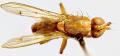
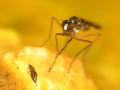
Hi, Some time ago Chris taught me how to identify C. auriceps females. Now I try my knowledge: to me, there are those small spikes/bristlets on the underside corners of tergite-2 that are decisive. The little fly was so kind to show the bottom side. So I hope I got the right species name - do you agree? Thanks, Sundew Sundew attached the following image: 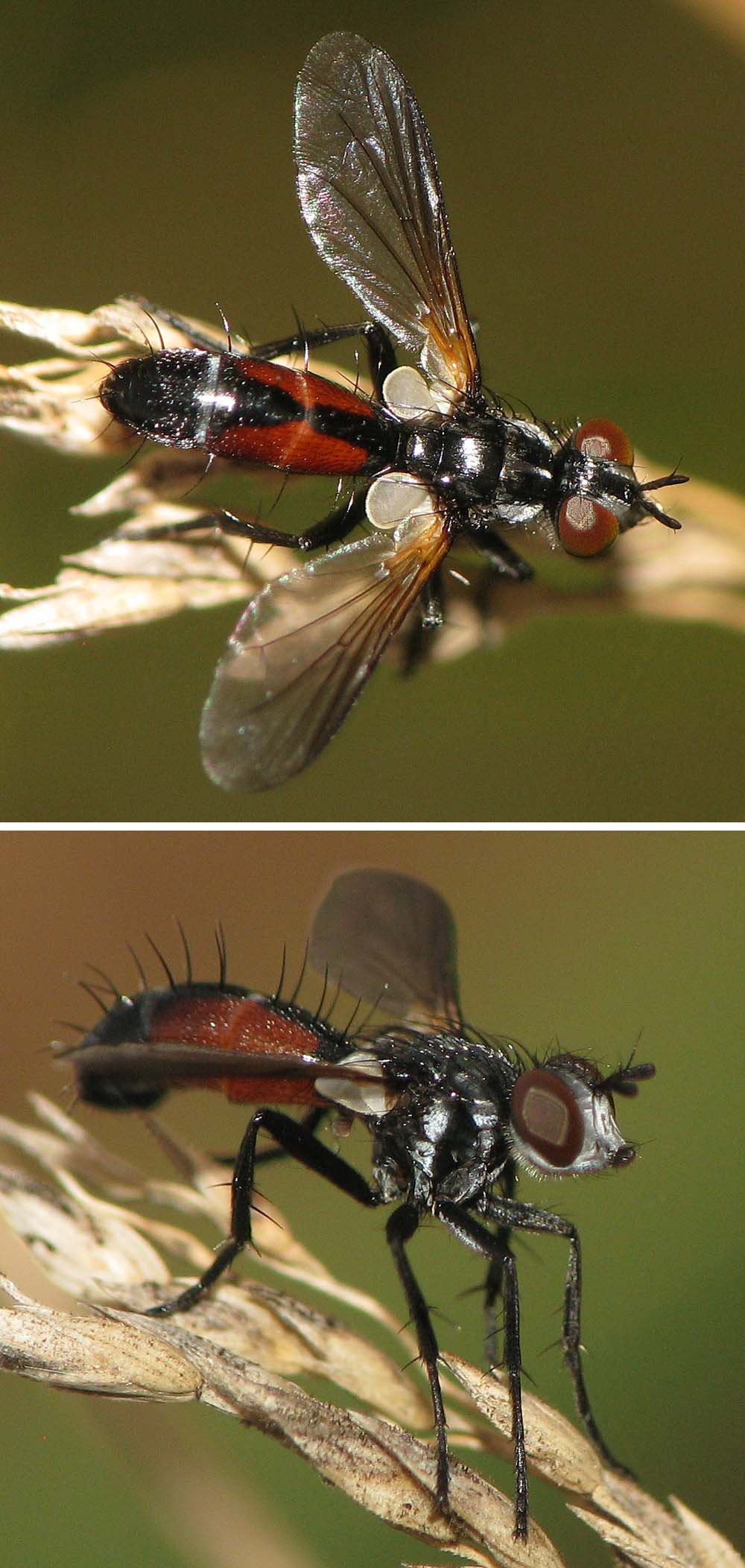 [179.41Kb] |
|
|
|
| Sundew |
Posted on 31-07-2012 18:42
|
|
Member Location: Berlin and Baden-Württemberg, Germany Posts: 3939 Joined: 28.07.07 |
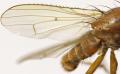
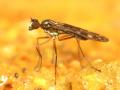
The arrow points to the spikes under concern.
Sundew attached the following image: 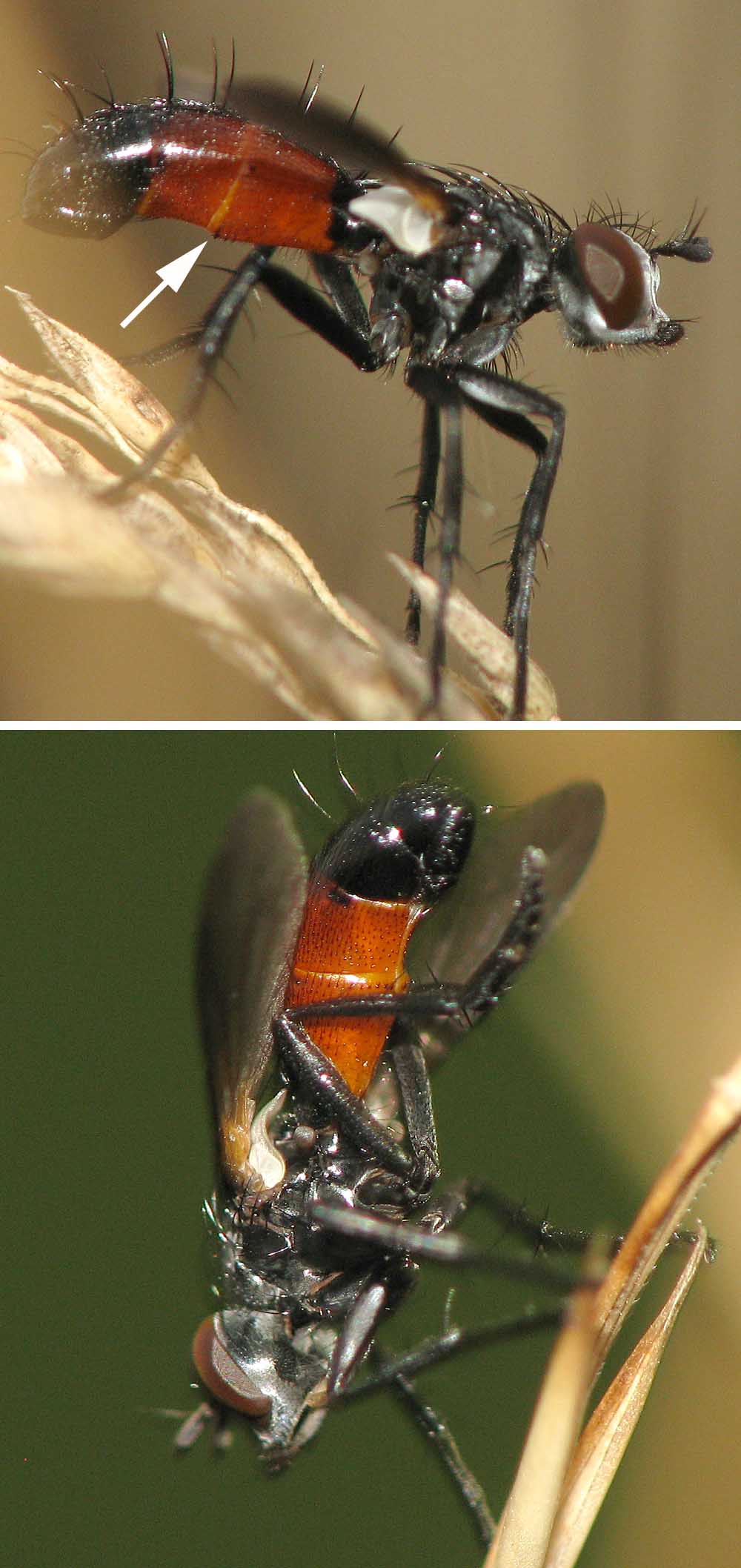 [131.86Kb] |
|
|
|
| ChrisR |
Posted on 31-07-2012 23:51
|
 Super Administrator Location: Reading, England Posts: 7706 Joined: 12.07.04 |
Very difficult ... C.auriceps is part of a group of very similar species and the spikelets are only reliable in one of the sexes (can't remember which without my keys). In my experience C.auriceps is the commonest southern European Cylindromyia but that isn't a good basis for an identification! 
Manager of the UK Species Inventory in the Angela Marmont Centre for UK Biodiversity at the Natural History Museum, London. |
 |
|
| Sundew |
Posted on 01-08-2012 01:39
|
|
Member Location: Berlin and Baden-Württemberg, Germany Posts: 3939 Joined: 28.07.07 |
Well, here (http://www.dipter...d_id=31769) you said the females were the spikelet-bearers  . . |
|
|
|
| Zeegers |
Posted on 04-08-2012 17:45
|
|
Member Location: Soest, NL Posts: 19327 Joined: 21.07.04 |
The pattern of dust on thoracic dorsum is consistent with interrupta, not auriceps. However, the picture might be misleading. If you have any other pic showing the thoracic dorsum.... Theo |
|
|
|
| Sundew |
Posted on 04-08-2012 21:11
|
|
Member Location: Berlin and Baden-Württemberg, Germany Posts: 3939 Joined: 28.07.07 |
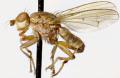
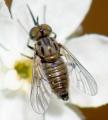
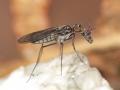
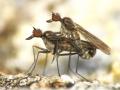
I am afraid I have no better dorsal pic of this fly, I focused on the bottom side . As it was near sunset (the fly intended to sleep there) I had to use a strong flash that might have given a wrong impression. So C. interrupta females also have these spikelets on tergite-2? I paid no attention to this species, because I learnt that there are no apical scutellar bristles, and I thought mine would have one. However, my poor knowledge came from a simple graphic saying the scutellum had just basal and apical bristles. Meanwhile I know that there may also be subapical ones, and obviously my fly shows these and no real apicals. I add some photos of another individual, seen a week earlier at a location not too far away from the first one. It also has the tergite-2 spikelets, so I suppose it is the same species. I did not intend to post that specimen, as the pics are somewhat blurred. However, they were taken without flashlight, which may give a more natural impression of the thorax dusting. Is it helpful? Thanks for all your efforts! Sundew attached the following image: 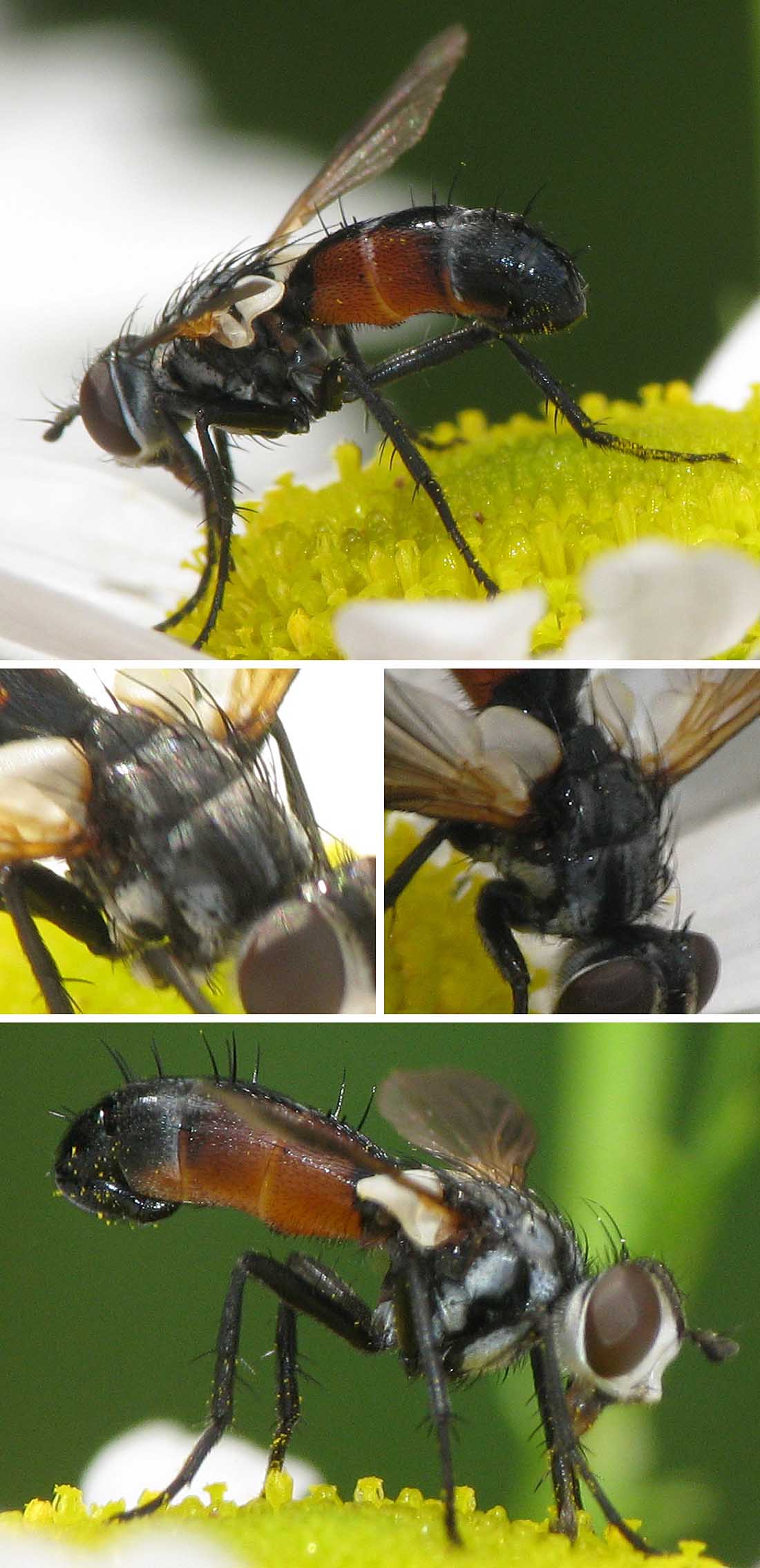 [184.77Kb] Edited by Sundew on 04-08-2012 21:14 |
|
|
|
| Jump to Forum: |