


Diptera.info :: Identification queries :: Diptera (adults)
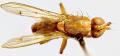
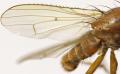
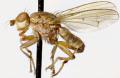
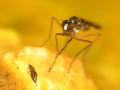
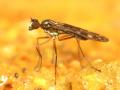
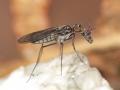
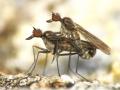
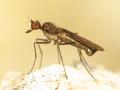
 Diplonevra sp, Phoridae, Japan
|
|
| Xespok |
Posted on 11-07-2005 16:36
|
 Member Location: Debrecen, Hungary Posts: 5551 Joined: 02.03.05 |
I have hard time placing this fly into a family.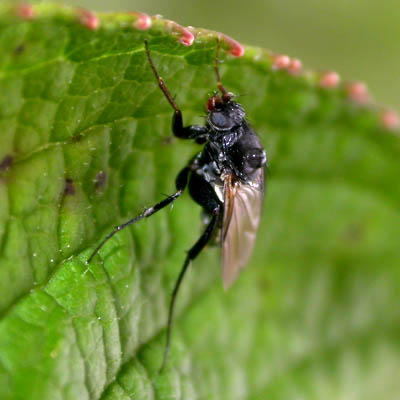
Edited by Xespok on 04-07-2006 13:51 |
 |
|
| Gerard Pennards |
Posted on 11-07-2005 18:25
|
 Member Location: Amersfoort Posts: 1914 Joined: 07.06.04 |
Hello xespok, This fly belongs to the family Phoridae, but as you might know they are very difficult to identify from a photo! Greetings Greetings, Gerard Pennards |
|
|
|
| Xespok |
Posted on 12-07-2005 00:33
|
|
Member Location: Debrecen, Hungary Posts: 5551 Joined: 02.03.05 |
Thx. This will be the first representative of this family in my gallery. I am always happy when I can add another group to it. |
|
|
|
| Mario Langourov |
Posted on 03-07-2006 09:12
|
|
Member Location: Sofia, Bulgaria Posts: 23 Joined: 01.03.06 |
Diplonevra sp. |
|
|
|
| Robert Nash |
Posted on 03-07-2006 11:51
|
|
Member Location: Ulster Museum, Belfast, Ireland Posts: 288 Joined: 11.11.05 |
Xespok If you would like more info on Phoridae go to scuttle flies in the glossary and click on the wikipedia link. Mario At last a phorid specialist keen to help  . This is really excellent. Keep up the good work. . This is really excellent. Keep up the good work.Robert |
|
|
|
| Paul Beuk |
Posted on 03-07-2006 12:43
|
 Super Administrator Location: Netherlands Posts: 19403 Joined: 11.05.04 |
Robert, you can just type in scuttle flies, select the text and then click the [ glos ] button below. That will give you scuttle flies and has the direct link to the Glossary page. and has the direct link to the Glossary page. 
Paul - - - - Paul Beuk on https://diptera.info |
|
|
|
| Xespok |
Posted on 04-07-2006 13:48
|
|
Member Location: Debrecen, Hungary Posts: 5551 Joined: 02.03.05 |
Thx! Good to have a Phorid expert in these forums. There are two known species within this genus in Japan: bifasciata (Walker, 1860) and peregrina (Wiedemann, 1830) . But this family is not very-well researched in Japan, I think. There are some more photos on Phoridae of Japan on my old Japan Wildlife gallery. If you can help me to place any of the images into genera please leave comments there. (Add comment section under the full sized image). Some of the images might also belong to other families. I do not want to post all these images, because they are not of the best quality. Phorids in my experience are very common, but very difficult to take photos of, because they are small, usually uniformly coloured, dark and move around a lot. Also they tend to sit on shaky substrates like leafs which themselves tend to move in the smallest breeze,. All of these makes focusing very difficult. |
|
|
|
| Xespok |
Posted on 04-07-2006 13:50
|
|
Member Location: Debrecen, Hungary Posts: 5551 Joined: 02.03.05 |
Thx! Good to have a Phorid expert in these forums. There are two known species within this genus in Japan: bifasciata (Walker, 1860) and peregrina (Wiedemann, 1830) . But this family is not very-well researched in Japan, I think. There are some more photos on Phoridae of Japan on my old Japan Wildlife gallery. If you can help me to place any of the images into genera please leave comments there. (Add comment section under the full sized image). Some of the images might also belong to other families. I do not want to post all these images, because they are not of the best quality. Phorids in my experience are very common, but very difficult to take photos of, because they are small, usually uniformly coloured, dark and move around a lot. Also they tend to sit on shaky substrates like leafs which themselves tend to move in the smallest breeze,. All of these makes focusing very difficult. |
|
|
|
| bbrown |
Posted on 10-05-2009 03:48
|
|
Member Location: Los Angeles, California Posts: 103 Joined: 17.02.05 |
I'm not so sure this is a Diplonevra, and it is definitely not D. peregrina (a yellow species) or D. bifasciata. There are other species of Diplonevra in Japan as well.
Brian Brown Entomology NH Museum of Los Angeles Co. |
|
|
|
| Jump to Forum: |