


Diptera.info :: Identification queries :: Diptera (adults)
 Helina vicina?
|
|
| Stephen R |
Posted on 02-06-2012 17:33
|
 Member Location: Clitheroe Lancashire UK Posts: 2396 Joined: 12.06.09 |
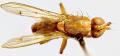
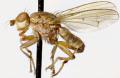
7mm, Clitheroe UK, 1 June 2012. I keyed this in Gregor and it seems to fit the genitalia drawing and the species description quite well, except that the latter says 'scutum usually without longitudinal stripes'. We have plenty of moss-covered rocks and trees to provide the larval habitat. Is this just an unusually stripy one or have I gone wrong? Stephen R attached the following image: 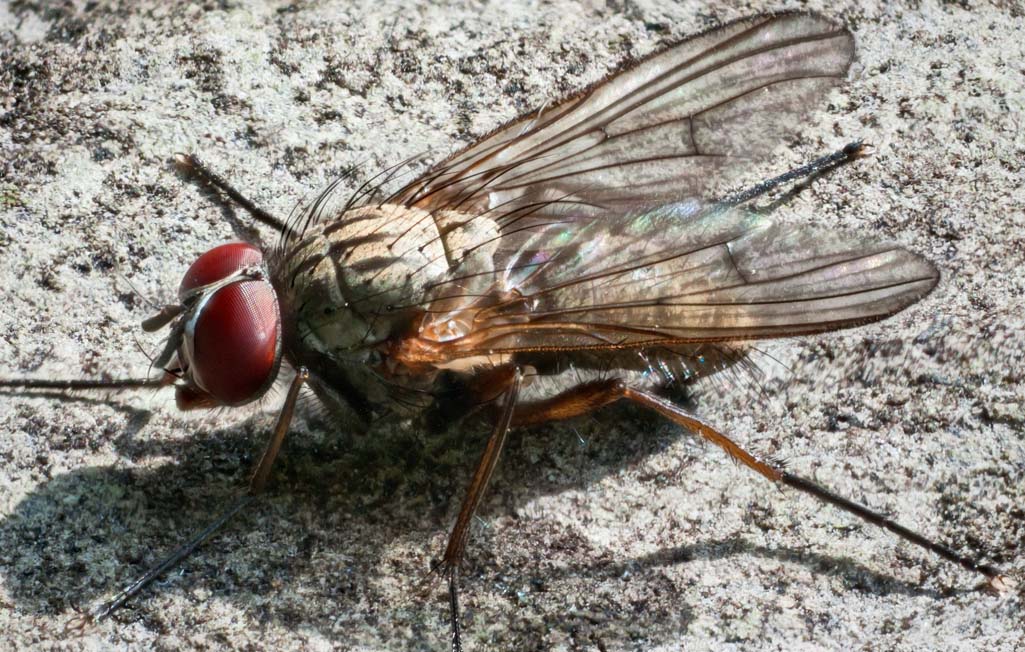 [198.01Kb] Edited by Stephen R on 07-06-2012 21:38 |
|
|
|
| Stephen R |
Posted on 02-06-2012 17:34
|
|
Member Location: Clitheroe Lancashire UK Posts: 2396 Joined: 12.06.09 |
t3 has two ad and one av; there is an erect posterior setula on one side only.
Stephen R attached the following image: 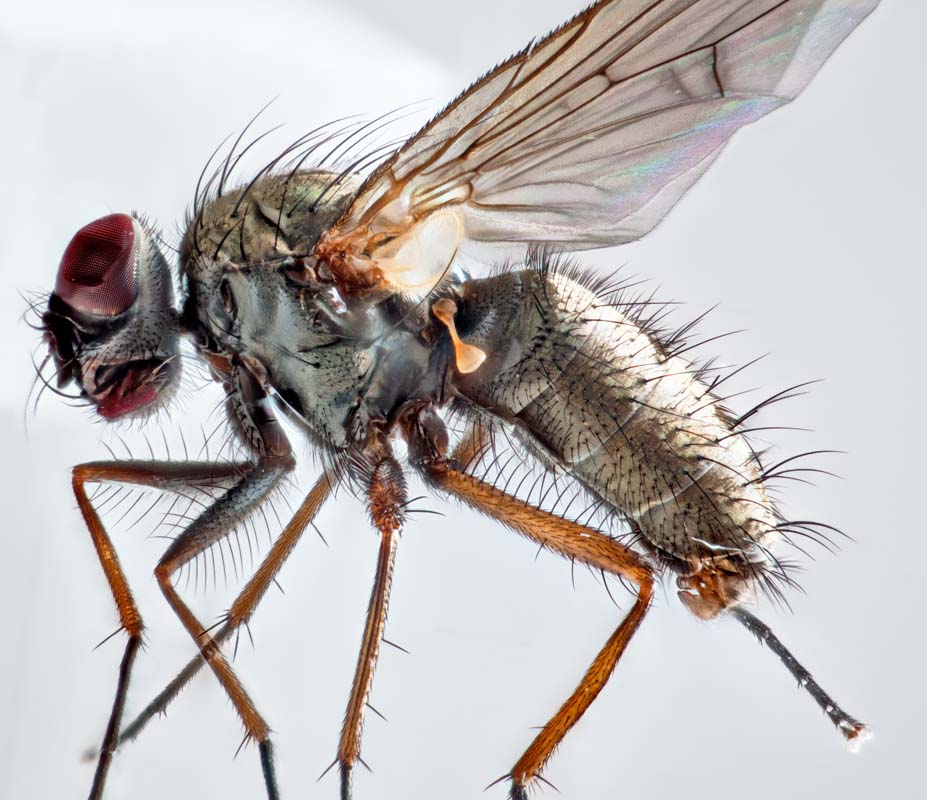 [125.07Kb] Edited by Stephen R on 02-06-2012 17:52 |
|
|
|
| Stephen R |
Posted on 02-06-2012 17:35
|
|
Member Location: Clitheroe Lancashire UK Posts: 2396 Joined: 12.06.09 |
3
Stephen R attached the following image: 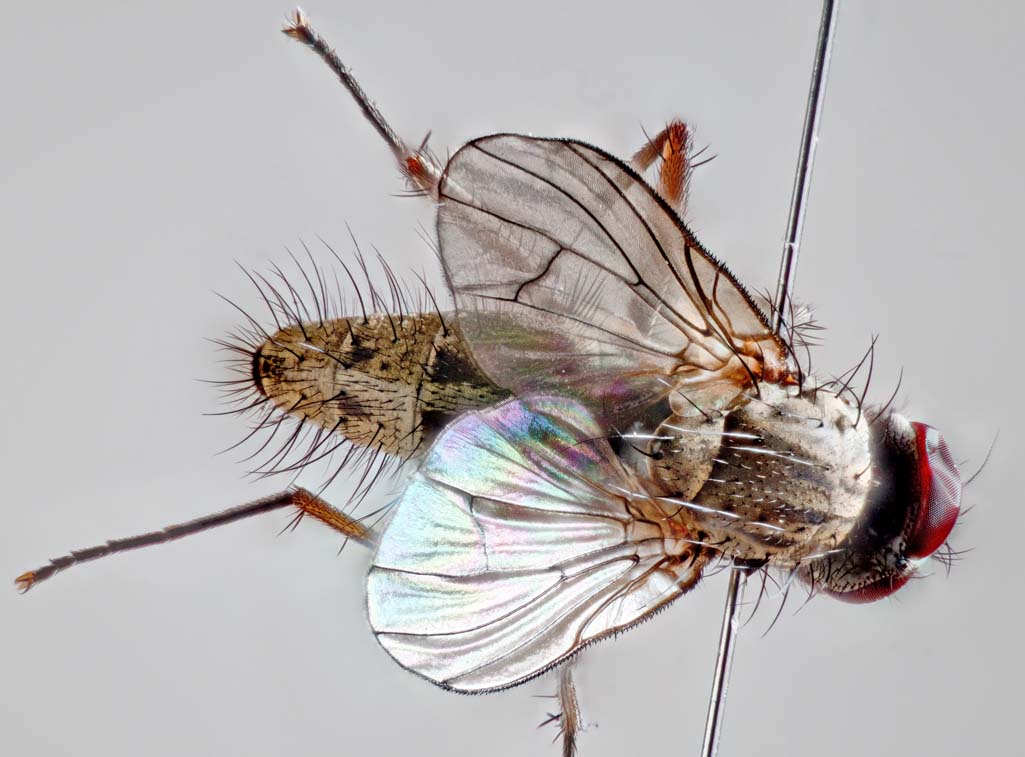 [110.4Kb] |
|
|
|
| Stephen R |
Posted on 02-06-2012 17:37
|
|
Member Location: Clitheroe Lancashire UK Posts: 2396 Joined: 12.06.09 |
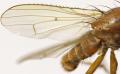
Setulose radial node, short pra.
Stephen R attached the following image: 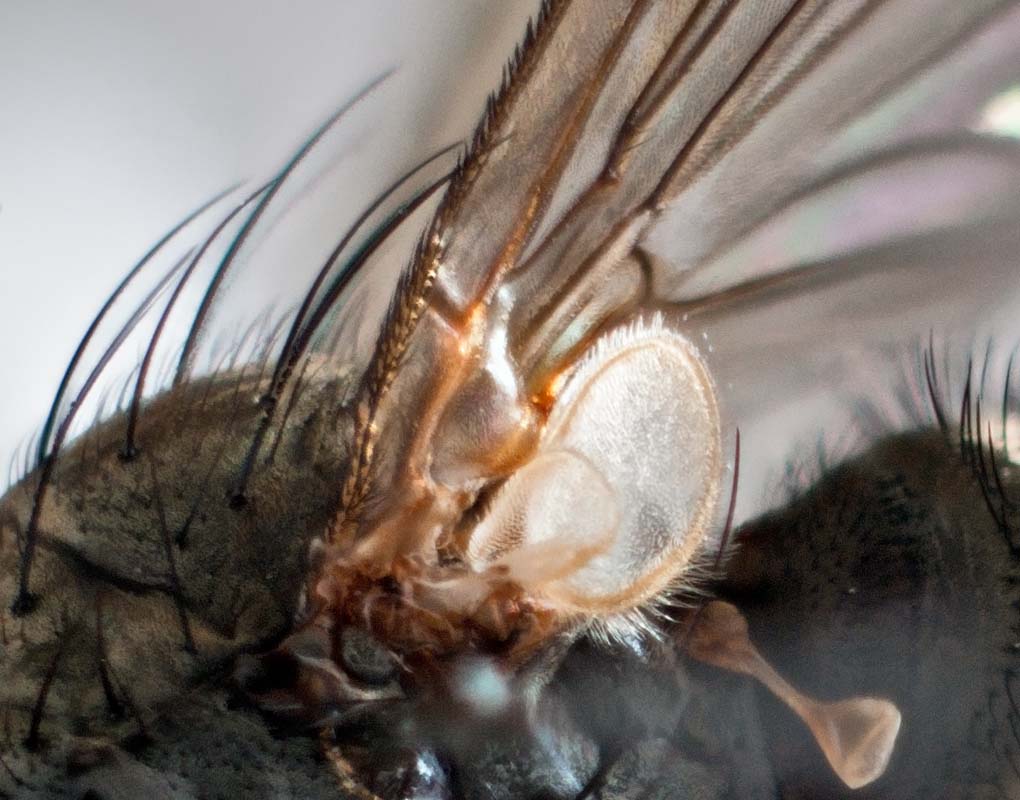 [111.86Kb] |
|
|
|
| Stephen R |
Posted on 02-06-2012 17:39
|
|
Member Location: Clitheroe Lancashire UK Posts: 2396 Joined: 12.06.09 |
Sparsely-haired eyes, aristal hairs short, parafrontals narrow and touching.
Stephen R attached the following image: 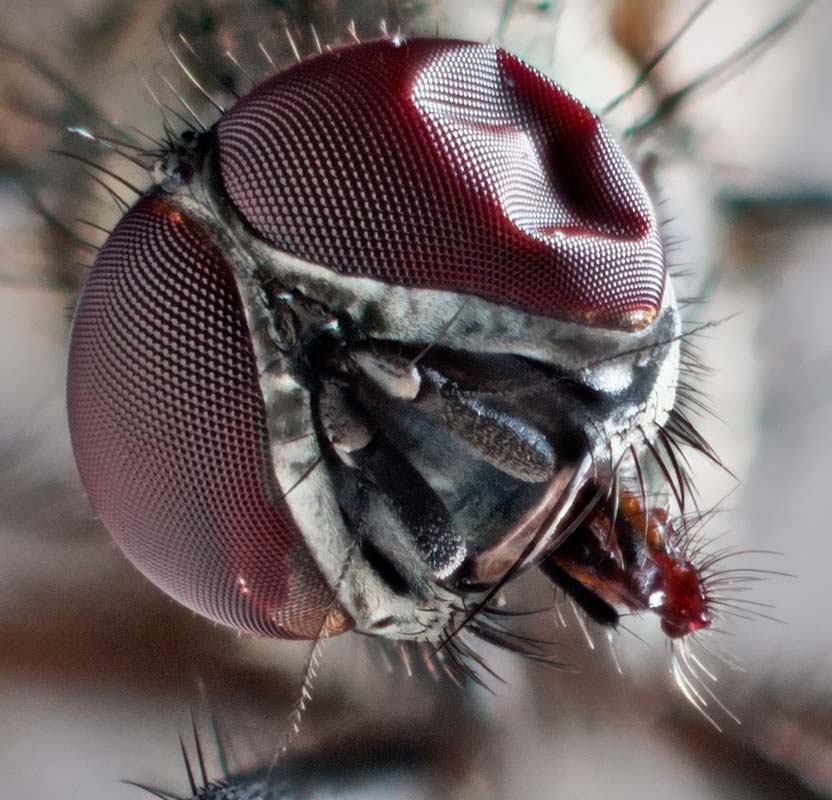 [118.14Kb] Edited by Stephen R on 02-06-2012 17:44 |
|
|
|
| Stephen R |
Posted on 02-06-2012 17:40
|
|
Member Location: Clitheroe Lancashire UK Posts: 2396 Joined: 12.06.09 |
6
Stephen R attached the following image: 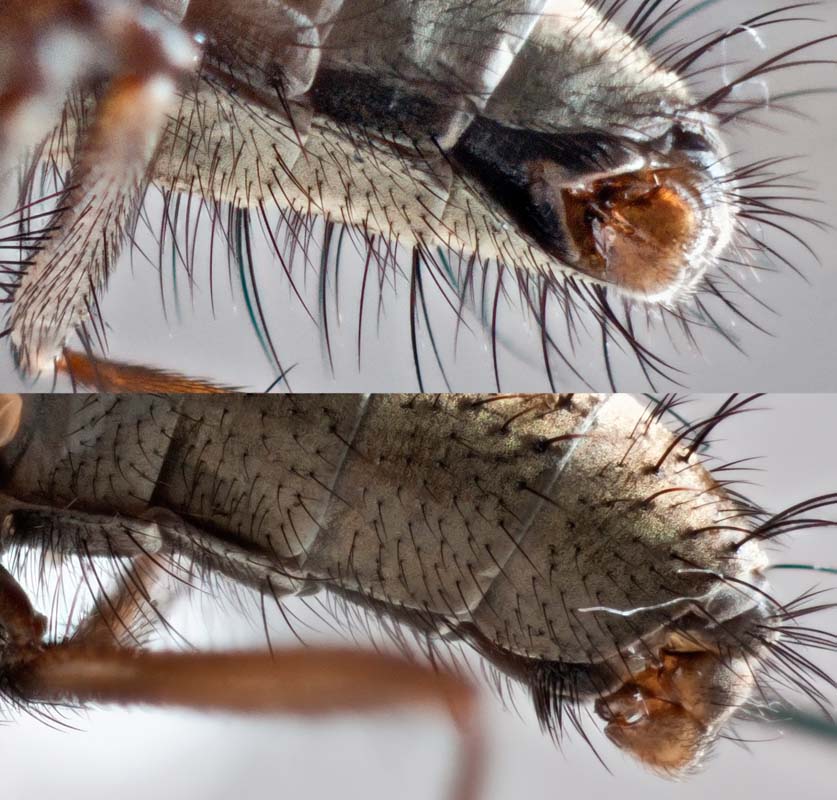 [133.06Kb] |
|
|
|
| oxycera |
Posted on 03-06-2012 09:23
|
|
Member Location: Barnsley, South Yorkshire Posts: 251 Joined: 31.12.09 |
I never know how to interpret 'usually' when a given character doesn't quite fit with a particular specimen. If everything else falls into place then I suppose you have to go with it. If a nagging doubt persists, try and find another specimen. |
|
|
|
| Stephen R |
Posted on 03-06-2012 11:32
|
|
Member Location: Clitheroe Lancashire UK Posts: 2396 Joined: 12.06.09 |
I will look out for another. Does anyone know this species? I see that Fauna Eur. gives subspp. H.v. vicina Czerny 1900 and H.v. lutea Hennig 1958. These are not distinguished in Gregor, but perhaps they represent forms with and without scutal stripes? |
|
|
|
| javanerkelens |
Posted on 04-06-2012 18:38
|
 Member Location: Netherlands Posts: 2962 Joined: 18.10.07 |
What about H. consimilis / fratercula ? |
|
|
|
| Stephen R |
Posted on 04-06-2012 19:02
|
|
Member Location: Clitheroe Lancashire UK Posts: 2396 Joined: 12.06.09 |
According to the key in Gregor they should have the fronto-orbital plates separated by a frontal vitta. |
|
|
|
| javanerkelens |
Posted on 04-06-2012 19:47
|
|
Member Location: Netherlands Posts: 2962 Joined: 18.10.07 |
Indeed H. consimilis has broader fronto orbital plates. Radial note haired on underside of wing + scutellum bare + arista pubescent / katepisternal 1+2 = H. fratercula or H. vicina. When the mid coxa had a brush of black spines it is H. fratercula........if not, you can presume you just have H. vicina indeed!  |
|
|
|
| Stephen R |
Posted on 04-06-2012 21:21
|
|
Member Location: Clitheroe Lancashire UK Posts: 2396 Joined: 12.06.09 |
I remember now that I did think I had H. fratercula because there is a fringe of strong bristles on the mid coxa, but then I looked at the genitalia drawing and read the description and thought it couldn't be right. What really put me off was 'hind tibia with almost complete rows of anteroventrals and anterodorsals (rather short in apical third) and posteroventrals in basal half'. It now occurs to me that perhaps 'hind tibia' should read 'hind femur', and that fits pretty well! So do the subtriangular spots. I still think the cercal plate looks wrong, but the fit with vicina wasn't totally decisive either. So, with the emended description, I now think it must be H. fratercula. Thank you for making me take another look!  |
|
|
|
| Stephen R |
Posted on 07-06-2012 21:20
|
|
Member Location: Clitheroe Lancashire UK Posts: 2396 Joined: 12.06.09 |
Sorry to come back on this, but I think I may have been right the first time. I found another male which looks similar and keys the same way. The cercal plate is again so different from H.fratercula in the book that I had yet another look at the 'brush' on the mid coxa. I think the fringe of setae on the anterior edge is not dense enough to be called a brush, though the bristles at the bottom of the katepisternum help to make it appear so from many angles. This individual differs from the first in having stronger posterior setae around the middle of t3 (two on one side, one on the other, all a bit longer than the diameter of the tibia. I add photos of the new specimen to show the terminalia and mid coxa (I amputated the leg to see better). Stephen R attached the following image: 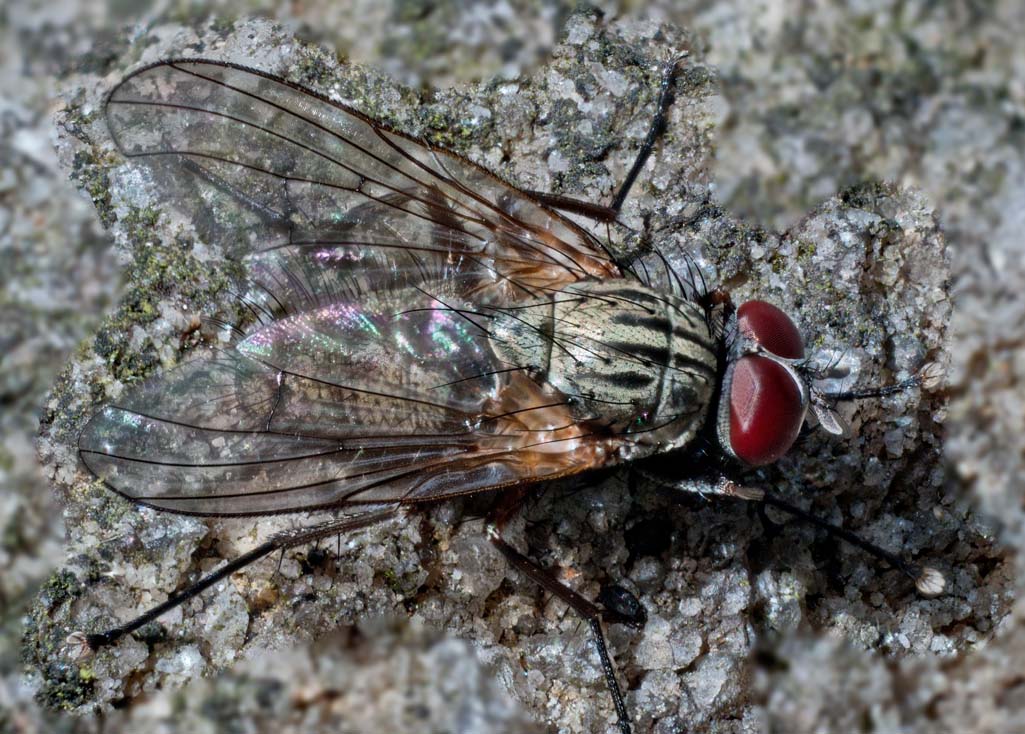 [178.38Kb] Edited by Stephen R on 07-06-2012 21:37 |
|
|
|
| Stephen R |
Posted on 07-06-2012 21:27
|
|
Member Location: Clitheroe Lancashire UK Posts: 2396 Joined: 12.06.09 |
8
Stephen R attached the following image: 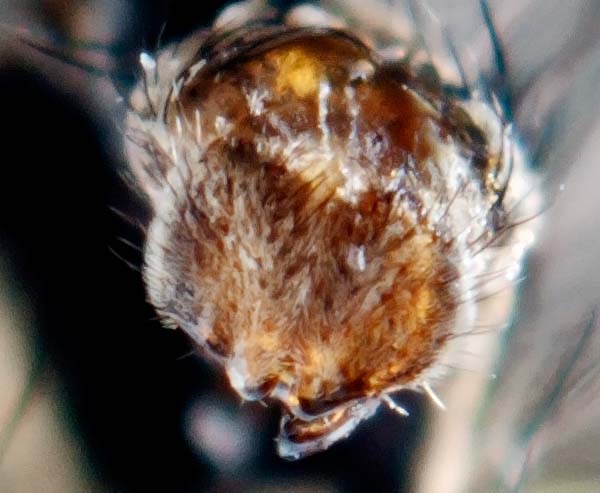 [58.21Kb] |
|
|
|
| Stephen R |
Posted on 07-06-2012 21:28
|
|
Member Location: Clitheroe Lancashire UK Posts: 2396 Joined: 12.06.09 |
9
Stephen R attached the following image: 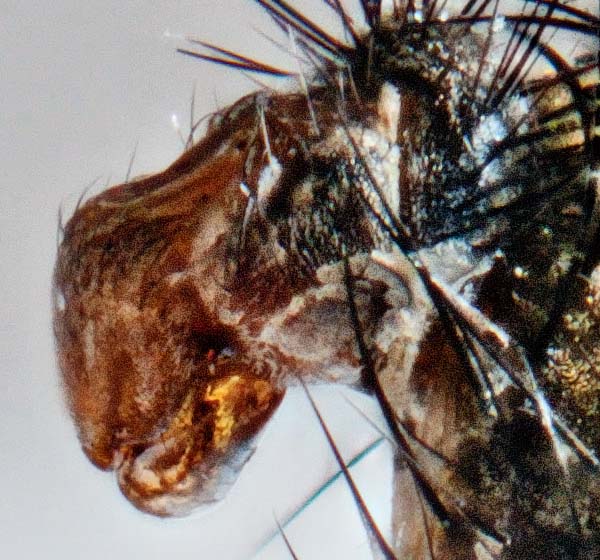 [102.61Kb] |
|
|
|
| Stephen R |
Posted on 07-06-2012 21:31
|
|
Member Location: Clitheroe Lancashire UK Posts: 2396 Joined: 12.06.09 |
10
Stephen R attached the following image: 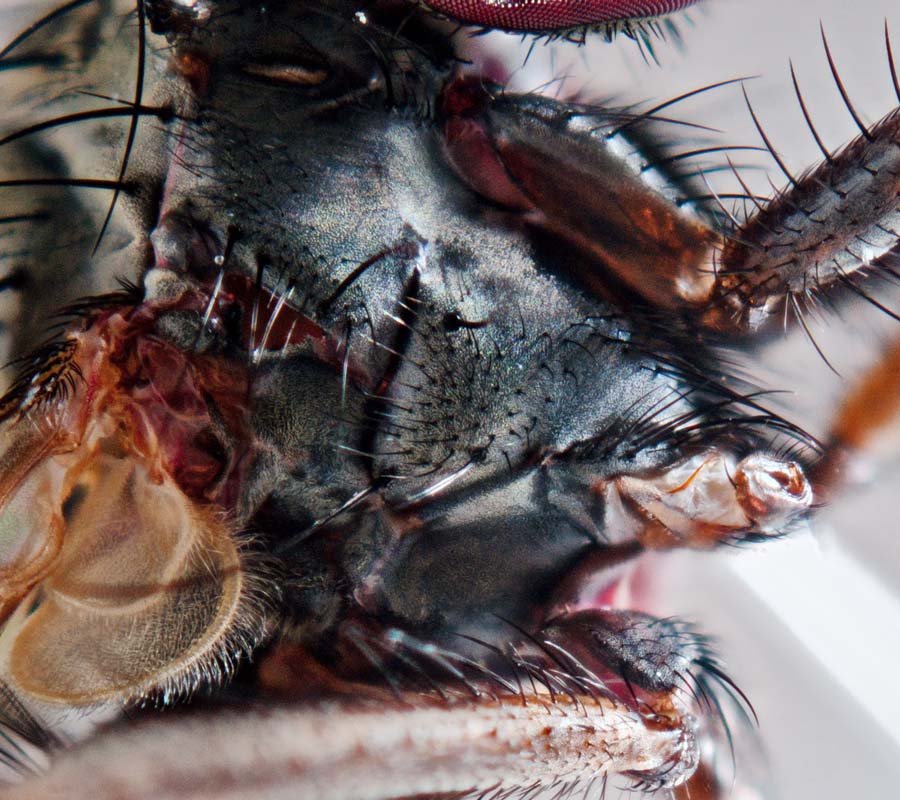 [145.99Kb] |
|
|
|
| Stephen R |
Posted on 20-06-2012 13:13
|
|
Member Location: Clitheroe Lancashire UK Posts: 2396 Joined: 12.06.09 |
Yesterday I found a female which keys to H. vicina. The only doubt is that has two av setae on each hind tibia (the key says 'usually' one). It has neither of the characters that would lead to H. fratercula. It has thoracic stripes like the males, but a bit less well-defined. |
|
|
|
| Jump to Forum: |