


Diptera.info :: Identification queries :: Diptera (adults)
 Green fly
|
|
| Carnota |
Posted on 22-01-2007 23:00
|
 Member Location: Galicia (Spain) Posts: 170 Joined: 29.05.06 |
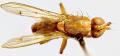
Please, could you tell me something about this fly? In Quercus pyrenaica forest. Near Ourense, NW Spain. 10-november-2006. Size 9mm. Carnota attached the following image:  [103.27Kb] Edited by Carnota on 22-01-2007 23:02 |
|
|
|
| Carnota |
Posted on 22-01-2007 23:03
|
|
Member Location: Galicia (Spain) Posts: 170 Joined: 29.05.06 |
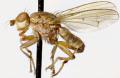
Another view
Carnota attached the following image:  [108.53Kb] |
|
|
|
| Carnota |
Posted on 22-01-2007 23:04
|
|
Member Location: Galicia (Spain) Posts: 170 Joined: 29.05.06 |
Another
Carnota attached the following image:  [111.53Kb] |
|
|
|
| Carnota |
Posted on 22-01-2007 23:05
|
|
Member Location: Galicia (Spain) Posts: 170 Joined: 29.05.06 |
Last
Carnota attached the following image:  [75.03Kb] |
|
|
|
| crex |
Posted on 23-01-2007 07:58
|
 Member Location: Sweden Posts: 1996 Joined: 22.05.06 |
Lucilia sp (Calliphoridae)!? Let's hear the experts sing their songs ... |
|
|
|
| Zeegers |
Posted on 23-01-2007 18:33
|
|
Member Location: Soest, NL Posts: 19317 Joined: 21.07.04 |
Can't tell, it's either Lucilia or Chrysomyia. For unscientific reasons, I've got the impression it is the last one. To be sure, need to get a good pic of the veins in the base of the wing from above. Theo Zeegers |
|
|
|
| Carnota |
Posted on 23-01-2007 21:09
|
|
Member Location: Galicia (Spain) Posts: 170 Joined: 29.05.06 |
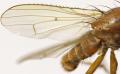
Hello Theo and crex Thanks for your comments  Unfortunately part of the wings are under the scutellum. Here is an image from above. If you need more I can humidify this specimen in order to extend the wings. Carnota attached the following image:  [91.08Kb] Edited by Carnota on 23-01-2007 23:22 |
|
|
|
| Carnota |
Posted on 23-01-2007 21:12
|
|
Member Location: Galicia (Spain) Posts: 170 Joined: 29.05.06 |
And there an image from below
Carnota attached the following image:  [61Kb] |
|
|
|
| Nikita Vikhrev |
Posted on 09-03-2007 23:34
|
 Member Location: Moscow, Russia Posts: 9561 Joined: 24.05.05 |
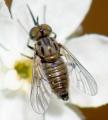
I vote for Lucilia. Chrysomya (at least Ch. albiceps which may be in NW Spain) has always dark bends on tergites edges.
Nikita Vikhrev attached the following image:  [103.74Kb] Nikita Vikhrev - Zool Museum of Moscow University |
|
|
|
| Zeegers |
Posted on 10-03-2007 10:07
|
|
Member Location: Soest, NL Posts: 19317 Joined: 21.07.04 |
I agree with Nikita. It's Lucilia, though probably not the most common species Theo |
|
|
|
| Susan R Walter |
Posted on 10-03-2007 13:02
|
 Member Location: Touraine du Sud, central France Posts: 1802 Joined: 14.01.06 |
Carnota I am not at all expert with Lucilia, but I have been trying to make sense of this genera recently. Your specimen seems to have 3 pairs of post sutural acrostichals, so that gives you a choice of L richardsi, L regalis, L magnicornis, L sericata and L silvarum.. (Look on the right - I think it has lost a bristle on the left.) Theo - I'd be interested to know what the common species are - apparently *not* L caesar, even though it is the one always featured in the general guides. I have come to the conclusion that the common species for me is L richardsi, but don't have enough experience yet to be sure. Susan |
 |
|
| Carnota |
Posted on 11-03-2007 21:50
|
|
Member Location: Galicia (Spain) Posts: 170 Joined: 29.05.06 |
Thank you to all Carnota |
|
|
|
| Xespok |
Posted on 12-03-2007 09:04
|
 Member Location: Debrecen, Hungary Posts: 5551 Joined: 02.03.05 |
Based on the literature that i have L. sericata seems to be the commonest species in Central Europe. It seems to be more common in and around habitations thatn L. caesar.
Gabor Keresztes Japan Wildlife Gallery Carpathian Basin Wildlife Gallery |
|
|
|
| Zeegers |
Posted on 12-03-2007 10:52
|
|
Member Location: Soest, NL Posts: 19317 Joined: 21.07.04 |
I think Gabor is right. However, I'm way out of my own league, so your experience is better than mine Theo |
|
|
|
| Jump to Forum: |