


Diptera.info :: Identification queries :: Diptera (adults)
 Which Tachinid?
|
|
| Auratus |
Posted on 19-05-2012 13:29
|
|
Member Location: Edam - Netherlands Posts: 423 Joined: 24.05.10 |
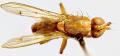
This one is giving me a difficult time. I have collected the specimen, but keep taking the wrong directions in trying to name it. Can someone give me a clue about a genus? Thanks in advance Auratus attached the following image: 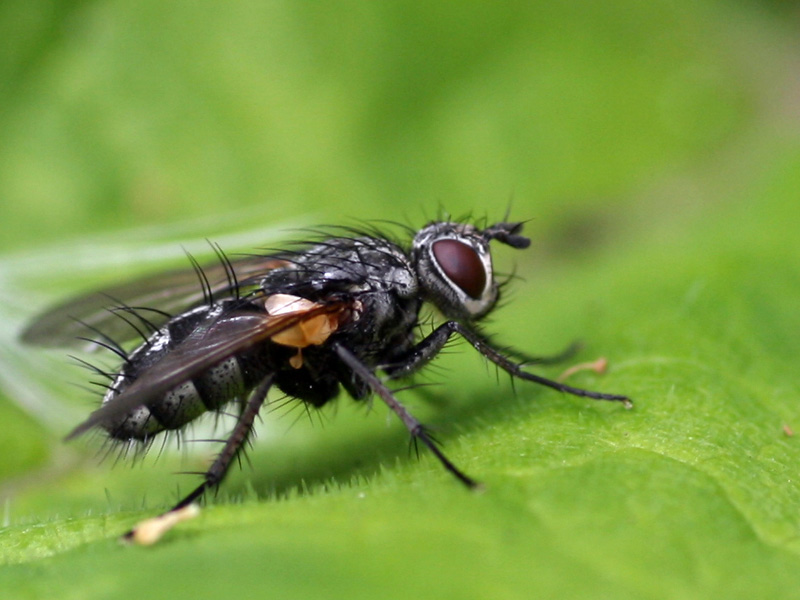 [145.74Kb] Edited by Auratus on 19-05-2012 13:29 Greetings, Jan |
|
|
|
| neprisikiski |
Posted on 19-05-2012 13:45
|
|
Member Location: Lithuania Posts: 876 Joined: 23.02.09 |
Pelatachina tibialis
Erikas |
|
|
|
| ChrisR |
Posted on 19-05-2012 13:47
|
 Super Administrator Location: Reading, England Posts: 7706 Joined: 12.07.04 |
Where is it going in the key? Does the humeral callus have bristles in a forward-pointing triangle, like Nemorilla? Could it be something like Oswaldia or Blondelia? Would be easier if we could see a dorsal view too 
Manager of the UK Species Inventory in the Angela Marmont Centre for UK Biodiversity at the Natural History Museum, London. |
 |
|
| Auratus |
Posted on 20-05-2012 08:55
|
|
Member Location: Edam - Netherlands Posts: 423 Joined: 24.05.10 |
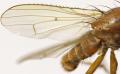
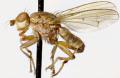
Hi Erikas and Chris. The first thing where it goes wrong is in the question about the setae on the humeral callas. Determining if the setae are in a straight line seems to be rather difficult for me  In the accompanying photo, the setae on the callus should be on a straight line. In my opinion, it depends on the angle with which you look. Pelatachina tibialis is correct, after overcoming my doubts on the humeral callus question, the key goes straight on to that species. Thanks Erikas and Chris, mystery solved Auratus attached the following image: 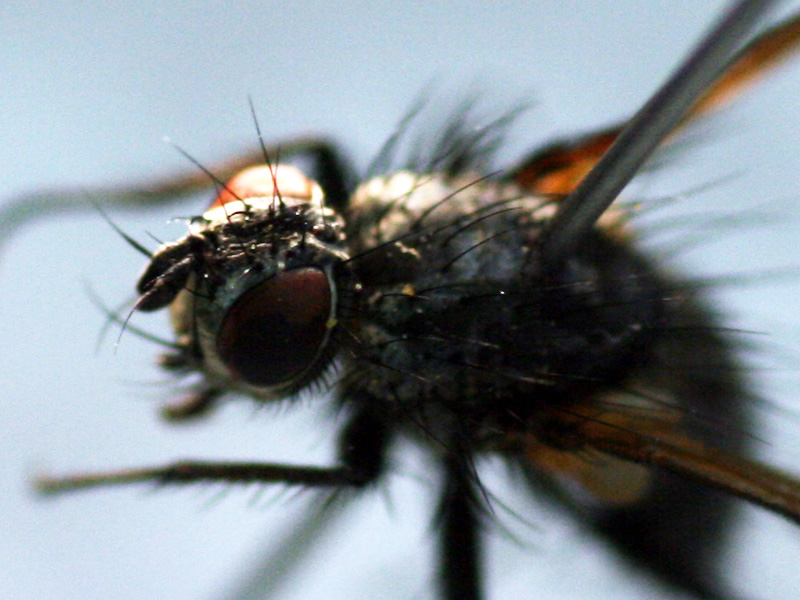 [144.71Kb] Edited by Auratus on 20-05-2012 10:00 Greetings, Jan |
|
|
|
| ChrisR |
Posted on 20-05-2012 09:12
|
|
Super Administrator Location: Reading, England Posts: 7706 Joined: 12.07.04 |
Glad you got it sorted anyway - it looked a bit too black/white in the photo but I rarely see them alive and sitting on leaves!  The humeral callus bristles do confuse some people ... I just see the triangle (or not) immediately but others do struggle. It is possibly because 95% of the flies you will key will not have the triangle so most of the time you are looking at negatives, which is never very confidence-inspiring! There are only a few genera that are positives on that test - like Nemorilla (getting rarer to find these days), Myxexoristops (incredibly rare), Phebellia (rare) and Allophorocera (also uncommon). See if you can see the triangle on my tutorial page here: http://tachinidae...age_id=791. Basically the triangle should be roughly equilateral and forward-pointing, and be comprised of the 3 strongest and most posterior bristles on the humeral callus. Let me know how you get on with that
Edited by ChrisR on 20-05-2012 09:34 Manager of the UK Species Inventory in the Angela Marmont Centre for UK Biodiversity at the Natural History Museum, London. |
|
|
|
| ChrisR |
Posted on 20-05-2012 09:34
|
|
Super Administrator Location: Reading, England Posts: 7706 Joined: 12.07.04 |
PS: I think I can see what you mean - the middle bristle is pushed forward a bit but it isn't really equilateral because the middle bristle is offset to one side and it isn't pushed forward by >2x the basal width (a test used in the Neotropical key).
Manager of the UK Species Inventory in the Angela Marmont Centre for UK Biodiversity at the Natural History Museum, London. |
|
|
|
| Auratus |
Posted on 20-05-2012 10:06
|
|
Member Location: Edam - Netherlands Posts: 423 Joined: 24.05.10 |
Yes Chris, thats exactly the problem i had. Of course it is definitely not equilateral. I have made a note at couple 64 in my key and added a reference to your tutorial, which absolutely clarifies the problem for me. Thanks again. Edited by Auratus on 20-05-2012 10:07 Greetings, Jan |
|
|
|
| Jump to Forum: |