


Diptera.info :: Identification queries :: Diptera (adults)
 Chironimidae? Sussex.
|
|
| Will van Niekerk |
Posted on 15-03-2012 10:32
|
 Member Location: UK Posts: 508 Joined: 16.11.11 |
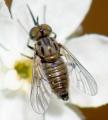
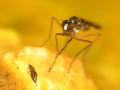
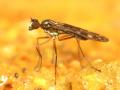
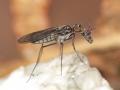
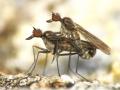
Not even suggesting a family on this one - not solely because it would only be wrong, but also becuase I've tried and failed to find one that looks likely. So I'm leaving it at Nematoceran, and hoping someone else can tell me more. (If it's not a nematoceran, I will cry). Bosham, West Sussex 3 March 2012. Amongst the floating irises on an ornamental pond. Tiny - not more than 5mm, probably a fair bit less (not including legs) Will van Niekerk attached the following image: 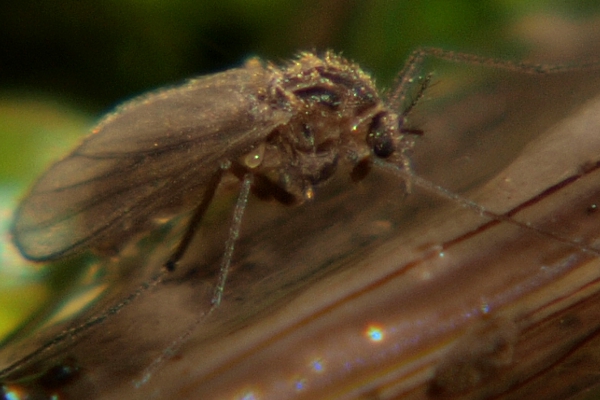 [157.36Kb] Edited by Will van Niekerk on 15-03-2012 12:21 |
|
|
|
| Stephen R |
Posted on 15-03-2012 10:42
|
 Member Location: Clitheroe Lancashire UK Posts: 2396 Joined: 12.06.09 |
Looks like Ceratopogonidae. Et tu, Brute  |
|
|
|
| Will van Niekerk |
Posted on 15-03-2012 11:21
|
|
Member Location: UK Posts: 508 Joined: 16.11.11 |
I could hardly resist on the ides of march, now, could I? Updating title and (with a quick check), confirming no need to cry. Excellent. Thanks, Will. |
|
|
|
| Tony Irwin |
Posted on 15-03-2012 12:12
|
 Member Location: Norwich, England Posts: 7350 Joined: 19.11.04 |
I think Chironomidae more likely for this female
Tony ---------- Tony Irwin |
|
|
|
| Will van Niekerk |
Posted on 15-03-2012 12:23
|
|
Member Location: UK Posts: 508 Joined: 16.11.11 |
It is a huge relief when other people can be uncertain at family level - even if it is just because of a bad photo. Thanks, and changing title. Will. |
|
|
|
| Stephen R |
Posted on 15-03-2012 14:32
|
|
Member Location: Clitheroe Lancashire UK Posts: 2396 Joined: 12.06.09 |
Will van Niekerk wrote: It is a huge relief when other people can be uncertain at family level Glad to be of service  . Of course Tony is right. . Of course Tony is right. |
|
|
|
| John Carr |
Posted on 15-03-2012 14:43
|
 Super Administrator Location: Colorado, USA Posts: 10660 Joined: 22.10.10 |
Odd one. It appears to have too many antenna segments. Female Chironomidae with more than 6 segments in the flagellum have M-Cu crossvein present or (rarely) M and Cu close together without an obvious crossvein. Males normally have more hairs on the antenna, and the blunt-tipped abdomen suggests female. If the antenna has only six segments with sculpturing creating the illusion of more, it's a very hairy female Orthocladiinae. |
 |
|
| Jump to Forum: |