


Diptera.info :: Identification queries :: Diptera (adults)
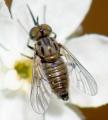
 Anthomyia pluvialis (male).
|
|
| Maherjos |
Posted on 10-03-2012 19:01
|
 Member Location: Motril (Granada) España Posts: 2402 Joined: 02.09.09 |
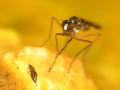
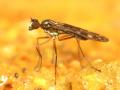
Photograph taken on March 11, 2012, in the wetlands of the Suárez Pond, Motril, Granada, Spain. Immediate area of the Mediterranean coast. Apparent size with wings, about 7-8 mm Click over the image increases in size I would appreciate your help identifying this dipterous - Best regards! Maherjos attached the following image: 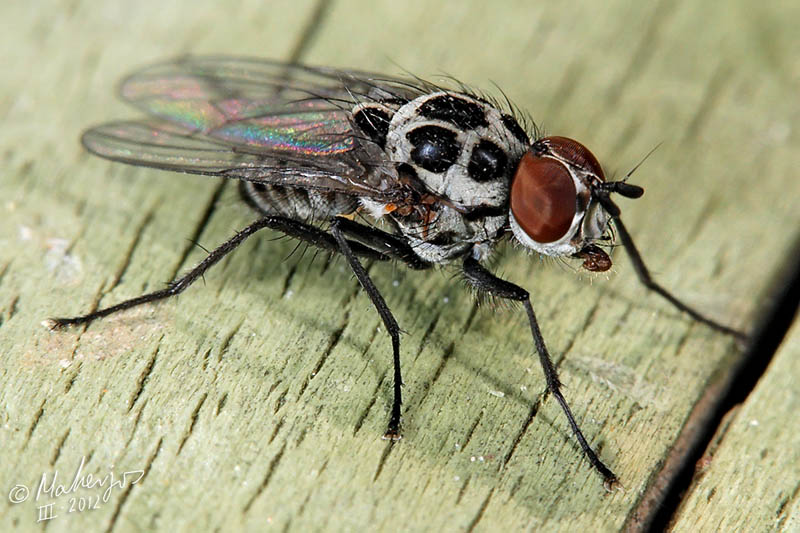 [117.45Kb] Edited by Maherjos on 14-03-2012 20:37 |
|
|
|
| Mucha Fero |
Posted on 10-03-2012 19:14
|
 Member Location: Posts: 8428 Joined: 27.09.10 |
I think it's Anthomyia procellaris (male) Mucha Fero |
|
|
|
| Maherjos |
Posted on 10-03-2012 19:53
|
|
Member Location: Motril (Granada) España Posts: 2402 Joined: 02.09.09 |
Mucha Fero wrote: I think it's Anthomyia procellaris (male) Mucha Fero Very grateful for their identification.  Best regards from the south of Spain. |
|
|
|
| Stephen R |
Posted on 11-03-2012 10:11
|
 Member Location: Clitheroe Lancashire UK Posts: 2396 Joined: 12.06.09 |
Because the black spots above the wing base are separated, A. pluvialis may be more likely. |
|
|
|
| Maherjos |
Posted on 11-03-2012 17:49
|
|
Member Location: Motril (Granada) España Posts: 2402 Joined: 02.09.09 |
Stephen R wrote: Because the black spots above the wing base are separated, A. pluvialis may be more likely. It is true that in this fly, the spots on the base of the wings are clearly separated. As I have no knowledge to discern, I edit the title with its proposal to try to confirm it with other opinions. Also I will upload another picture to try to make it look better that detail. My thanks for your support and assistance. Best regards. |
|
|
|
| Michael Ackland |
Posted on 11-03-2012 19:26
|
|
Member Location: Dorset UK Posts: 680 Joined: 23.02.08 |
I think it is more likely to be Anthomyia quinquemaculata Macq, which is a southern European species. It seems to be large for pluvialis. But it is impossible to identify these Anthomyia species without a lateral view of the male 5th sternite, which is distinctive for most species. Therefore you will have to catch one and mount it if you wish to make a positive identification. They are too difficult generally to recognise from a photo, especially a photo of a living fly taken from above |
|
|
|
| Maherjos |
Posted on 11-03-2012 20:25
|
|
Member Location: Motril (Granada) España Posts: 2402 Joined: 02.09.09 |
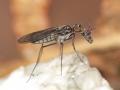
Michael Ackland wrote: I think it is more likely to be Anthomyia quinquemaculata Macq, which is a southern European species. It seems to be large for pluvialis. But it is impossible to identify these Anthomyia species without a lateral view of the male 5th sternite, which is distinctive for most species. Therefore you will have to catch one and mount it if you wish to make a positive identification. They are too difficult generally to recognise from a photo, especially a photo of a living fly taken from above Very grateful for their reasoning and data provided. Add a more lateral view, to try to help in identification. Best Regards Maherjos attached the following image: 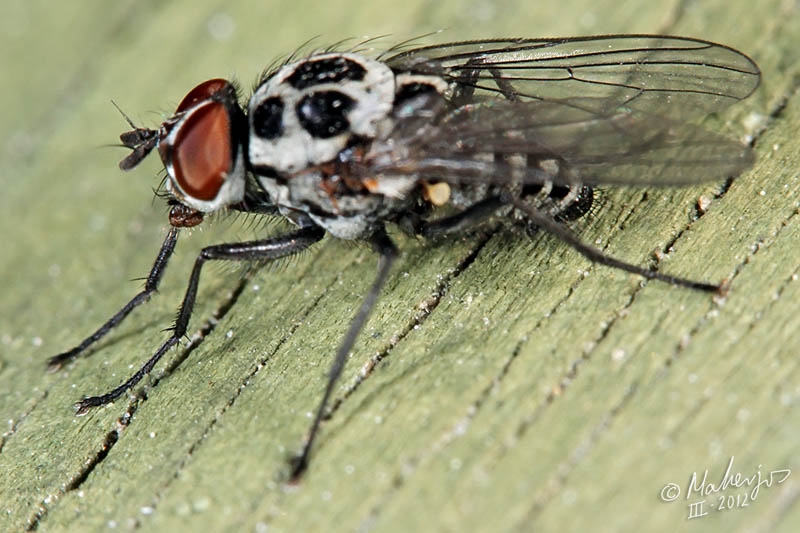 [109.1Kb] Edited by Maherjos on 11-03-2012 20:27 |
|
|
|
| Jump to Forum: |