


Diptera.info :: Identification queries :: Diptera (adults)
Page 1 of 2: 12
|
 ID, please. Calliphoridae... IDed as Pollenia sp
|
|
| Ginks |
Posted on 26-01-2012 12:25
|
 Member Location: Mid-Essex Posts: 69 Joined: 05.01.12 |
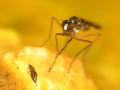
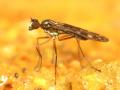
Hello! Is this photo good enough to ID this fly? I think it may be Calliphoridae, Pollenia rudis (female)? Please, if possible, could you tell me if I've got the sex right too. Thanks, Ginks Ginks attached the following image: 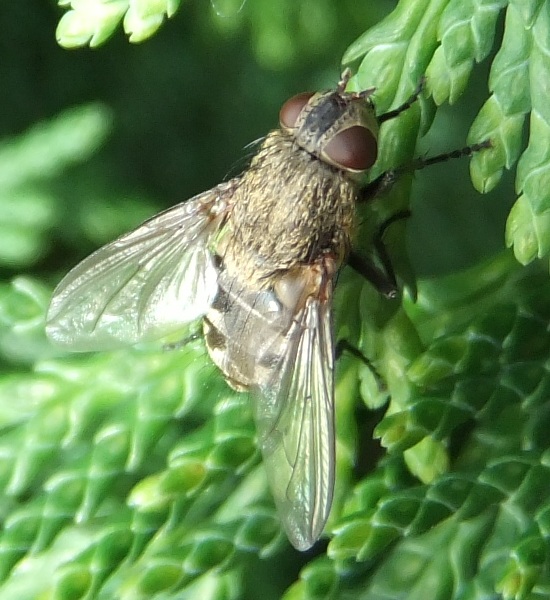 [152.35Kb] Edited by Ginks on 26-01-2012 17:41 |
|
|
|
| rvanderweele |
Posted on 26-01-2012 13:33
|
|
Member Location: Leiden, the Netherlands Posts: 1988 Joined: 01.11.06 |
It is indeed a Pollenia, possibly or even likely P. rudis, since it is very common, yet it is not possible to say with 100% certainty.
ruud van der weele rvanderweele@gmail.com |
|
|
|
| Jason G |
Posted on 26-01-2012 14:09
|
 Member Location: London UK Posts: 136 Joined: 22.12.08 |
Yes, correct sexing.
London's Insects http://londoninve...hostia.com |
|
|
|
| rvanderweele |
Posted on 26-01-2012 14:19
|
|
Member Location: Leiden, the Netherlands Posts: 1988 Joined: 01.11.06 |
Jason, you can see that the fly is a female? I cannot, how do you see it?
ruud van der weele rvanderweele@gmail.com |
|
|
|
| Ginks |
Posted on 26-01-2012 14:34
|
|
Member Location: Mid-Essex Posts: 69 Joined: 05.01.12 |
Hello! I used the spacing between the eyes to determine the sex of the fly. I know this technique cannot be used for every species. Is it OK for this species? Best wishes, Ginks |
|
|
|
| rvanderweele |
Posted on 26-01-2012 14:45
|
|
Member Location: Leiden, the Netherlands Posts: 1988 Joined: 01.11.06 |
No, it is not, sorry.
ruud van der weele rvanderweele@gmail.com |
|
|
|
| rvanderweele |
Posted on 26-01-2012 14:46
|
|
Member Location: Leiden, the Netherlands Posts: 1988 Joined: 01.11.06 |
You really have to look at the genitals. With Calliphoridae generally speaking, there are few characteristics to separate the sexes. (as far as I know, I am not too familiar with the family)
ruud van der weele rvanderweele@gmail.com |
|
|
|
| blowave |
Posted on 26-01-2012 14:50
|
 Member Location: LINCOLN, UK Posts: 3151 Joined: 27.06.07 |
Maybe this helps? 
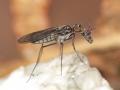
blowave attached the following image: 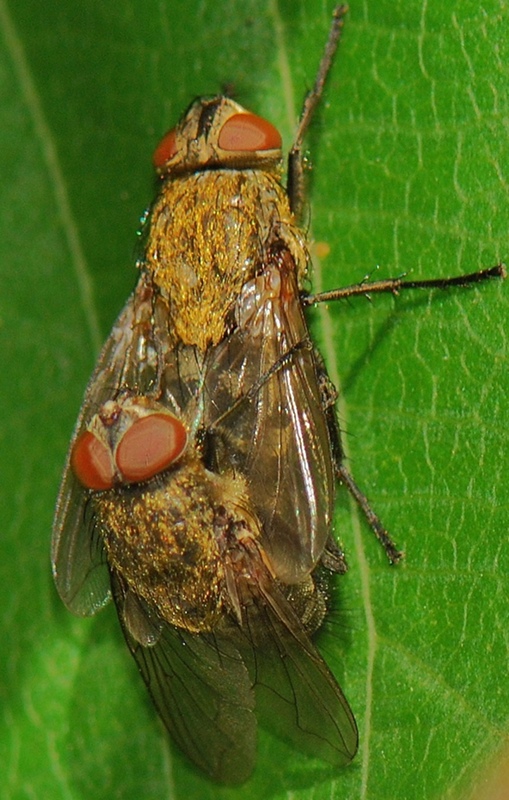 [187.81Kb] http://cubits.org... |
 |
|
| rvanderweele |
Posted on 26-01-2012 14:54
|
|
Member Location: Leiden, the Netherlands Posts: 1988 Joined: 01.11.06 |
Oops, interesting. Please, add that really you cannot say that when eyes are touching it is male and when not it is female. Even for Syrphidae it is not always the case (Helophilus). But this is really entertaining for me. I was never aware of it of calypterates. ruud van der weele rvanderweele@gmail.com |
|
|
|
| rvanderweele |
Posted on 26-01-2012 15:00
|
|
Member Location: Leiden, the Netherlands Posts: 1988 Joined: 01.11.06 |
I decided to look at the other Calliphorids, because I was pretty convinced that the separation of the eyes is not a good characteristic, but it is not true. Also at Calliphora! For me funny, that I never realized it. ruud van der weele rvanderweele@gmail.com |
|
|
|
| blowave |
Posted on 26-01-2012 15:02
|
|
Member Location: LINCOLN, UK Posts: 3151 Joined: 27.06.07 |
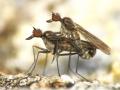
I agree Ruud, there are many cases where you cannot tell for sure and caution must be taken. Sometimes people just get lucky. I have another species of Pollenia showing similar .. blowave attached the following image: 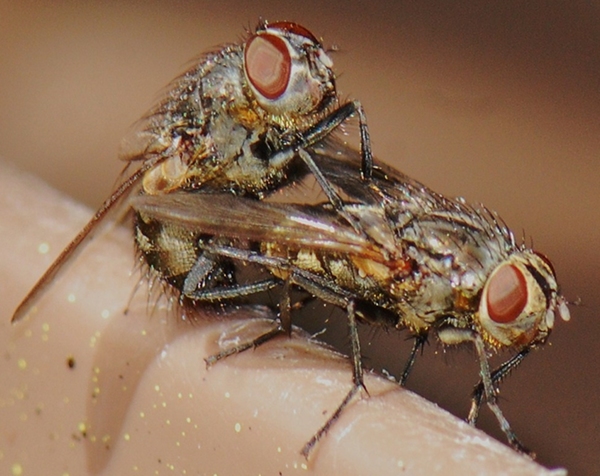 [178.97Kb] http://cubits.org... |
|
|
|
| rvanderweele |
Posted on 26-01-2012 15:13
|
|
Member Location: Leiden, the Netherlands Posts: 1988 Joined: 01.11.06 |
BTW, very nice photo's! I never tried to determine Pollenia's, they are not really my group of flies, but when I see them on a sunny day in the winter on the wall, I always like to see them.
ruud van der weele rvanderweele@gmail.com |
|
|
|
| Ginks |
Posted on 26-01-2012 17:07
|
|
Member Location: Mid-Essex Posts: 69 Joined: 05.01.12 |
WOW! You've gone to so much trouble over my query, thank you so much. The photos are BRILLIANT... and I'm glad my question has given you a chance to have such an interesting conversation! When I have my other hat on, I'm an artist, so I'm very observant. I don't know much about flies, but I've been working on IDing hovers for months, so I know some of the pitfalls of trying to sex these critters. In this case, I got lucky, as you put it!!! This has been such fun, but it's made me awfully hungry... TTFN, Ginks |
|
|
|
| rvanderweele |
Posted on 26-01-2012 17:32
|
|
Member Location: Leiden, the Netherlands Posts: 1988 Joined: 01.11.06 |
hahaha, for me it felt, again, as a cold shower and I learnt you only should talk about those families you are familiar with. So no calypterates for me! ;-)
ruud van der weele rvanderweele@gmail.com |
|
|
|
| Ginks |
Posted on 26-01-2012 17:37
|
|
Member Location: Mid-Essex Posts: 69 Joined: 05.01.12 |
Don't fret about it, Ruud! Look on the bright side, you've learnt something, and you've kept a not-so-young-lady amused for a while... that's not a bad afternoon's work in my book! Nice talking to you, bye! Ginks |
|
|
|
| rvanderweele |
Posted on 26-01-2012 18:06
|
|
Member Location: Leiden, the Netherlands Posts: 1988 Joined: 01.11.06 |
I am here around for some time. Some people are always chasing me and teasing. Mother, they are not nice! So if people like Jorge Almeida appear or Roger Thomason, the Shetlander, who is sometimes as evil as Jorge.....beware!
ruud van der weele rvanderweele@gmail.com |
|
|
|
| blowave |
Posted on 26-01-2012 18:10
|
|
Member Location: LINCOLN, UK Posts: 3151 Joined: 27.06.07 |
It's queries like this that are educational for all Ruud, you have done many people a favour. 
http://cubits.org... |
|
|
|
| rvanderweele |
Posted on 26-01-2012 18:13
|
|
Member Location: Leiden, the Netherlands Posts: 1988 Joined: 01.11.06 |
Jorge and Roger are not like that.....;-)
ruud van der weele rvanderweele@gmail.com |
|
|
|
| Jason G |
Posted on 26-01-2012 22:00
|
|
Member Location: London UK Posts: 136 Joined: 22.12.08 |
rvanderweele wrote: Jason, you can see that the fly is a female? I cannot, how do you see it? The eyes - with a lot of scrutiny! Though, your point is correct with a lot (most?) of calypterates. For me when it comes to calypterate males with widely-separated eyes they usually have the interfrontalia the same or a comparable width to the parafrontalia, and with such girls as you see here the interfrontalia just below the oculars is wider then the parafrontalia. That said, I don't doubt there are exceptions - probably more so, than parrallels with my reasoning! Asides from this, female insects in such cases are usually wider, slightly more rounded and the tip of the abdomen looking less likely to contain male genitals! As I say, there are always insects around to chuck spanners in the works. nice to 'talk' to you anyway, Ruud, I've seen you around frequently. Edited by Jason G on 26-01-2012 22:01 London's Insects http://londoninve...hostia.com |
|
|
|
| rvanderweele |
Posted on 26-01-2012 22:20
|
|
Member Location: Leiden, the Netherlands Posts: 1988 Joined: 01.11.06 |
Not so true, Jason. In the past I visited diptera.info more frequently.At the moment I am almost every evening busy with determining flies for malaise traps. Only as a break, so now and then, I pay this excellent site a visit. I like to people active on it a lot. Paul is doing truly a fantastic job with it.
ruud van der weele rvanderweele@gmail.com |
|
|
|
Page 1 of 2: 12
| Jump to Forum: |