


Diptera.info :: Identification queries :: Diptera (adults)
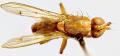
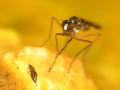
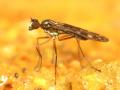
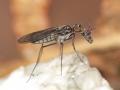
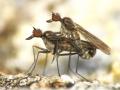
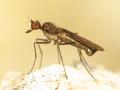
 Chloropidae USA 2011-V-19 (= Incertella)
|
|
| John Carr |
Posted on 23-11-2011 18:58
|
 Super Administrator Location: Colorado, USA Posts: 10662 Joined: 22.10.10 |
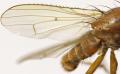
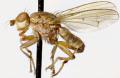
Found in a flower. Massachusetts, USA May 19, 2011. 2.5 mm long. Oscinellinae, I think.  (Click for large size or view on Flickr.)  (Click for large size or view on Flickr.) 
Edited by John Carr on 21-05-2012 21:46 |
 |
|
| Sara21392 |
Posted on 27-11-2011 15:46
|
 Member Location: Posts: 1445 Joined: 07.11.10 |
Yes, is Oscinelliene, but would you please take a photo from profile of head clearly? or please tell me is vibrissal angle of gena developed anteriorly or no? 
Sincerely yours Sara |
|
|
|
| John Carr |
Posted on 27-11-2011 17:50
|
|
Super Administrator Location: Colorado, USA Posts: 10662 Joined: 22.10.10 |
 It has dried in storage. I thought I had it in alcohol but the container was empty. |
|
|
|
| Sara21392 |
Posted on 27-11-2011 23:35
|
|
Member Location: Posts: 1445 Joined: 07.11.10 |
Unfortunately it's difficult to me. so sorry, I'd like to help you!  Looks like Aphanotrigonum to me, but by key i arrive to Pseudeurina!!!!!  I hope some friends can help to us! 
Sincerely yours Sara |
|
|
|
| John Carr |
Posted on 28-11-2011 00:37
|
|
Super Administrator Location: Colorado, USA Posts: 10662 Joined: 22.10.10 |
I don't think we have Pseudeurina in America. The ocellar triangle should be gray pruinose to reach Aphanotrigonum in the key in Manual of Nearctic Diptera: 15. Ocellar triangle only, or both triangle and scutum highly shining, entirely or predominantly without pruinescence; if triangle entirely pruinose (rarely), then hind tibia with a short anteroventral spur, or frons with two pairs of fronto-orbital bristles developed; ocellar triangle usually smooth and shiny but this shine sometimes interrupted by piliferous punctures or fine striations or shagreening ... 16 15. Ocellar triangle, scutum, and scutellum dull, densely gray pruinose, sometimes subshining if only thinly pruinose; three small polished spots rarely present on ocellar triangle adjacent to ocelli ... 36 From couplet 36 one selects "scutum without deeply incised lines of punctures" to reach 37, R2+3 not exceptionally long as in Dicraeus to reach couplet 38, and "ocellar triangle with two rows of coarse piliferous punctures" to reach Aphanotrigonum. The two species were reviewed by Sabrosky (1936) but I do not have his paper; I would have to request it through my library. |
|
|
|
| John Carr |
Posted on 21-05-2012 21:46
|
|
Super Administrator Location: Colorado, USA Posts: 10662 Joined: 22.10.10 |
Terry Wheeler has identified it as a member of a species group of Incertella that needs revision. |
|
|
|
| Sara21392 |
Posted on 23-05-2012 21:18
|
|
Member Location: Posts: 1445 Joined: 07.11.10 |
Hi John Did Terry tell you about characters of this genus that needs for ID? I have a species like this that confirmed as Aphanotrigonum! Thank you very much Edited by Sara21392 on 23-05-2012 21:28 Sincerely yours Sara |
|
|
|
| John Carr |
Posted on 24-05-2012 00:05
|
|
Super Administrator Location: Colorado, USA Posts: 10662 Joined: 22.10.10 |
He didn't mention generic characters. He said the species in my area are usually identifiable by color. His chapter in Manual of Central American Diptera includes Incertella in the key., but does not include Aphanotrigonum. |
|
|
|
| Sara21392 |
Posted on 24-05-2012 18:04
|
|
Member Location: Posts: 1445 Joined: 07.11.10 |
Thank you!
Sincerely yours Sara |
|
|
|
| Jump to Forum: |