


Diptera.info :: Identification queries :: Diptera (adults)
 Tephritidae Tephritis bardanae?
|
|
| blowave |
Posted on 12-11-2011 21:47
|
 Member Location: LINCOLN, UK Posts: 3151 Joined: 27.06.07 |
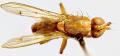
Hello! This doesn't quite look right for Tephritis formosa, could it be T. bardanae? 19th August, near Lincoln UK. Janet blowave attached the following image: 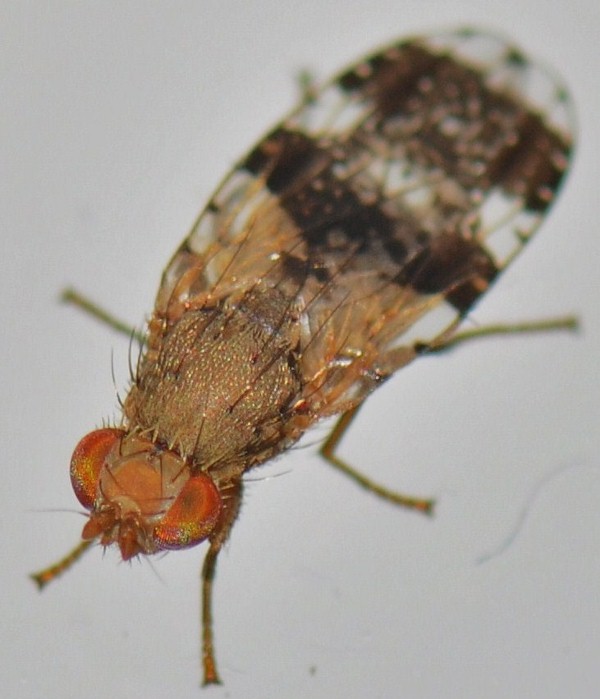 [88.42Kb] http://cubits.org... |
 |
|
| blowave |
Posted on 12-11-2011 21:47
|
|
Member Location: LINCOLN, UK Posts: 3151 Joined: 27.06.07 |
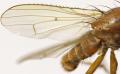
pic 2
blowave attached the following image: 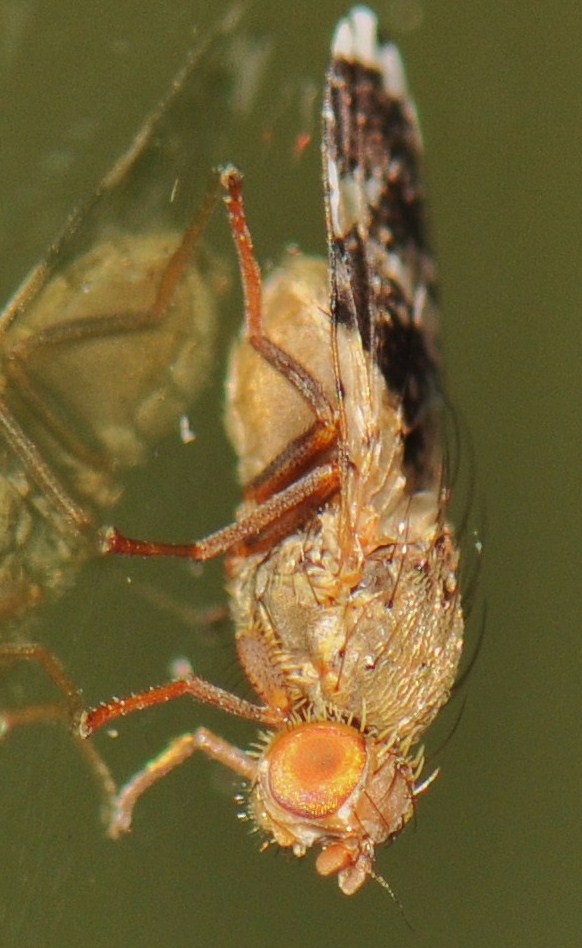 [128.77Kb] http://cubits.org... |
|
|
|
| John Smit |
Posted on 13-11-2011 09:03
|
 Member Location: Utrecht Posts: 565 Joined: 05.10.04 |
Your initial id was correct, it is T. formosa. Mind you, females have a much more extensive wingpattern than males, perhaps that made you doubt. John |
|
|
|
| blowave |
Posted on 13-11-2011 14:55
|
|
Member Location: LINCOLN, UK Posts: 3151 Joined: 27.06.07 |
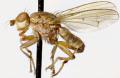
John Smit wrote: Your initial id was correct, it is T. formosa. Mind you, females have a much more extensive wingpattern than males, perhaps that made you doubt. John Thanks John.  Yes it was the wing pattern which had me doubting, but the lack of a black glossy strip on the scutellum had me wondering too! http://cubits.org... |
|
|
|
| John Smit |
Posted on 15-11-2011 15:53
|
|
Member Location: Utrecht Posts: 565 Joined: 05.10.04 |
... Can you believe I've never noticed that before! Just been looking at some pictures and indeed the majority seem to have, though not all! Not even sure it is a valid character for the species or whether its variable. Thanks for drawing my attention to it though! John |
|
|
|
| blowave |
Posted on 15-11-2011 23:27
|
|
Member Location: LINCOLN, UK Posts: 3151 Joined: 27.06.07 |
Wow, hard to imagine that John!  I find my own ways often to separate one species from another, so not using keys I have probably picked up on features which those who follow keys haven't.  I found a feature to recognise a male from a female Blue-tailed damselfly which nobody has found too! The female has a 'C' shape turned on the side on the tail segment next to the blue band, males have a sort of sideways 'S' shape. Check it out!
http://cubits.org... |
|
|
|
| Jump to Forum: |