


Diptera.info :: Identification queries :: Diptera (adults)
Who is here? 1 guest(s)
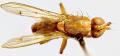
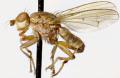
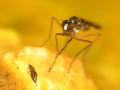
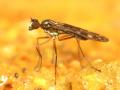
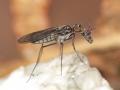
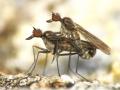
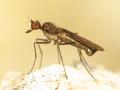
 Tachinidae USA 2009-VII-9 (= Siphonini)
|
|
| John Carr |
Posted on 06-11-2011 23:23
|
 Super Administrator Location: Colorado, USA Posts: 10655 Joined: 22.10.10 |
Massachusetts, USA July 9, 2009. (Click to enlarge or view on Flickr.)    
Edited by John Carr on 07-11-2011 14:50 |
 |
|
| ChrisR |
Posted on 07-11-2011 12:01
|
 Super Administrator Location: Reading, England Posts: 7706 Joined: 12.07.04 |
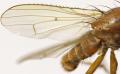
Oh, very nice ... looks like a North American species of Siphona  Definitely a siphonine (converging sub-apicals, hairy r4+5 and general habitus) ... not sure how easy they are to identify in the nearctic but they are probably very difficult Definitely a siphonine (converging sub-apicals, hairy r4+5 and general habitus) ... not sure how easy they are to identify in the nearctic but they are probably very difficult 
Manager of the UK Species Inventory in the Angela Marmont Centre for UK Biodiversity at the Natural History Museum, London. |
|
|
|
| John Carr |
Posted on 07-11-2011 14:47
|
|
Super Administrator Location: Colorado, USA Posts: 10655 Joined: 22.10.10 |
I tried the key to Actia (Curran, 1933) and if in that key it would have to be Actia atripes (Coquillett, 1897) based on the mostly bare veins. The description is close. It was described from Massachusetts and represented by only the type specimen as of 1933. The name does not appear in the nadsdiptera.org catalog, even as a synonym. I have not seen the revision of Siphona by O'Hara (1982). |
|
|
|
| ChrisR |
Posted on 07-11-2011 15:19
|
|
Super Administrator Location: Reading, England Posts: 7706 Joined: 12.07.04 |
Did Curran distinguish between Siphona and Actia? This one seems to have a long, hinged proboscis so would be Siphona under a modern interpretation
Manager of the UK Species Inventory in the Angela Marmont Centre for UK Biodiversity at the Natural History Museum, London. |
|
|
|
| John Carr |
Posted on 07-11-2011 15:43
|
|
Super Administrator Location: Colorado, USA Posts: 10655 Joined: 22.10.10 |
Curran's Actia contains at least four genera now. The key in Manual of Nearctic Diptera distinguishes Siphona and Ceranthia from the rest by "A1 ending at wing margin." This fly's A1 appears to be short, but a fold may reach the wing margin. Then Siphona and Ceranthia are distinguished by proboscis. The key says Actia and Ceromya both have "R4+5 setose from base to well beyond crossvein r-m", which is not the case here. Another picture shows more clearly that there are no bristles in the out of focus part of the vein. Edited by John Carr on 07-11-2011 15:44 |
|
|
|
| Jump to Forum: |