

Diptera.info :: Identification queries :: Diptera (adults)
 Sardinia Tachinidae Eumeella
|
|
| sd |
Posted on 01-11-2011 21:42
|
|
Member Location: Suffolk, UK Posts: 893 Joined: 11.10.07 |
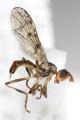
Sardinia, Nuoro, 600m alt. 21st June 2011 Wood Pasture. Roadside, on flowers. Size 8mm approx I cannot work this one out at all, help  Steve [edit: correction- date is 2nd April 2011 and location is Tortoli, altitude 100m approx] sd attached the following image: 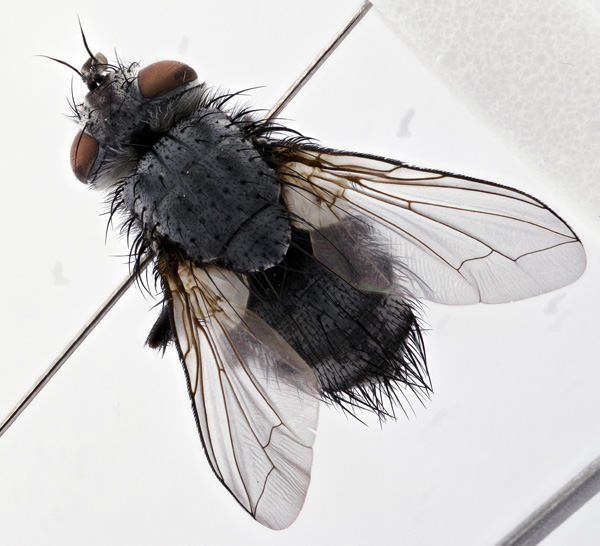 [127.62Kb] Edited by sd on 28-09-2012 11:19 |
|
|
|
| sd |
Posted on 01-11-2011 21:43
|
|
Member Location: Suffolk, UK Posts: 893 Joined: 11.10.07 |
..
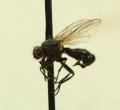
sd attached the following image: 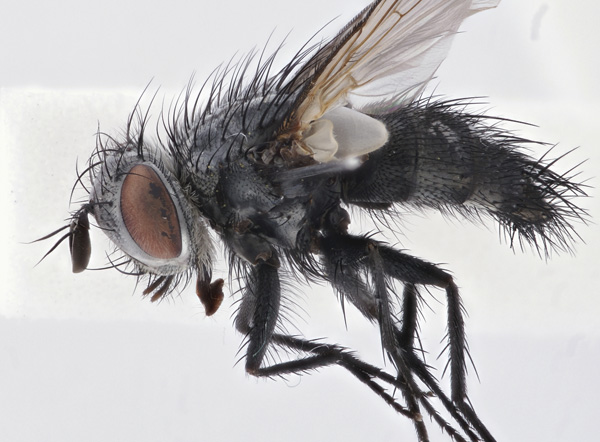 [116.84Kb] |
|
|
|
| sd |
Posted on 01-11-2011 21:43
|
|
Member Location: Suffolk, UK Posts: 893 Joined: 11.10.07 |
..
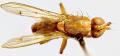
sd attached the following image: 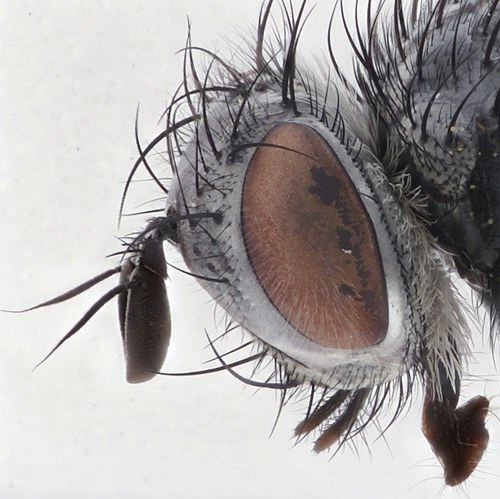 [132.45Kb] |
|
|
|
| ChrisR |
Posted on 01-11-2011 23:45
|
 Super Administrator Location: Reading, England Posts: 7706 Joined: 12.07.04 |
Very interesting - yellow palps ... hairy parafacial ,.. not sure what it could be but it should be easy to key - what does it come out to be? Have you tried it in Tschorsnig & Richter, the Palearctic Manual - or just Central European key?
Manager of the UK Species Inventory in the Angela Marmont Centre for UK Biodiversity at the Natural History Museum, London. |
 |
|
| Zeegers |
Posted on 02-11-2011 07:51
|
|
Member Location: Soest, NL Posts: 19363 Joined: 21.07.04 |
Please have a good look at the calypter: it looks swollen, suggesting Ethyliini Theo |
|
|
|
| Zeegers |
Posted on 02-11-2011 07:52
|
|
Member Location: Soest, NL Posts: 19363 Joined: 21.07.04 |
swollen is not correctly put, but I don't know how to put it more properly. Have a look at the keys at Ethyliini. Theo |
|
|
|
| ChrisR |
Posted on 02-11-2011 10:33
|
|
Super Administrator Location: Reading, England Posts: 7706 Joined: 12.07.04 |
I think Theo means "balloon-like convex" (couplet #145 in the Central European key), as we translated it ( "ballonformig konvex" ) - also #400 in the Palearctic Manual. This is a tricky concept to translate from the key to reality but it means that the outer edge of the calypter is strongly bent and down-curved like the edge of a Frisbee ... rather like your specimen  Using the Palearctic key and squinting a lot at the photos I make it Paratryphera sp. ... then using Mesnil in Lindner I make it a possible P.bisetosa.
Edited by ChrisR on 02-11-2011 10:34 Manager of the UK Species Inventory in the Angela Marmont Centre for UK Biodiversity at the Natural History Museum, London. |
|
|
|
| sd |
Posted on 02-11-2011 11:44
|
|
Member Location: Suffolk, UK Posts: 893 Joined: 11.10.07 |
Thank you Theo and Chris. I wil take a photo of the calypter for confirmation. The laterals are strong so it cannot be Paratryphera or Prosethilla. It cannot be Amnomia or Atylomyia as these have bare eyes. Which really only leaves Ethilla which is supposed to have reddish sides to the abdomen. So still no solution at the moment. My apologies, I need to correct the date and location above ( I transcibed from an adjacent specimen  ). The date was 2nd April 2011, at the same time and place as the Gonia atra on this thread- ). The date was 2nd April 2011, at the same time and place as the Gonia atra on this thread-http://www.dipter...d_id=37814 |
|
|
|
| sd |
Posted on 02-11-2011 12:10
|
|
Member Location: Suffolk, UK Posts: 893 Joined: 11.10.07 |
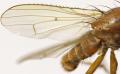
Here is a close up of the calypter. I'm not sure it is convex enough? Steve sd attached the following image: 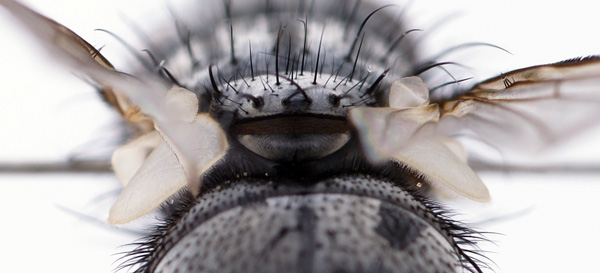 [80.35Kb] |
|
|
|
| sd |
Posted on 02-11-2011 12:20
|
|
Member Location: Suffolk, UK Posts: 893 Joined: 11.10.07 |
..
sd attached the following image: 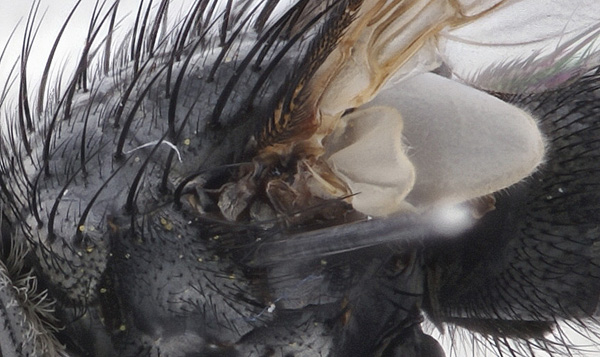 [122.23Kb] |
|
|
|
| sd |
Posted on 02-11-2011 13:31
|
|
Member Location: Suffolk, UK Posts: 893 Joined: 11.10.07 |
If I put the following points into Moschweb, eyes hairy, facial ridge seta 1/4 or less, lower facial margin not visible laterally, arista bare, arista thickened 3/5 - 3/4, 4 post-sutural dc, 3 katepisternal setae, 4 marginal scutellar setae, apical setae crossed at less than 60 degrees, median discals on T3 and T4. Just 4 genera are shown - Cavalieria, Exorista, Neophryxe, Nilea, Winthemia Cavalieria has parafacial hairs along the whole length and Neophryxe has none. The parafacial is bare for Nilea apart from N. anatolica which is presumably only Eastern Mediterranean. Which leaves Exorista and Winthemia. Neither seem very convincing? Steve Edited by sd on 02-11-2011 13:32 |
|
|
|
| ChrisR |
Posted on 02-11-2011 14:22
|
|
Super Administrator Location: Reading, England Posts: 7706 Joined: 12.07.04 |
Hmm, are you sure that the laterals are strong? I see strong apicals & sub-apicals and basals but the laterals (between basal and sub-apical) seem missing or hair-like.
Manager of the UK Species Inventory in the Angela Marmont Centre for UK Biodiversity at the Natural History Museum, London. |
|
|
|
| sd |
Posted on 02-11-2011 14:36
|
|
Member Location: Suffolk, UK Posts: 893 Joined: 11.10.07 |
Yes, they are there, just no clear photo of them.
sd attached the following image: 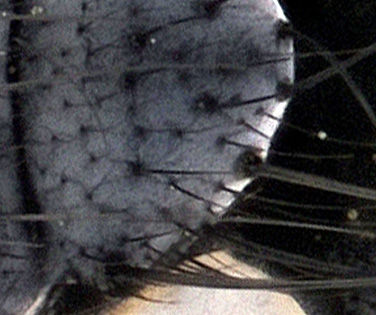 [78.6Kb] |
|
|
|
| sd |
Posted on 02-11-2011 14:40
|
|
Member Location: Suffolk, UK Posts: 893 Joined: 11.10.07 |
probably half the thickness of the basals and 2/3 of the length. |
|
|
|
| sd |
Posted on 02-11-2011 15:20
|
|
Member Location: Suffolk, UK Posts: 893 Joined: 11.10.07 |
If I relax the condition on the facial ridge bristles to allow 1/3-2/5, whilst adding conditions of few hairs on parafacial below last bristle and a bristle comb on hind tibia; Moschweb gives me Eumeella, Exorista and Nilea There is a single photo of the head of Eumeella on the site, which looks similar to this specimen, including the general white pubescence on the head. Steve |
|
|
|
| ChrisR |
Posted on 02-11-2011 15:45
|
|
Super Administrator Location: Reading, England Posts: 7706 Joined: 12.07.04 |
Ahh, OK I see them now - that's fine Definitely not Exorista but I don't have any experience of Eumeella
Manager of the UK Species Inventory in the Angela Marmont Centre for UK Biodiversity at the Natural History Museum, London. |
|
|
|
| Zeegers |
Posted on 02-11-2011 22:01
|
|
Member Location: Soest, NL Posts: 19363 Joined: 21.07.04 |
The calypter still looks 'balloonish'. I see two pairs of reclinate orbital setae, so that makes Eumeella a bit difficult. I have one, I need to check. Just to be sure: the hind coxa are really bare ? Theo |
|
|
|
| sd |
Posted on 03-11-2011 12:50
|
|
Member Location: Suffolk, UK Posts: 893 Joined: 11.10.07 |
Hi Theo, Thank you for looking at this. I eliminated Ethyliini as it has no genera with hairy eyes and with the arista thickened further than 1/2 way. The orbitals are rather knocked about, I think it's possible there was only one pair of reclinates in the natural state. The hind coxae are bare on the postero-dorsal margin. Steve sd attached the following image: 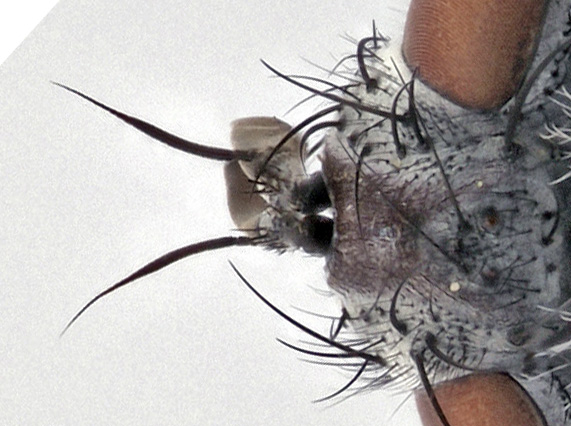 [125.07Kb] |
|
|
|
| sd |
Posted on 03-11-2011 12:52
|
|
Member Location: Suffolk, UK Posts: 893 Joined: 11.10.07 |
..
sd attached the following image: 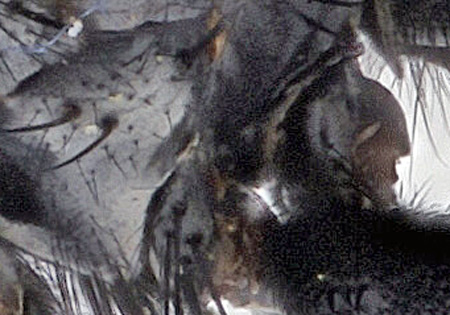 [94.42Kb] |
|
|
|
| sd |
Posted on 28-09-2012 10:53
|
|
Member Location: Suffolk, UK Posts: 893 Joined: 11.10.07 |
My apologies - I should have updated this earlier in the year. It was finally determined by Peter Tschorsnig as a female Eumeella and probably perdives. (very few females are known in collections) Thanks to Theo and Chris for their help with this, Steve |
|
|
|
| Jump to Forum: |