


Diptera.info :: Identification queries :: Diptera (adults)
 Siphona
|
|
| oceanlis2000 |
Posted on 24-10-2011 10:36
|
|
Member Location: Wales, UK Posts: 570 Joined: 15.06.10 |
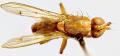
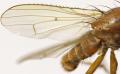
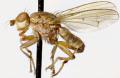
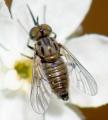
After reading all the comments on the site and looking at the photos I've come up with this for Siphona Information Small 3-6mm in length, long hinged proboscis = Siphona >3 subvibrissal seta discounts S. boreata, S. collini T2 with medial marginal bristles discounts S. ingerae, S. pauciseta, S. confusa, S. cristata, S. maculata 2nd antennal segment orange discounts S. setose However I’d be grateful if anyone can give me some on S. variata or S. hokkaidensis, the differences that id it from S. geniculata From previous threads from Chris they seem to be uncommon in the UK Thank you Edited by oceanlis2000 on 24-10-2011 10:41 Dr Elisabeth A. Harris @FloraConsUK |
|
|
|
| ChrisR |
Posted on 24-10-2011 12:23
|
 Super Administrator Location: Reading, England Posts: 7706 Joined: 12.07.04 |
S.hokkaidensis and variata are very very rare in the UK - and I've never seen either (in the UK or abroad). If you believe Andersen's keys then cristata *can* have median marginals on T1+2 ... but I have never seen one with median marginals there. [Remembering that he used a non-standard naming for cristata & geniculata that the ICZN later overruled]. Manager of the UK Species Inventory in the Angela Marmont Centre for UK Biodiversity at the Natural History Museum, London. |
 |
|
| oceanlis2000 |
Posted on 27-10-2011 10:43
|
|
Member Location: Wales, UK Posts: 570 Joined: 15.06.10 |
Thanks Chris Perhaps Theo or someone else can give us a bit more info. if they are common in the rest of Europe! Dr Elisabeth A. Harris @FloraConsUK |
|
|
|
| ChrisR |
Posted on 27-10-2011 11:59
|
|
Super Administrator Location: Reading, England Posts: 7706 Joined: 12.07.04 |
I've got a feeling that S.hokkaidensis is fairly rare everywhere but S.variata might be commoner on the mainland ... as you say, we need the help of Theo or someone who has plenty of experience of these. But, to be honest, we might be flogging a dead horse because the confidence of Siphona IDs is nearly always lower than other tachinid genera - even with a specimen. Pushing an ID on a photo is an exercise in futility most of the time 
Manager of the UK Species Inventory in the Angela Marmont Centre for UK Biodiversity at the Natural History Museum, London. |
|
|
|
| Zeegers |
Posted on 28-10-2011 09:02
|
|
Member Location: Soest, NL Posts: 19310 Joined: 21.07.04 |
What you need to do is get lots and lots of experience with geniculata. Then you might be able to spot aberrant species. Hokkaidensis and variata are not the real troubles: Hokkaidensis has the epaulette very dark, nearly black (as many others, but never that dark in geniculata). Variata has no marginal bristles on syntergite 1&2 and only 3 post DC. Variata is much closer to confusa and cristata. Hope that helps Theo |
|
|
|
| oceanlis2000 |
Posted on 28-10-2011 10:59
|
|
Member Location: Wales, UK Posts: 570 Joined: 15.06.10 |
Yes thanks Theo I think I can discount these 2 Looking again at the photos for geniculata I can see 1 ad and 2 pd, can anyone confirm if this is the same for cristata (the photos are too obscure to see for sure) Dr Elisabeth A. Harris @FloraConsUK |
|
|
|
| Zeegers |
Posted on 28-10-2011 19:53
|
|
Member Location: Soest, NL Posts: 19310 Joined: 21.07.04 |
yes. geniculata is really very simple (in most cases): * strong marginals on syntergite 1&2 * parafacial broad with abundant hairing * epaulette yellow or reddish. Theo |
|
|
|
| oceanlis2000 |
Posted on 29-10-2011 09:50
|
|
Member Location: Wales, UK Posts: 570 Joined: 15.06.10 |
Thanks Theo I'm pretty sure it's geniculata but will have a look again this weekend Edited by oceanlis2000 on 29-10-2011 09:52 Dr Elisabeth A. Harris @FloraConsUK |
|
|
|
| oceanlis2000 |
Posted on 31-10-2011 10:53
|
|
Member Location: Wales, UK Posts: 570 Joined: 15.06.10 |
Well 1discounts Siphona hokkaidensis (epaulettes = humeri?) are grey and not black) and Siphona variata (4 post dc are present) I have 2 more ideas Here there are 5 upper facial seta- on the photos of cristata I can only see 4 (both have the lower 1) And the post dc bristles are stronger in geniculata I’d be grateful for any agreements with these observations? Thank you oceanlis2000 attached the following image: 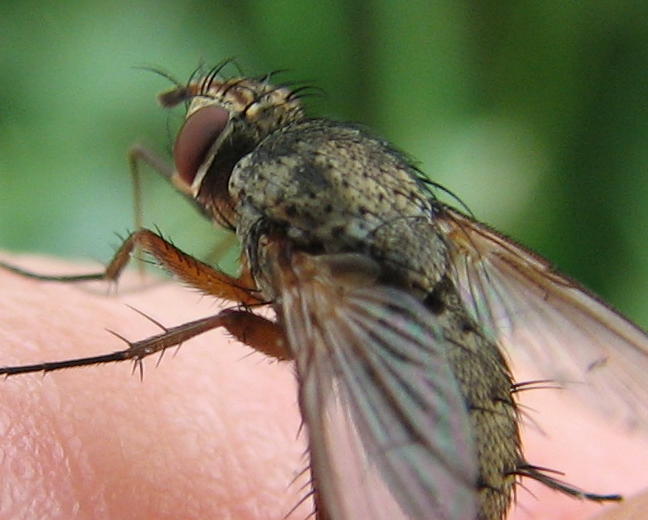 [51.91Kb] Dr Elisabeth A. Harris @FloraConsUK |
|
|
|
| oceanlis2000 |
Posted on 31-10-2011 10:54
|
|
Member Location: Wales, UK Posts: 570 Joined: 15.06.10 |
2
oceanlis2000 attached the following image: 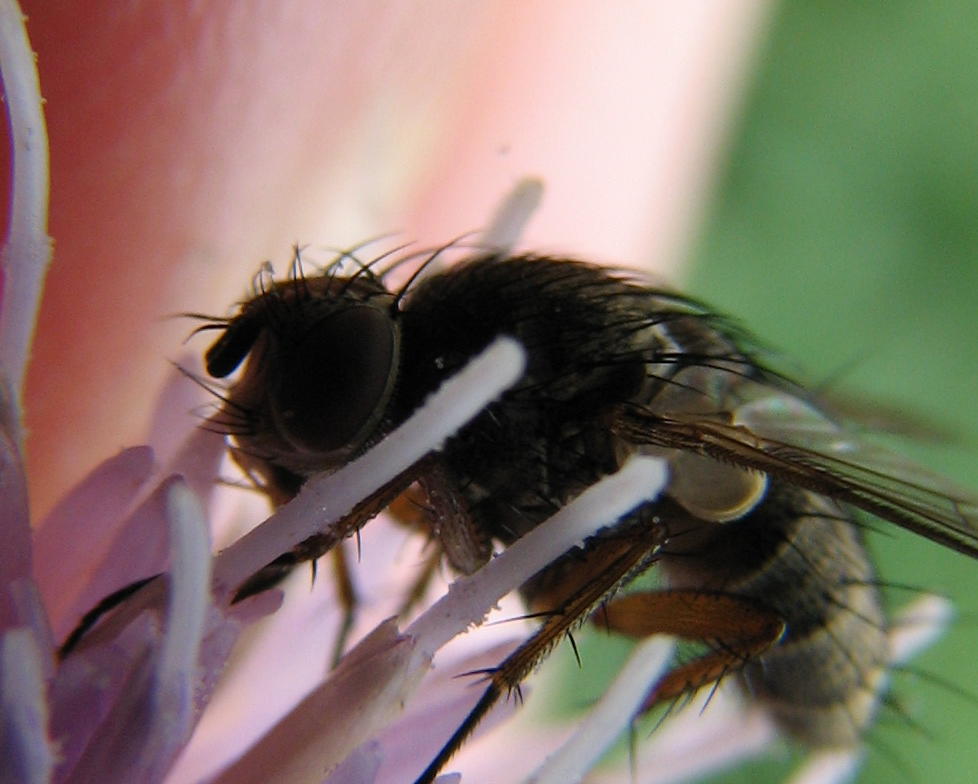 [83.16Kb] Dr Elisabeth A. Harris @FloraConsUK |
|
|
|
| Zeegers |
Posted on 31-10-2011 21:47
|
|
Member Location: Soest, NL Posts: 19310 Joined: 21.07.04 |
First of all, Siphona is hopeless. Secondly, all Siphona are geniculata until proven otherwise. Thirdly, cristata has golden vertex. Your observation on DC is more or less correct: in cristata the second and third post DC are usually close together. I think Belshaw uses this feature. In UK this might be OK, but in Finland it does not work. So be careful ! Never identify a Siphona based on 1 feature only ! Theo |
|
|
|
| ChrisR |
Posted on 31-10-2011 23:06
|
|
Super Administrator Location: Reading, England Posts: 7706 Joined: 12.07.04 |
Zeegers wrote: Secondly, all Siphona are geniculata until proven otherwise.  I most heartily concur - especially in the UK. At least 95% of all the Siphona that I find key out to geniculata I most heartily concur - especially in the UK. At least 95% of all the Siphona that I find key out to geniculata
Edited by ChrisR on 31-10-2011 23:06 Manager of the UK Species Inventory in the Angela Marmont Centre for UK Biodiversity at the Natural History Museum, London. |
|
|
|
| oceanlis2000 |
Posted on 03-11-2011 11:31
|
|
Member Location: Wales, UK Posts: 570 Joined: 15.06.10 |
Thanks to you both for all comments and discussions, I happy with geniculata I can't find anything against it and yes it is another hard genus in the world of tachinids! Dr Elisabeth A. Harris @FloraConsUK |
|
|
|
| ChrisR |
Posted on 03-11-2011 13:23
|
|
Super Administrator Location: Reading, England Posts: 7706 Joined: 12.07.04 |
Well, Siphona is a special case really - the other tachinid genera are far, far easier to ID - by a long way. You can always find difficult specimens in genera such as Dufouria, Thelaira, Phryxe (etc) but nothing matches Siphona for the level of uncertainty that one regularly finds. They are the only genus where an expert once admitted to me that only 20% will be reasonably confident IDs ... the rest will have varying levels of uncertainty and a high percentage will be completely indeterminate. Also, try to stick to males because with female specimens the uncertainty goes up a level. British Siphona are at least 95% geniculata with cristata making up maybe 3% and then maculata maybe another 1% ... the other 1% is shared between "the others", but are only usually found if you are in an unusual habitat or up in Scotland (in my experience). As a general rules, if it is a dirty brown colour with median marginals on T1+2 and >5 hairs below the parafrontals on the parafacial then it's going to be a geniculata. I only allow myself to get excited when I find much yellower-coloured specimens or ones without any T1+2 median marginals.
Edited by ChrisR on 03-11-2011 13:24 Manager of the UK Species Inventory in the Angela Marmont Centre for UK Biodiversity at the Natural History Museum, London. |
|
|
|
| oceanlis2000 |
Posted on 07-11-2011 11:37
|
|
Member Location: Wales, UK Posts: 570 Joined: 15.06.10 |
Yes I can see why looking at the stats Thanks again to everyone for their input- a good discussion Dr Elisabeth A. Harris @FloraConsUK |
|
|
|
| Jump to Forum: |