


Diptera.info :: Identification queries :: Diptera (adults)
Who is here? 1 guest(s)
 Terellia longicauda
|
|
| Jordi Clavell |
Posted on 25-09-2011 07:29
|
 Member Location: Sant Martí d'Albars, Catalonia Posts: 1226 Joined: 04.05.08 |
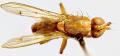
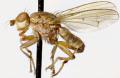
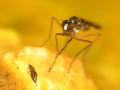
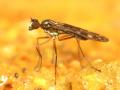
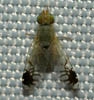
Could someone help me identifying this Terellia? Perhaps serratulae? The photos (author: Rosa Angulo) were made near Madrid, Spain, on 6.8.2011. I upload photos of a female and a male. Thanks. Jordi Clavell attached the following image: 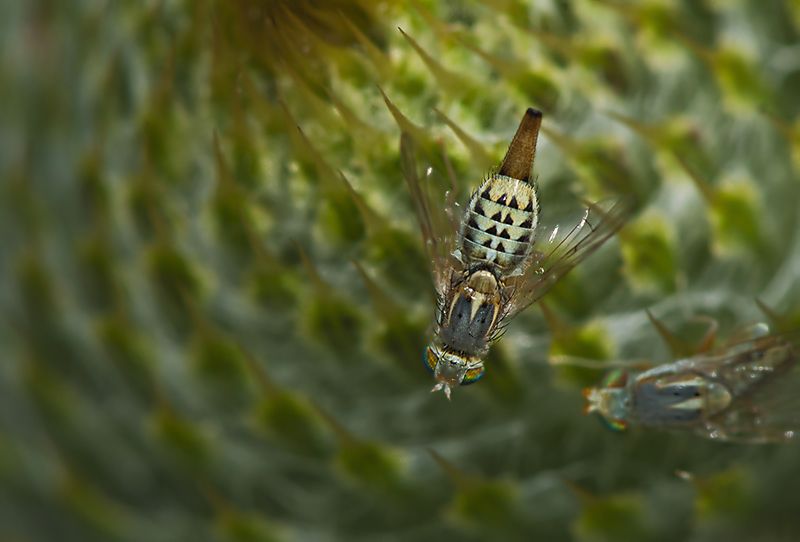 [53.39Kb] Edited by Jordi Clavell on 17-12-2011 20:44 |
 |
|
| Jordi Clavell |
Posted on 25-09-2011 07:30
|
|
Member Location: Sant Martí d'Albars, Catalonia Posts: 1226 Joined: 04.05.08 |
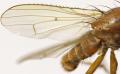
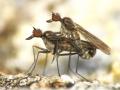
The male...
Jordi Clavell attached the following image: 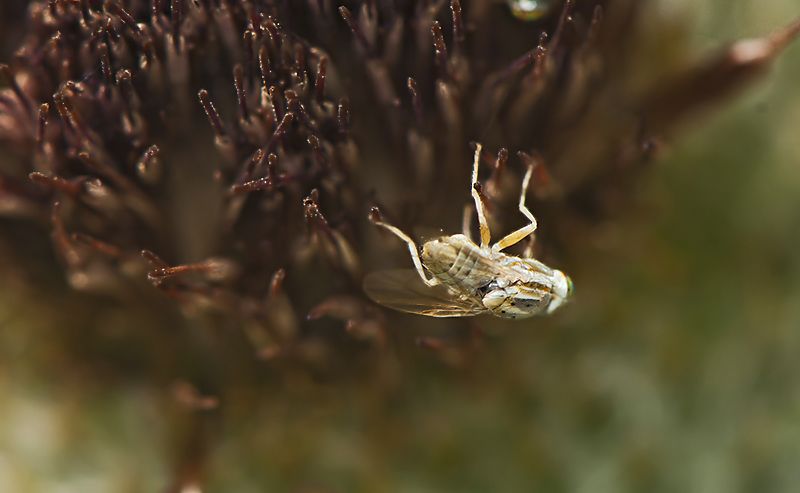 [46.65Kb] |
|
|
|
| Piluca_Alvarez |
Posted on 02-10-2011 19:58
|
 Member Location: Madrid, Spain Posts: 2431 Joined: 06.11.10 |
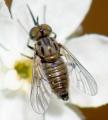
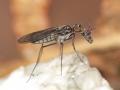
I was with Rosa and took pictures of the same specimens. They were everywhere on those thistles. My best shot is of this female. Hope it helps.
Piluca_Alvarez attached the following image: 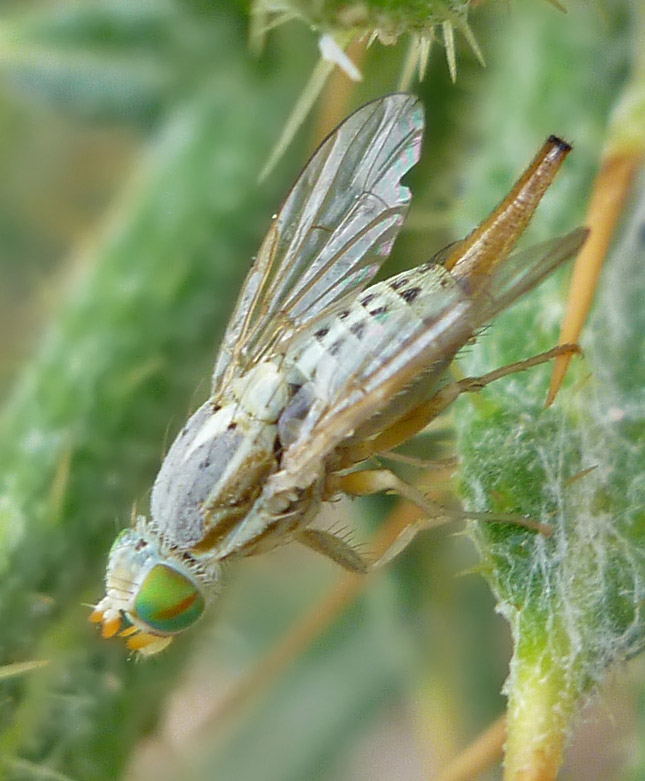 [138.13Kb] |
|
|
|
| Jordi Clavell |
Posted on 06-10-2011 18:46
|
|
Member Location: Sant Martí d'Albars, Catalonia Posts: 1226 Joined: 04.05.08 |
Thank you, Piluca; I think it can be Terellia (Terellia) serratulae. :-) |
|
|
|
| Piluca_Alvarez |
Posted on 09-10-2011 13:50
|
|
Member Location: Madrid, Spain Posts: 2431 Joined: 06.11.10 |
Oviscapo doesn't seem to be long enough for T. longicauda, neither I see the bluish colour. But it is that way to my unexperienced eyes  I guess other opinions are necessary. Let's see if Valery can put some light to this mystery I guess other opinions are necessary. Let's see if Valery can put some light to this mystery  |
|
|
|
| Jordi Clavell |
Posted on 12-12-2011 20:05
|
|
Member Location: Sant Martí d'Albars, Catalonia Posts: 1226 Joined: 04.05.08 |
Thanks, Piluca! Perhaps this fly can only be identified as Terellia sp. |
|
|
|
| John Smit |
Posted on 14-12-2011 13:39
|
 Member Location: Utrecht Posts: 565 Joined: 05.10.04 |
I'ld say Terellia longicauda, the oviscapus is too long for T. serratulae and the third antennal segment is not black, hence no T. fuscicornis, which leaves us with T. longicauda. John |
|
|
|
| Nosferatumyia |
Posted on 14-12-2011 19:03
|
 Member Location: Posts: 3578 Joined: 28.12.07 |
Still there is "something like T. longicauda" in Spain (incl. Canaries) that infests artichoques. Bernhard Merz recorded it from Canaries as T. sp. nr fuscicornis, but I still do not know what it is, though have gathered quite a lot of stuff from several European collections. Since the plant is certainly not an artichoque, but a Cirsium (apparently C. erisithales), yes, it is almost certainly T. longicauda. Val |
|
|
|
| Jordi Clavell |
Posted on 14-12-2011 20:37
|
|
Member Location: Sant Martí d'Albars, Catalonia Posts: 1226 Joined: 04.05.08 |
Thank you very much, John and Valery!! |
|
|
|
| Jump to Forum: |