


Diptera.info :: Identification queries :: Diptera (adults)
Who is here? 1 guest(s)
 Dolichopodidae >> Hercostomus <?> Gymnopternus
|
|
| Maherjos |
Posted on 10-09-2011 10:17
|
 Member Location: Motril (Granada) España Posts: 2402 Joined: 02.09.09 |
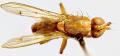
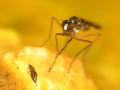
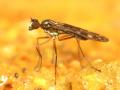
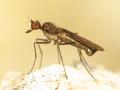
The picture is not good. I made a single photo before flying, and went out of focus. Has a lot of unsharp mask. But those green eyes fascinate me .... Photograph taken on September, 03, 2011, in the wetlands of the Suárez Pond in Motril, Granada, Spain. Immediate area of the Mediterranean coast. Approximate size, no antennae or tails 3-5 mm Click over the image increases in size  Appreciate your cooperation for identification. Greetings Edited by Maherjos on 22-10-2011 01:40 |
|
|
|
| jorgemotalmeida |
Posted on 10-09-2011 10:21
|
 Member Location: Viseu - PORTUGAL Posts: 9296 Joined: 05.06.06 |
It is a Dolichopodidae |
 |
|
| Maherjos |
Posted on 10-09-2011 10:50
|
|
Member Location: Motril (Granada) España Posts: 2402 Joined: 02.09.09 |
[b wrote:[/b] It is a Dolichopodidae Very grateful, jorgemotalmeida.  Best regards! |
|
|
|
| Igor Grichanov |
Posted on 12-09-2011 08:21
|
 Member Location: St.Petersburg, Russia Posts: 1818 Joined: 17.08.06 |
I think Hercostomus
Igor Grichanov |
|
|
|
| Maherjos |
Posted on 12-09-2011 11:11
|
|
Member Location: Motril (Granada) España Posts: 2402 Joined: 02.09.09 |
wrote: I think Hercostomus Very grateful, Igor Grichanov. I guess it will be very difficult to get to know the especie.... Possibly a better quality picture ... Best Regards Edited by Maherjos on 12-09-2011 11:13 |
|
|
|
| Marc Pollet |
Posted on 17-10-2011 21:33
|
|
Member Location: Welle (Denderleeuw) Posts: 161 Joined: 02.06.05 |
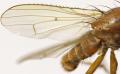
Dear Maherjos, This is the second time that I try to reply (the MySQL server went out during a previous session). Well, my guess would be that this is a female Chrysotus, considering the nearly parallel course of veins R4+5 and M1+2 in the upper wing. One might get the impression that these feins are strongly converging in the lower wing, but this must be due to the folding of the wing as this type of convergence is only typical for Medetera (and not for Hercostomus). Well, I am afraid you are stuck with guesses only, one better than the other, but without certainty about the identity of this fly unless the specimen is examined in detail. And that is my lasting recommendation. I am enjoying a collaboration with Portuguese friends for the past year, with them collecting specimens for me to identity. I return identifications and a reference collection, while keeping the most valuable of the specimens. So it's a clear win-win situation. Just give it some thought, ok? Con saludos cordiales, Marc |
|
|
|
| Maherjos |
Posted on 20-10-2011 16:42
|
|
Member Location: Motril (Granada) España Posts: 2402 Joined: 02.09.09 |
Marc Pollet wrote: Dear Maherjos, This is the second time that I try to reply (the MySQL server went out during a previous session). Well, my guess would be that this is a female Chrysotus, considering the nearly parallel course of veins R4+5 and M1+2 in the upper wing. One might get the impression that these feins are strongly converging in the lower wing, but this must be due to the folding of the wing as this type of convergence is only typical for Medetera (and not for Hercostomus). Well, I am afraid you are stuck with guesses only, one better than the other, but without certainty about the identity of this fly unless the specimen is examined in detail. And that is my lasting recommendation. I am enjoying a collaboration with Portuguese friends for the past year, with them collecting specimens for me to identity. I return identifications and a reference collection, while keeping the most valuable of the specimens. So it's a clear win-win situation. Just give it some thought, ok? Con saludos cordiales, Marc Many thanks for your deductions and reasoning. I will consider your offer to try to better identify some of these small insects, for which it had not been enough of photography. I have no training or taxonomic knowledge, and therefore lack the capacity to identify insects that picture. Only take pictures. The problem is that often fly or insect generally flies and disappears before the end of the shooting. Only rarely is stationary ... Edit the title identification with their advance. Thanks for everything and a warm greeting. |
|
|
|
| Igor Grichanov |
Posted on 21-10-2011 10:04
|
|
Member Location: St.Petersburg, Russia Posts: 1818 Joined: 17.08.06 |
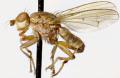
Sorry, Marc. This fly is too bristly for Diaphorinae. I checked my photo collection with European Chrysotus species, and did not find any species with strong ventral bristle on mid tibia or strong dorsal bristle at base of hind tibia. Therefore, dolichopodines are much better guess than diaphorines.
Igor Grichanov |
|
|
|
| Stefan Naglis |
Posted on 21-10-2011 11:28
|
|
Member Location: Switzerland Posts: 738 Joined: 27.12.08 |
I agree with Igor, the strong dorsal and apical setae on mid and hind tibiae are typical for Dolichopodinae, and I guess it is Hercostomus or Gymnopternus. |
|
|
|
| Maherjos |
Posted on 22-10-2011 01:51
|
|
Member Location: Motril (Granada) España Posts: 2402 Joined: 02.09.09 |
Igor Grichanov wrote: Sorry, Marc. This fly is too bristly for Diaphorinae. I checked my photo collection with European Chrysotus species, and did not find any species with strong ventral bristle on mid tibia or strong dorsal bristle at base of hind tibia. Therefore, dolichopodines are much better guess than diaphorines. Stefan Naglis wrote: I agree with Igor, the strong dorsal and apical setae on mid and hind tibiae are typical for Dolichopodinae, and I guess it is Hercostomus or Gymnopternus. I appreciate you interest with experts, trying to ascertain the identity of this fly. For my part, I can only lament the poor quality I did the photography. Perhaps a better picture quality, provide you the expert identification easier and safer. Best Regards |
|
|
|
| Jump to Forum: |