


Diptera.info :: Identification queries :: Diptera (adults)
Who is here? 1 guest(s)
Page 1 of 2: 12
|
 Tachinidae ex pupae, Oct.26, 2006
|
|
| Dmitry Gavryushin |
Posted on 26-10-2006 17:22
|
 Member Location: Moscow region, Russia Posts: 3347 Joined: 17.10.05 |
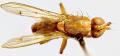
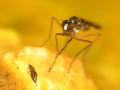
I've already said goodbye to Tachinidae until next spring, but now I'm back with images of freshly-emerged (late autumn?) species. 3 specimens, host: Acronicta sp. (A. psi or A. alni, my records are still not too accurate). Size 9mm. Dmitry Gavryushin attached the following image: 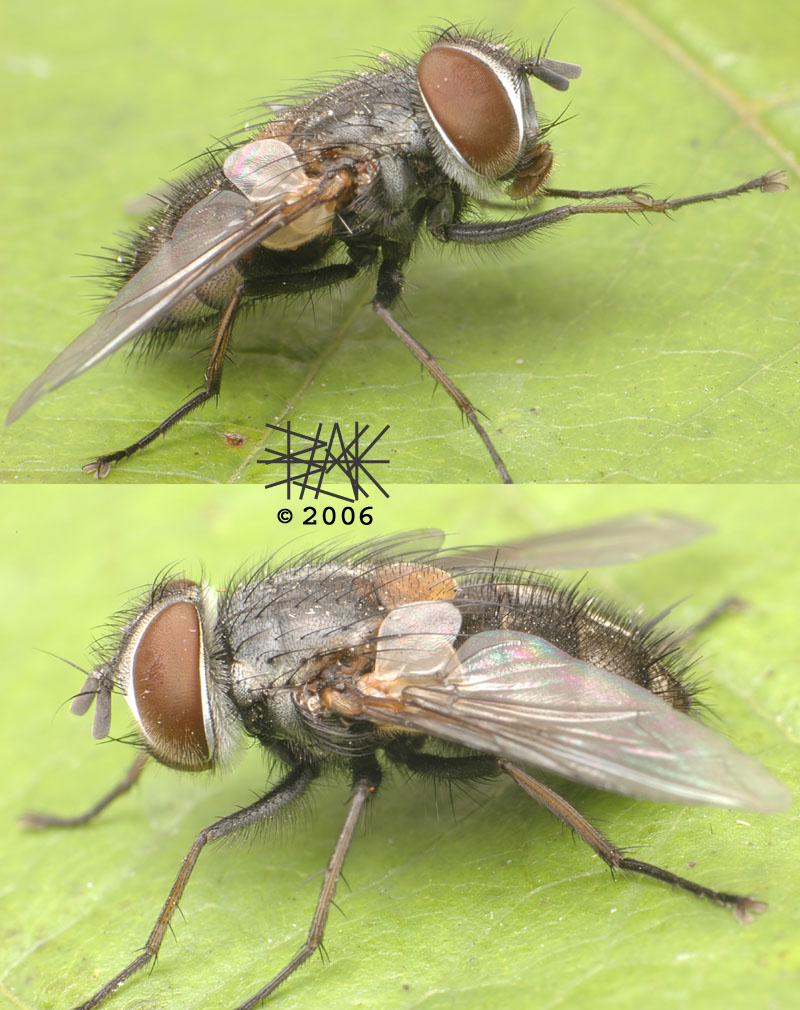 [180.79Kb] |
|
|
|
| Dmitry Gavryushin |
Posted on 26-10-2006 17:23
|
|
Member Location: Moscow region, Russia Posts: 3347 Joined: 17.10.05 |
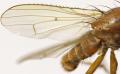
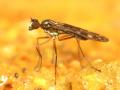
A dorsal view.
Dmitry Gavryushin attached the following image: 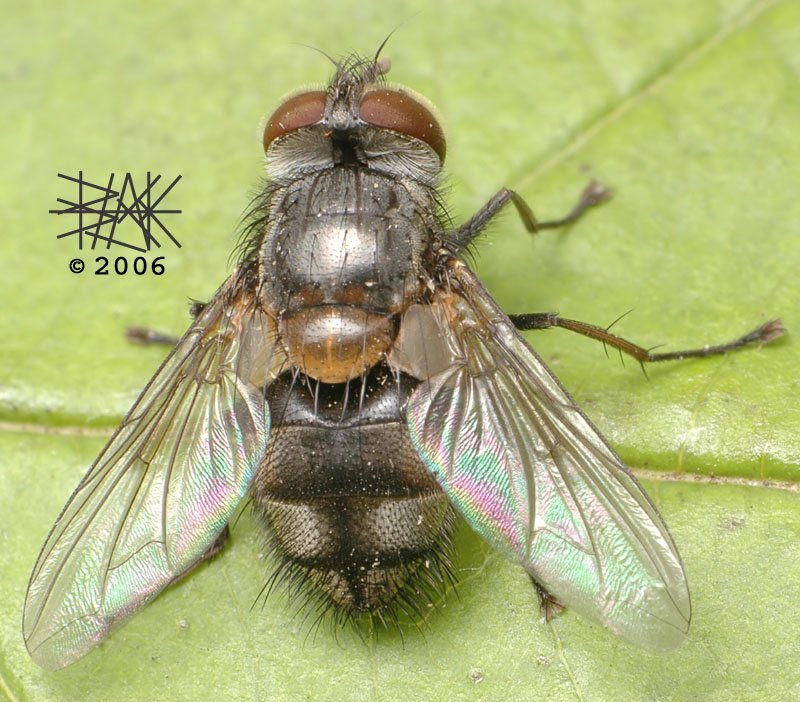 [160.01Kb] |
|
|
|
| Dmitry Gavryushin |
Posted on 26-10-2006 17:25
|
|
Member Location: Moscow region, Russia Posts: 3347 Joined: 17.10.05 |
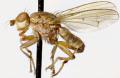
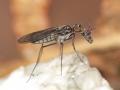
And the head. (My 1000th post, and it's a Tachinidae  !) !)
Dmitry Gavryushin attached the following image: 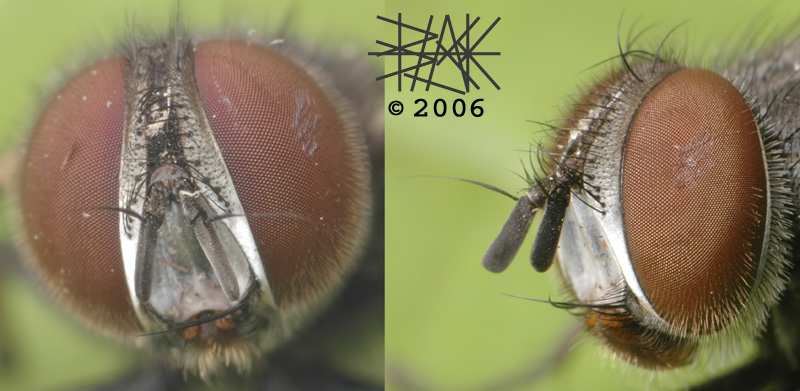 [124.03Kb] |
|
|
|
| Xespok |
Posted on 26-10-2006 18:16
|
 Member Location: Debrecen, Hungary Posts: 5551 Joined: 02.03.05 |
Somewhat similar to Carcelia sp that I posted a few weeks ago, but with Tachinids lets wait for Chris or Theo. |
 |
|
| Zeegers |
Posted on 26-10-2006 21:07
|
|
Member Location: Soest, NL Posts: 19317 Joined: 21.07.04 |
Well, it clearly is Carcelia and with such nice pictures we might even get a full ID (Carcelia is difficult genus). The vertex is very small, the basicosta yellow, tibia 2 yellow with 1 ad, humeri dark, and the thorax slightly reddish in front of scutellum leading to Carcelia rasa (male) The host is suprising: Carcelia rasa prefers Lymantriidae. However, crossing over to other families as expection in known for many species in Carcelia. C. rasa has two generations each year, but this record is late even for the autumn generation. Theo Zeegers |
|
|
|
| Dmitry Gavryushin |
Posted on 26-10-2006 22:11
|
|
Member Location: Moscow region, Russia Posts: 3347 Joined: 17.10.05 |
Thank you so much Theo, even down to a species level ID, I'm really impressed . Concerning the host, now I have some doubts. I fed only 2 spp. of Lymantriidae, L. monacha (infested by a parasitic wasp, emerged on July 14), and C. pudibunda (collected on Sept. 03 on Salix, no articulate further records, but I can check if its pupa is present, it's rather easy to recognize, and then double-check to maybe exclude Acronicta, I fed many of them and the majority was infested, a common case for solitary caterpillars in autumn). |
|
|
|
| ChrisR |
Posted on 26-10-2006 23:16
|
 Super Administrator Location: Reading, England Posts: 7706 Joined: 12.07.04 |
I'm impressed too - I am not sure I'd like to split rasa, bombylans and puberula without measuring the frons with with a graticule  Here it is a very rare species and we have been finding more bombylans than rasa in recent years Here it is a very rare species and we have been finding more bombylans than rasa in recent years |
|
|
|
| Dmitry Gavryushin |
Posted on 27-10-2006 07:32
|
|
Member Location: Moscow region, Russia Posts: 3347 Joined: 17.10.05 |
Thanks for your remark Chris - and some more on host: I remembered also a Leucoma salicis (collected on August 01, there's a remark 'immediately started preparing to pupate' on it, I should check more of my (loose) notes to find out what its fate actually was). |
|
|
|
| crex |
Posted on 27-10-2006 09:04
|
 Member Location: Sweden Posts: 1996 Joined: 22.05.06 |
I can't stop being amazed by the quality of your photos Black! Could you please reveal exactly what equipment you use and what settings for camera, lens, flash ... perhaps in the macro lens thread, in a new thread or in a PM to me if you don't want it to be public!? I haven't been able to take photos with such good lighting, DOF or overall sharpness. I know that most photos are taken in your kitchen, but nontheless that doesn't make the photos less breathtaking. Thanx in advance from a true fan  If Nikita wants to share his equipment too I woudn't mind. I'm thinking of his nice photos of the small Dolichopodidae etc in the wild. |
|
|
|
| Zeegers |
Posted on 27-10-2006 09:33
|
|
Member Location: Soest, NL Posts: 19317 Joined: 21.07.04 |
I consulted H.-P. Tschorsnig (Stuttgart), he is the real expert in Tachinidae. The chances of C. rasa being bred from Acronicta are in his opinion very small indeed, because Acronicta has been bred many many times and C. rasa never occurred (C. atricosta did once). There is a small chance that the species might be Senometopia separata. On the other hand, given the new info by Black, there is the possibility that a Lymantriid was the host after all ! My personal view is that the second option is the most likely. if th specimen was collected, and/of if we can get a photo of the middle leg in frontal view or back view, we can get to a really positive ID. I know, you make such great pictures, and then I start complaining about not being able to see the underside of the middel tibia! Theo Zeegers |
|
|
|
| ChrisR |
Posted on 27-10-2006 09:59
|
|
Super Administrator Location: Reading, England Posts: 7706 Joined: 12.07.04 |
It's the unwritten rule of diptera identification from photos - "there's always 1 more angle to photograph"! |
|
|
|
| Dmitry Gavryushin |
Posted on 27-10-2006 10:39
|
|
Member Location: Moscow region, Russia Posts: 3347 Joined: 17.10.05 |
Thanks to all for your remarks. 2 crex: will inform soon - no secrets. 2 Theo Zeegers: specimens are collected and still alive, will post mid tibia image(s) soon, and it's really nice to have such a comment from Hans-Peter Tschorsnig. |
|
|
|
| Dmitry Gavryushin |
Posted on 28-10-2006 11:26
|
|
Member Location: Moscow region, Russia Posts: 3347 Joined: 17.10.05 |
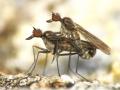
Here's some views of the right tibia II of a mounted fly - please let me know if that's enough Theo.
Dmitry Gavryushin attached the following image:  [166.87Kb] |
|
|
|
| Zeegers |
Posted on 28-10-2006 13:37
|
|
Member Location: Soest, NL Posts: 19317 Joined: 21.07.04 |
thanks Black, The middle picture settles it: there is clearly a ventral bristle, in retrospect we could have seen it all along (I noticed it, however, perspective can be very tricky in pictures so I wanted to be very sure). Implying: Carcelia, not Senometopia and therefore: Carcelia rasa it is. Any news on the host ? Theo |
|
|
|
| ChrisR |
Posted on 28-10-2006 15:54
|
|
Super Administrator Location: Reading, England Posts: 7706 Joined: 12.07.04 |
If it is a male then the genitalia are usually quite distinctive - to add weight to the identification While it is soft just hook out his 'bits' with a fine pin and let them dry. I have some line drawings here somewhere that I can send to you if you'd like to give it a try |
|
|
|
| Dmitry Gavryushin |
Posted on 29-10-2006 08:55
|
|
Member Location: Moscow region, Russia Posts: 3347 Joined: 17.10.05 |
Many thanks Theo and Chris. As regards the host, now I'm sure it was Calliteara pudibunda. I will check if I got any males (two specimens are still alive). |
|
|
|
| ChrisR |
Posted on 29-10-2006 10:29
|
|
Super Administrator Location: Reading, England Posts: 7706 Joined: 12.07.04 |
When you find a male to examine just download the Carcelia article from here http://tachinidae...ifrons.pdf It doesn't cover all European species but here we are primarily just trying to back-up the suggestion that it is C.rasa, so if the figures look the same as your specimen then it adds weight to the identification |
|
|
|
| Dmitry Gavryushin |
Posted on 29-10-2006 10:55
|
|
Member Location: Moscow region, Russia Posts: 3347 Joined: 17.10.05 |
OK thanks again Chris. |
|
|
|
| Dmitry Gavryushin |
Posted on 29-10-2006 19:13
|
|
Member Location: Moscow region, Russia Posts: 3347 Joined: 17.10.05 |
Today I've got the fourth fly. The smallest of the four is 8mm, and they all are females. |
|
|
|
| ChrisR |
Posted on 29-10-2006 20:06
|
|
Super Administrator Location: Reading, England Posts: 7706 Joined: 12.07.04 |
Ahh, it is normal for all flies to be the same sex if they are from the same host.  The frons is unusually narrow so with nothing more to work on Theo's C.rasa seems the best bet. The frons is unusually narrow so with nothing more to work on Theo's C.rasa seems the best bet. |
|
|
|
Page 1 of 2: 12
| Jump to Forum: |