


Diptera.info :: Identification queries :: Diptera (adults)
Who is here? 1 guest(s)
 Chironomidae> Stenochironomus
|
|
| Maherjos |
Posted on 06-07-2011 12:39
|
 Member Location: Motril (Granada) España Posts: 2402 Joined: 02.09.09 |
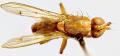
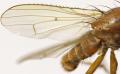
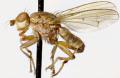
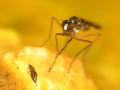
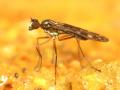
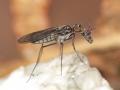
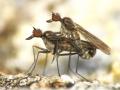
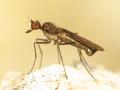
Very small, no antennae or legs two millimeters. Found on my desk on 02/07/2011 in Motril, Granada, Spain.  I appreciate the help I can provide. Regards _____________________________________________________ Add photo of detail of the wings. Double click on the photo, it enlarges its size. 
Edited by Maherjos on 08-07-2011 10:22 |
|
|
|
| John Carr |
Posted on 06-07-2011 14:15
|
 Super Administrator Location: Colorado, USA Posts: 10652 Joined: 22.10.10 |
Female Chironomini. Possibly Polypedilum (Pentapedilum) if the wings are hairy. |
 |
|
| Maherjos |
Posted on 07-07-2011 09:17
|
|
Member Location: Motril (Granada) España Posts: 2402 Joined: 02.09.09 |
John Carr wrote: Female Chironomini. Possibly Polypedilum (Pentapedilum) if the wings are hairy. Appreciated your information I added a detail of the photograph to show the wings further. I see very clear hairs on the edges of the wings. Do you serve this image to identify the species of mosquito.? very grateful |
|
|
|
| John Carr |
Posted on 08-07-2011 00:36
|
|
Super Administrator Location: Colorado, USA Posts: 10652 Joined: 22.10.10 |
Polypedilum (Pentapedilum) has hairs on the wing membrane as well as the edge. If there are no hairs on the wing membrane it may be Stenochironomus or a related genus. Stenochironomus has the scutum projecting far forward over the pronotum and usually has irregular black marks near the tip of the abdomen. It also likes to hold front legs out to the side as your midge does, but that tendency is more or less present in several genera. The subgenus Pentapedilum was revised by Oyewo and Saether in Zootaxa 1953. The key to females requires slide mounts. |
|
|
|
| Maherjos |
Posted on 08-07-2011 10:21
|
|
Member Location: Motril (Granada) España Posts: 2402 Joined: 02.09.09 |
John Carr wrote: Polypedilum (Pentapedilum) has hairs on the wing membrane as well as the edge. If there are no hairs on the wing membrane it may be Stenochironomus or a related genus. Stenochironomus has the scutum projecting far forward over the pronotum and usually has irregular black marks near the tip of the abdomen. It also likes to hold front legs out to the side as your midge does, but that tendency is more or less present in several genera. The subgenus Pentapedilum was revised by Oyewo and Saether in Zootaxa 1953. The key to females requires slide mounts. John Carr, I am very grateful for his extensive and complete information. Indeed, as shown, has hairs on the edges of the wing, but not in membranes, which would rule Polypedilum. Edit the title with the best orientation Stenochironomus. I reiterate my thanks to your data and explanations.  Best Regards |
|
|
|
| Jump to Forum: |