


Diptera.info :: Identification queries :: Diptera (adults)
Who is here? 1 guest(s)
 Tachinid for ID, C Spain
|
|
| Piluca_Alvarez |
Posted on 12-06-2011 22:32
|
 Member Location: Madrid, Spain Posts: 2431 Joined: 06.11.10 |
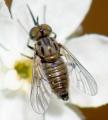
Taken in the mountains of Madrid on the 11th June 2011. ID would be much appreciated.
Piluca_Alvarez attached the following image: 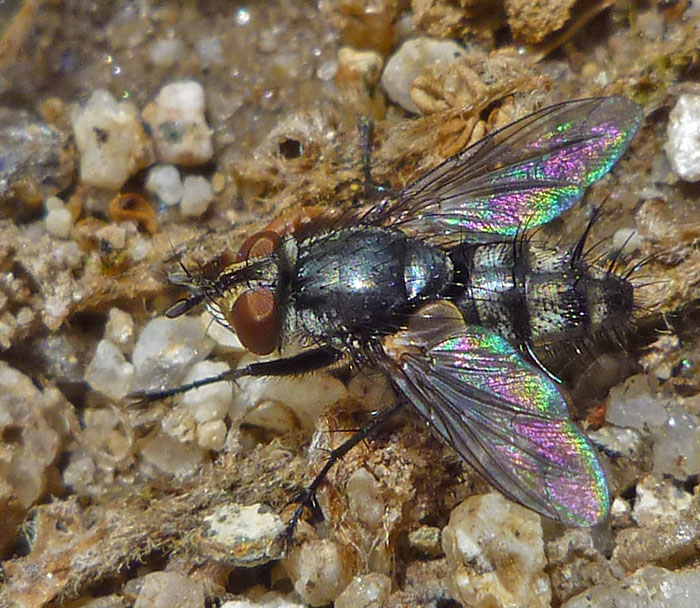 [174.43Kb] Edited by Piluca_Alvarez on 15-11-2011 14:52 |
|
|
|
| Piluca_Alvarez |
Posted on 15-11-2011 14:54
|
|
Member Location: Madrid, Spain Posts: 2431 Joined: 06.11.10 |
Well, after so many months at least I have an idea of what it might be. Exorista? A male Exorista larvarum by any chance? Thanks! Edited by Piluca_Alvarez on 15-11-2011 14:55 |
|
|
|
| ChrisR |
Posted on 15-11-2011 14:59
|
 Super Administrator Location: Reading, England Posts: 7706 Joined: 12.07.04 |
I'd possibly go with Exorista but I only count 3 post-dc so perhaps it is one of the E.rustica group? If so then it would most likely be rustica but it would be impossible to prove it without seeing the male genitalia 
Manager of the UK Species Inventory in the Angela Marmont Centre for UK Biodiversity at the Natural History Museum, London. |
 |
|
| Piluca_Alvarez |
Posted on 15-11-2011 23:39
|
|
Member Location: Madrid, Spain Posts: 2431 Joined: 06.11.10 |
Thanks, Chris!! Pretty happy with the Exorista confirmation  Thought it might be larvarum simply because I already found one and was way too similar at first view. I see now Exorista are tricky Haven't gone through any key and seems it is going to be nearly impossible with this one picture. So I will leave it as Exorista sp. if nobody else gives another opinion Thought it might be larvarum simply because I already found one and was way too similar at first view. I see now Exorista are tricky Haven't gone through any key and seems it is going to be nearly impossible with this one picture. So I will leave it as Exorista sp. if nobody else gives another opinion |
|
|
|
| ChrisR |
Posted on 15-11-2011 23:42
|
|
Super Administrator Location: Reading, England Posts: 7706 Joined: 12.07.04 |
The most important split is between those with 3 post-sutural dc (the rustica group where females are unidentifiable and males need genitalia examination - rustica, tubulosa & mimula) and the ones with 4 post-sutural dc ... everything else, like larvarum, fasciata, glossatorum etc.
Manager of the UK Species Inventory in the Angela Marmont Centre for UK Biodiversity at the Natural History Museum, London. |
|
|
|
| Piluca_Alvarez |
Posted on 15-11-2011 23:49
|
|
Member Location: Madrid, Spain Posts: 2431 Joined: 06.11.10 |
Thanks once more, Chris!! I have checked what you tell me in my two Exorista flies and I see the difference at perfection That is great!! I have learnt the first step to separate Exorista species Best Piluca |
|
|
|
| Jump to Forum: |