


Diptera.info :: Identification queries :: Diptera (adults)
 Fly
|
|
| oceanlis2000 |
Posted on 07-03-2011 11:01
|
|
Member Location: Wales, UK Posts: 570 Joined: 15.06.10 |
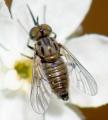
This photo was taken in mid-Wales on 18_06_10 I don't know the family so would be grateful for some more help Thank you oceanlis2000 attached the following image: 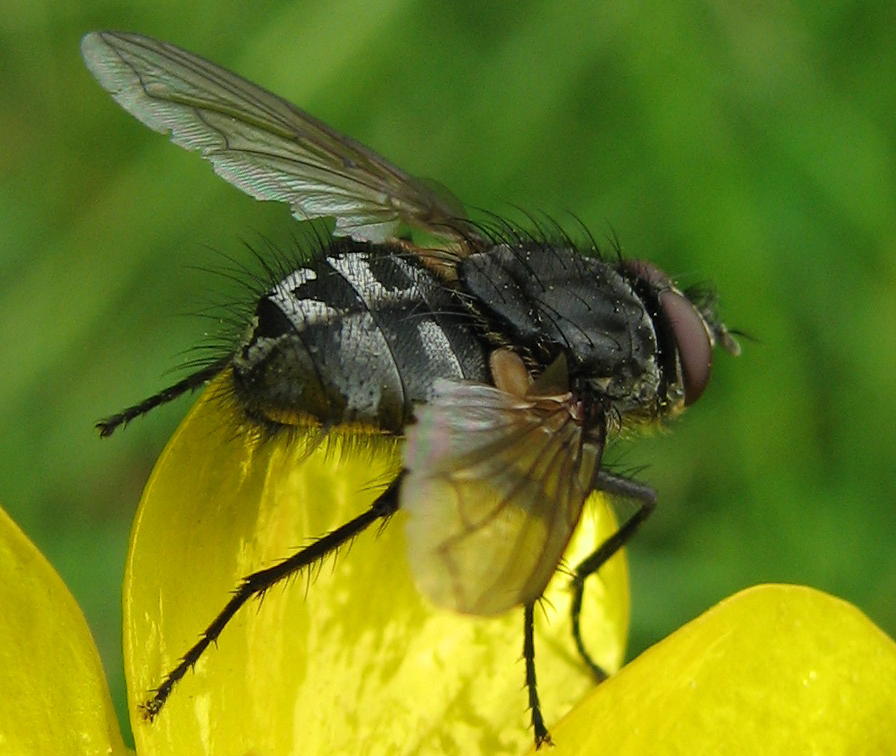 [87.51Kb] Dr Elisabeth A. Harris @FloraConsUK |
|
|
|
| Stephen R |
Posted on 07-03-2011 11:07
|
 Member Location: Clitheroe Lancashire UK Posts: 2396 Joined: 12.06.09 |
Pollenia. You can see the golden hairs on the side of the thorax. |
|
|
|
| oceanlis2000 |
Posted on 17-03-2011 11:04
|
|
Member Location: Wales, UK Posts: 570 Joined: 15.06.10 |
Yes I had a look at some of the photos in the gallery- I have to admit defeat on this one! I like the photo and find the opposing colouration on the abdomen interesting, I'm wondering why the difference?
Dr Elisabeth A. Harris @FloraConsUK |
|
|
|
| ChrisR |
Posted on 17-03-2011 11:24
|
 Super Administrator Location: Reading, England Posts: 7706 Joined: 12.07.04 |
Sorry ... the difference between what exactly? The colours or a difference between this fly and typical Pollenia? 
Manager of the UK Species Inventory in the Angela Marmont Centre for UK Biodiversity at the Natural History Museum, London. |
 |
|
| oceanlis2000 |
Posted on 17-03-2011 12:26
|
|
Member Location: Wales, UK Posts: 570 Joined: 15.06.10 |
1.The difference between the males of the genus Pollenia 2. Why the difference between the opposing black and white colouration on the abdomen!- the left and right hand sides, it seems to be quite typical Dr Elisabeth A. Harris @FloraConsUK |
|
|
|
| ChrisR |
Posted on 17-03-2011 12:29
|
|
Super Administrator Location: Reading, England Posts: 7706 Joined: 12.07.04 |
Ahh, well Pollenia are quite variable because those golden hairs often get rubbed off when they move about, meaning that fresh ones can look really golden while older ones might only have hairs left around the edges (as in your photo). The abdomen pattern is all down to the dusting and thsi seems to have some variability - perhaps again caused by wear, but generally dusting is a bit variable anyway on all individuals
Manager of the UK Species Inventory in the Angela Marmont Centre for UK Biodiversity at the Natural History Museum, London. |
|
|
|
| Paul Beuk |
Posted on 17-03-2011 13:31
|
 Super Administrator Location: Netherlands Posts: 19403 Joined: 11.05.04 |
The difference in dusting on the left and right sides is just a difference in appearance. The dusting itself is more or less symmetrical but the way the light falls onto the surface can make the different sides appear to be different.
Paul - - - - Paul Beuk on https://diptera.info |
|
|
|
| Stephen R |
Posted on 17-03-2011 15:00
|
|
Member Location: Clitheroe Lancashire UK Posts: 2396 Joined: 12.06.09 |
I imagine it to be like microscopic crushed velvet, with white pile on a black background. Where you see the hairs end-on it appears black. |
|
|
|
| oceanlis2000 |
Posted on 18-03-2011 16:06
|
|
Member Location: Wales, UK Posts: 570 Joined: 15.06.10 |
It's very clever! an interesting group
Dr Elisabeth A. Harris @FloraConsUK |
|
|
|
| Jump to Forum: |