


Diptera.info :: Identification queries :: Diptera (adults)
 Lauxaniidae - Aulogastromyia anisodactyla
|
|
| hedy2411 |
Posted on 05-02-2011 15:03
|
 Member Location: Zeist, Holland Posts: 5242 Joined: 20.11.09 |
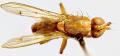
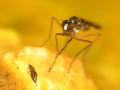
Is it possible to say which Lauxaniidae fly this is..? Picture is made 28-8-2008 in Zeist, Holland hedy2411 attached the following image: 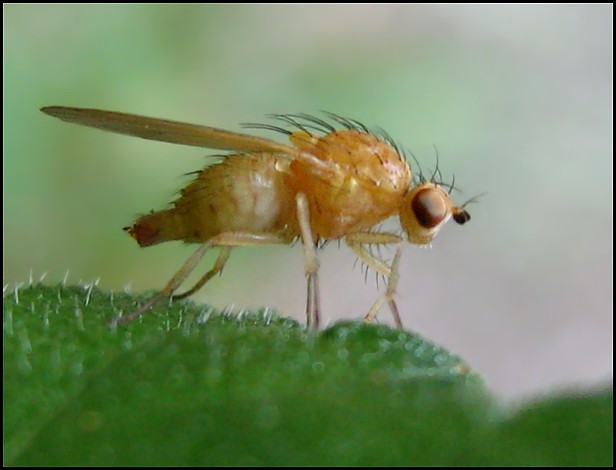 [43.74Kb] Edited by hedy2411 on 16-08-2011 11:11 |
|
|
|
| rvanderweele |
Posted on 05-02-2011 18:22
|
|
Member Location: Leiden, the Netherlands Posts: 1988 Joined: 01.11.06 |
I am in the Emirates and I did not take literature with me. So I cannot be sure, but I think it is an anisodactyla female.
ruud van der weele rvanderweele@gmail.com |
|
|
|
| rvanderweele |
Posted on 05-02-2011 18:31
|
|
Member Location: Leiden, the Netherlands Posts: 1988 Joined: 01.11.06 |
Forgot genus: Aulogastromyia anisodactyla, but I'd rather see it checked by Katka or Paul. I would like to see the literature
ruud van der weele rvanderweele@gmail.com |
|
|
|
| katerina dvorakova |
Posted on 05-02-2011 21:14
|
 Member Location: Czech Republic Posts: 399 Joined: 25.03.08 |
A. anisodactyla is correct. Katka |
 |
|
| hedy2411 |
Posted on 05-02-2011 22:16
|
|
Member Location: Zeist, Holland Posts: 5242 Joined: 20.11.09 |
Hello Ruud and Katka, Ruud, it seems to me that you don't need any book, sometimes maybe you have to think twice..  .. but then you have the answer..! Thanks that eventhough you're far away, you still take care over my flies... I wish you a nice stay there. .. but then you have the answer..! Thanks that eventhough you're far away, you still take care over my flies... I wish you a nice stay there.Katka, thank you for your confirmation!! Regards, Hedy |
|
|
|
| Mark-uk |
Posted on 06-02-2011 13:48
|
 Member Location: UK - Hampshire Posts: 792 Joined: 01.02.10 |
Am I correct in thinking males are uncommon? or am I just looking for these in the wrong places or times? |
|
|
|
| rvanderweele |
Posted on 06-02-2011 18:36
|
|
Member Location: Leiden, the Netherlands Posts: 1988 Joined: 01.11.06 |
Thanks Katka! No, they are not that uncommon. Just pay attention to the typical Lauxaniid flies, yellow, with extraordinary hind tarsi. The tarsus is shaped into a long thin claw. Please, look at he gallery: there are some good photo's ruud van der weele rvanderweele@gmail.com |
|
|
|
| Mark-uk |
Posted on 07-02-2011 15:11
|
|
Member Location: UK - Hampshire Posts: 792 Joined: 01.02.10 |
Yes I am familiar with what they look like and have seen museum specimens. I turn up a good number of females, but have never caught a male specimen myself. I was wondering if the males have a different habit/habitat (like in some Tabanids)? or if they really are just uncommon (like in some Lonchoptera). From memory, I think i had about 20 specimens this year, and all are female. |
|
|
|
| katerina dvorakova |
Posted on 07-02-2011 23:38
|
|
Member Location: Czech Republic Posts: 399 Joined: 25.03.08 |
Hmm, strange...I think you never caught a male by chance. I have about a same number males and females at my collection. Katka |
|
|
|
| Jump to Forum: |