


Diptera.info :: Identification queries :: Diptera (adults)
 Tachinidae from USA 2008-VIII-3 (= Leucostoma)
|
|
| John Carr |
Posted on 03-01-2011 22:17
|
 Super Administrator Location: Colorado, USA Posts: 10647 Joined: 22.10.10 |
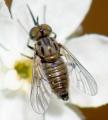
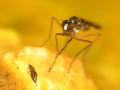
Only two of the wing patterns in Manual of Nearctic Diptera match the course of M, meeting R5 far from wing margin. Neither could belong to this fly (one has marked wings, the other has large antennae). This fly was on a flower and did not fly away as I moved the flower to get a better shot. On a field on a hill in central Massachusetts. The field is a ski slope in the winter. It bears some resemblence to Rhinophoridae too but I know of no North American species like this. John Carr attached the following image: 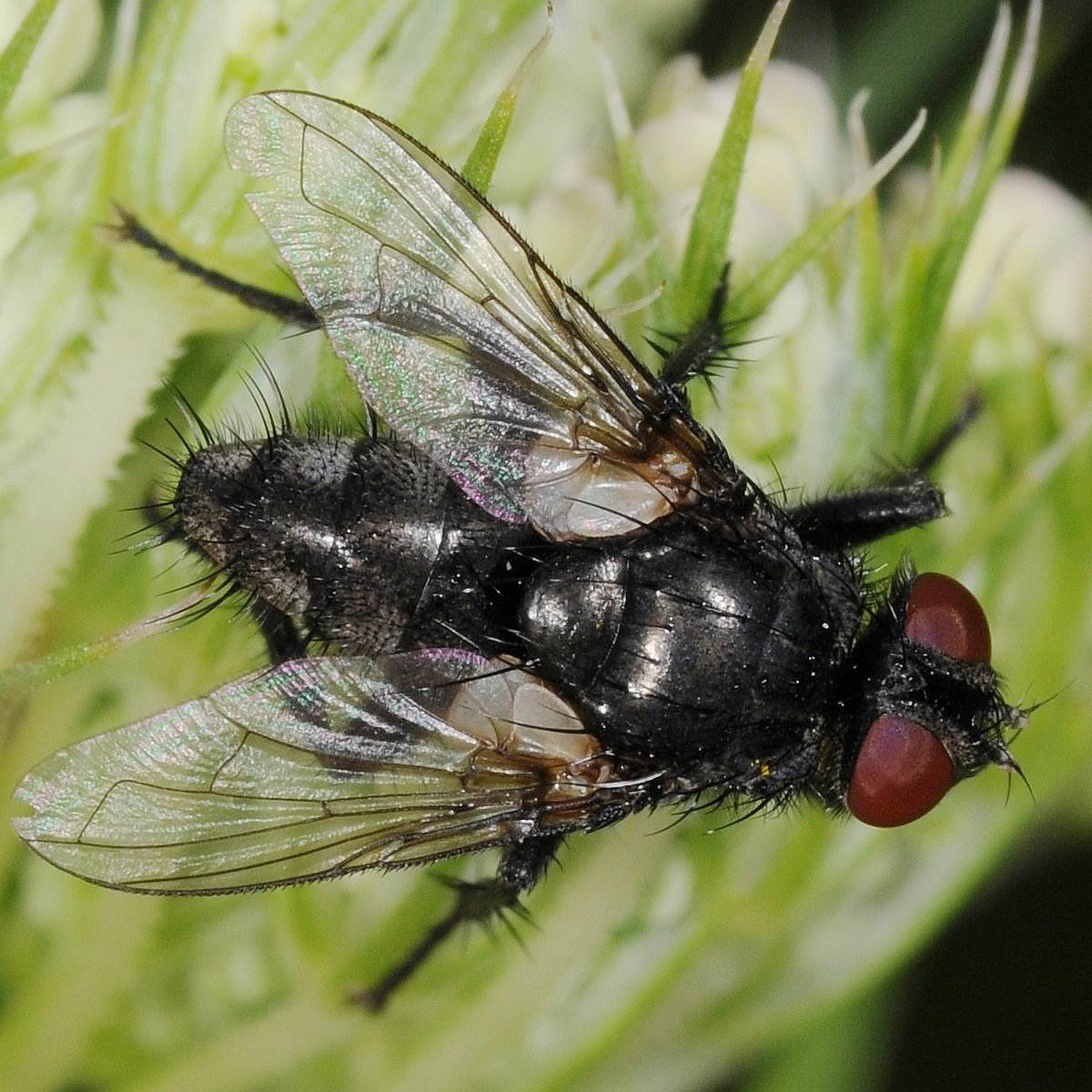 [180.13Kb] Edited by John Carr on 20-03-2012 01:49 |
 |
|
| John Carr |
Posted on 03-01-2011 22:18
|
|
Super Administrator Location: Colorado, USA Posts: 10647 Joined: 22.10.10 |
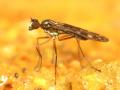
Head
John Carr attached the following image: 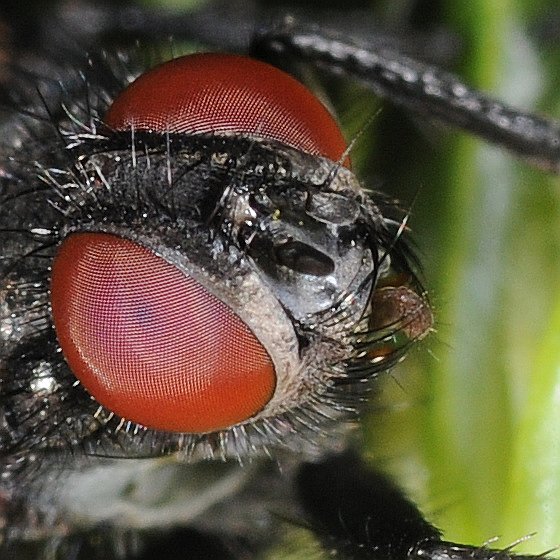 [125.97Kb] |
|
|
|
| John Carr |
Posted on 03-01-2011 22:19
|
|
Super Administrator Location: Colorado, USA Posts: 10647 Joined: 22.10.10 |
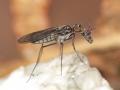
Another angle
John Carr attached the following image: 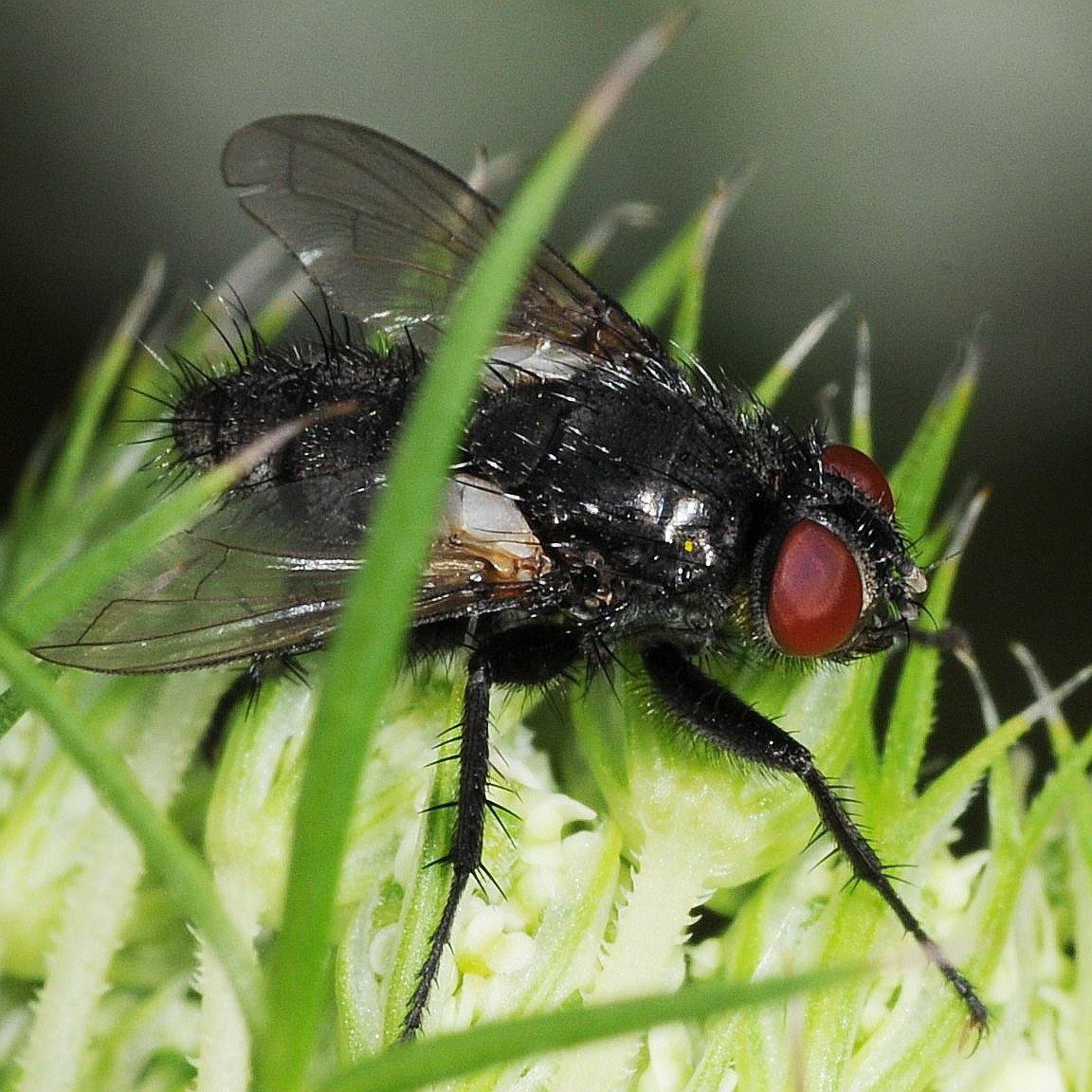 [190.08Kb] |
|
|
|
| ChrisR |
Posted on 04-01-2011 00:05
|
 Super Administrator Location: Reading, England Posts: 7706 Joined: 12.07.04 |
Hmm, it doesn't look like a rhinophorid to me ... the median vein is slightly rounded where it bends and the calyptrate are big. My first thought was Leucostoma ... but I am not sure what your species look like. I wouldn't worry that the wing pattern doesn't match the figures in the Nearctic Manual ... the figures in the manual aren't comprehensive and there are bound to be quite a few genera that have such a strong petiole. I have had a quick look at the key and there is a whole branch after #236, which includes Leucostoma ... and it might be that if the arista isn't pubescent; and the ocellar bristles are reclinate ... the antennal bases are separated, which would point to Leucostoma 
Manager of the UK Species Inventory in the Angela Marmont Centre for UK Biodiversity at the Natural History Museum, London. |
|
|
|
| John Carr |
Posted on 04-01-2011 01:11
|
|
Super Administrator Location: Colorado, USA Posts: 10647 Joined: 22.10.10 |
To get to 236 you have to take the "parafacial setose on lower half" branch at 235, but the lower parafacial of my fly looks bare. That choice leads to 271, which also leads to Leucostoma. The calypter is slightly smaller than the key specifies but still large. I'm checking Reinhard 1956 (reference cited in MND) for confirmation. I note first that Reinhard says parafacial bare while MND allows either, so there may be changes since his work. |
|
|
|
| ChrisR |
Posted on 04-01-2011 01:16
|
|
Super Administrator Location: Reading, England Posts: 7706 Joined: 12.07.04 |
Well, Leucostoma is considered quite a difficult genus over here ... not always easy to key to species but they are usually OK to genus because those calypters look so distinctive. But I'm not an expert on the Nearctic fauna so it migth be worth contacting Jim O'Hara and asking if he could comment on it
Manager of the UK Species Inventory in the Angela Marmont Centre for UK Biodiversity at the Natural History Museum, London. |
|
|
|
| John Carr |
Posted on 04-01-2011 01:35
|
|
Super Administrator Location: Colorado, USA Posts: 10647 Joined: 22.10.10 |
The features I can make out match the description of the genus. It might be Leucostoma gravipes van der Wulp. Couplet 1 chooses male/female. Male, I presume. Couplet 2 pollinose or shining abdomen. Partly pollinose. (If shining, L. simplex). Couplet 3, pollen confined to basal half of last three segments. Not so distributed. Couplet 5, frontal lunule bare or setose. I don't know which hairs count here, but bare leads to neotropical species so I'll go the other way. Couplet 7, fore tibia with one or two posterolateral bristles. I can't tell exact location from a photo so here I stop. Of the remaining four choices, L. gravipes has calypters "not much enlarged." I could also be convinced of L. atterimum. Edited by John Carr on 04-01-2011 01:36 |
|
|
|
| Jump to Forum: |