


Diptera.info :: Identification queries :: Diptera (adults)
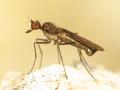
 Trichocera cf. saltator
|
|
| pjoris |
Posted on 03-01-2011 21:29
|
|
Member Location: Posts: 98 Joined: 07.04.09 |
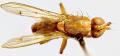
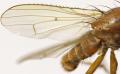
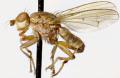
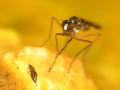
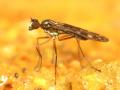
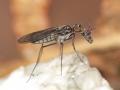
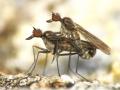
Can anybody help me with this one. I think it is Trichocera major (R2+3<first part of R2, fairly long and thin ovipositor, fairly big: wing length 7mm), but I'm doubting as R2+3 is not that much shorter than first part of R2, ovipositor is not very long and thin, and it isn't that big, compared to the one I caught last year: (this year - maybe major ?) vs:  (last year - definitely major) Now I'm putting them side by side, it is quite a big difference ... saltator then maybe ? Joris Edited by pjoris on 04-01-2011 07:41 |
|
|
|
| Jason G |
Posted on 03-01-2011 21:58
|
 Member Location: London UK Posts: 136 Joined: 22.12.08 |
Hi Joris, Well, I personally would prefer to identify major on the basis of male genitalia - I find what's curved and to what degree, a little subjective. I can find a few similarities wing-wise with my major specimen - but not in others. One oddity is the curve to Rs - it's a lot straighter in mine. My literature states for major females that the cerci are very long. Your specimen in question looks rather short, and gently curved - could be saltator as you say. Being British though, it's worth bearing in mind I don't have an understanding of your local Trichocerid fauna, so it's more academic. Edited by Jason G on 03-01-2011 22:01 London's Insects http://londoninve...hostia.com |
|
|
|
| pjoris |
Posted on 03-01-2011 22:22
|
|
Member Location: Posts: 98 Joined: 07.04.09 |
Yes, I was thinking I made a bad call on the ovipositor being long ... certainly compared to the T major I photographed last year. I'll make it a "probable saltator" - too big and cell M long with parallel sides should exclude hiemalis. I don't think the Belgian fauna is that different from the one in the UK and Bei-Bienko doesn't offer any other possibilities that fit. Unfortunately the males were dancing at least one meter above my head and, well, I didn't yet bring my net in field ... Joris |
|
|
|
| Jason G |
Posted on 03-01-2011 22:45
|
|
Member Location: London UK Posts: 136 Joined: 22.12.08 |
Get back there with a net!! The males are much easier. Are you storing these in alcohol or something? Can you get a better-illuminated shot of the dorsal aspect of the abdomen? I think she's gravid, and must admit she looks like one I have (pinned), that was annulata - the swollen abdomen made discerning the annulation harder. The cerci looks similar, so may be worth examining at x20. The distal end of the sternites appear darker than the front, and the Rs vein looks like my annulata too. Just a thought! What identification material are you using? Edited by Jason G on 03-01-2011 22:48 London's Insects http://londoninve...hostia.com |
|
|
|
| pjoris |
Posted on 03-01-2011 23:16
|
|
Member Location: Posts: 98 Joined: 07.04.09 |
Yes on alcohol - I let it dry and then had an eureka moment. Yes, it has light bands ! Then I read further: annulata has anterior margin yellow, this one posterior. And it can't be maculipennis, I assume, as she has no spots in wings ... Hmm. Will get back this weekend with net - though I'm sure my birdwatching friends will make fun of me. The hard life of a dipterist ! Joris (Re literature: I have Freeman & Bei-Bienko - Keys to the Insects of the European Part of the USSR - I should als check Faune de France).
Edited by pjoris on 03-01-2011 23:24 |
|
|
|
| Jason G |
Posted on 03-01-2011 23:22
|
|
Member Location: London UK Posts: 136 Joined: 22.12.08 |
Ah - according to my definition of annulation, your specimen isn't (I believe banding is half-and-half each segment). What I think you're seeing is the stretched posterior margin from egg-carrying. Back to cf. saltator for me. Edited by Jason G on 03-01-2011 23:31 London's Insects http://londoninve...hostia.com |
|
|
|
| Andrius |
Posted on 04-01-2011 22:42
|
|
Member Location: Lithuania Posts: 315 Joined: 27.01.05 |
Well, I'll enter the discussion with some thoughts. The second one (from last year) is definitely major - ovipositor is very specific, the only one such in this part of the world. And the first one is definitely not saltator - ovipositor is too short and of different shape; also the vein R2+3+4<R2+3 which is uncommon in saltator. T.annulata is also not an option as there are no real bands visible. Pjoris, would it be possible to make a more close-up picture of the ovipositor and also of the basis of antennae? |
|
|
|
| pjoris |
Posted on 06-01-2011 20:52
|
|
Member Location: Posts: 98 Joined: 07.04.09 |
Some more detail of the ovipositor   |
|
|
|
| pjoris |
Posted on 06-01-2011 20:53
|
|
Member Location: Posts: 98 Joined: 07.04.09 |
And the head Thanks for helping ! Joris Edited by pjoris on 06-01-2011 20:55 |
|
|
|
| Jason G |
Posted on 06-01-2011 22:13
|
|
Member Location: London UK Posts: 136 Joined: 22.12.08 |
Great photos PJ! Can you tell us about the claws length? A photo would be good.
London's Insects http://londoninve...hostia.com |
|
|
|
| Andrius |
Posted on 08-01-2011 11:58
|
|
Member Location: Lithuania Posts: 315 Joined: 27.01.05 |
Judging from the form of ovipositor and the setose area on it, I see two possible candidates - T. forcipula and T. rufulenta (neither of these species are given for Belgium in FAEU). Although I would tend to think this is forcipula, the best way to be sure is making the preparation of inner genital structures. |
|
|
|
| pjoris |
Posted on 08-01-2011 21:30
|
|
Member Location: Posts: 98 Joined: 07.04.09 |
Any literature and instruction how I do that and what to look for ? What would be the most up to date literature ? I could also mail it to you if you would like to have a look at it. I'm not surprised of catching a Trichocera unknown for Belgium, I don't think many (or even any) people studying these here. In fact in the Catalogue for Belgium T. major isn't even mentioned. Joris |
|
|
|
| Andrius |
Posted on 10-01-2011 09:39
|
|
Member Location: Lithuania Posts: 315 Joined: 27.01.05 |
Check your Private messages  |
|
|
|
| jonas |
Posted on 10-01-2011 12:29
|
|
Member Location: Posts: 351 Joined: 06.05.07 |
Hi, i have been following this thread a while. Last year, I have collected some possible T.saltator specimens as well (from Belgium as well). I have never been shure about ID, but this thread made me look at the specimen again. Is it possible to send me the liturature about those two species as well? Thank you! Jonas |
|
|
|
| Jump to Forum: |